







The Rise of Hybrid Learning Is Changing What a College Experience Looks Like
Higher education in India is moving beyond the traditional classroom model, with hybrid learning bringing online classes and campus-based experiences together. By combining digital flexibility with practical sessions, peer interaction and academic support, this model offers another way to pursue a degree. The shift comes amid growing demand for flexible education, with 9.5 million online higher education enrolments in India.

Choosing a college degree is no longer only about selecting a university or a subject. Students also consider where they will study, how much time they need to spend on campus, whether they can manage other responsibilities and what kind of practical exposure a programme offers.
Traditional classroom education provides direct interaction with teachers, classmates and campus facilities. However, attending college every day may not be convenient for students who live far from institutions or need to balance studies with work and other responsibilities. Fully online education offers flexibility, but students may still want face-to-face discussions, practical sessions and campus experiences.
Hybrid learning brings these two formats together. Students can access lectures and study material online while participating in selected classroom sessions, practical activities and campus interactions.
What Is Hybrid Learning in Higher Education?
Hybrid learning is an education model that combines online instruction with in-person academic activities. The exact format depends on the university and programme.
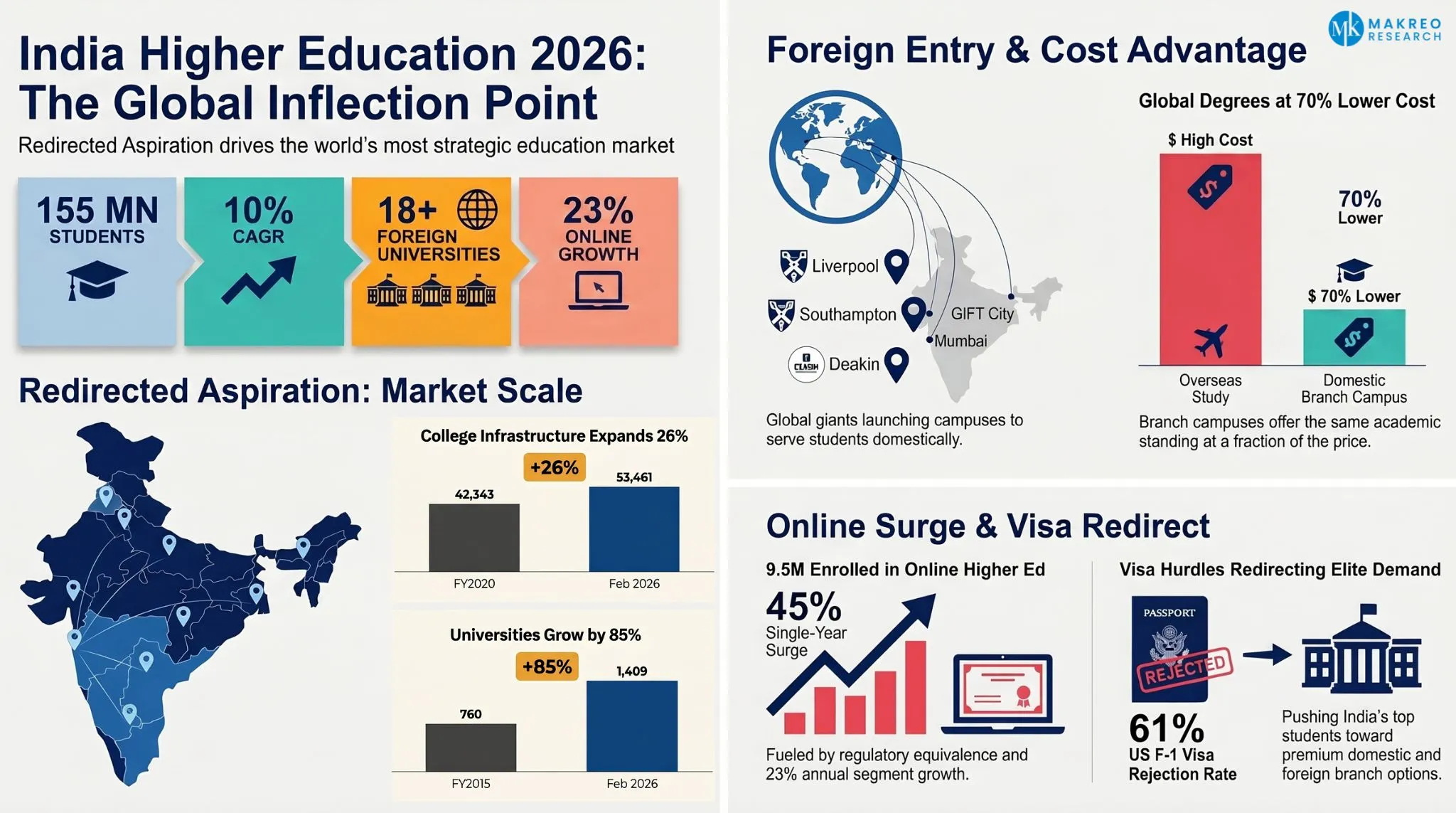
According to Makreo Research's India Higher Education Market and Forecast (FY2021–FY2030), India's higher education market is growing at a 10% CAGR, while online enrolments have reached 9.5 million. These developments highlight the growing importance of flexible learning models, including hybrid education.
A hybrid degree programme may include:
-
Online classes: Live or recorded lectures that students can access remotely.
-
Digital study material: E-books, assignments, presentations and other learning resources.
-
Classroom sessions: In-person discussions, presentations and group activities.
-
Practical learning: Workshops, laboratory sessions or demonstrations, where required.
-
Academic support: Faculty guidance and doubt-solving through online or offline channels.
For example, a business administration student may attend lectures online and participate in selected classroom sessions for case studies, presentations and group projects. Students exploring this subject can also compare Online BBA programmes available through PW Medharthi.
Why Is Hybrid Learning Gaining Popularity in India?
Not every student can attend college on campus every day. Learners from smaller cities may need to relocate for a particular course, while working professionals and competitive exam aspirants may find fixed college schedules difficult to manage.
Online education has made it easier to access lectures and study resources remotely.
However, students may also want opportunities for face-to-face interaction, practical activities and group learning. Hybrid learning can address these needs by combining digital access with selected in-person activities.
Makreo Research identifies Tier-2 and Tier-3 cities as important markets for online degrees, hybrid learning and skill-linked programmes. These locations may benefit from access to programmes offered by institutions in other cities.
Looking for flexible undergraduate and postgraduate options? Explore PW's Online UG and PG Degree Programmes to compare courses across different fields.
What Are the Benefits of Hybrid Learning for Students?
Hybrid learning offers a combination of flexibility and in-person engagement. Its benefits may include:
-
Flexible study schedule: Online lectures and digital resources can help students manage their studies alongside work, exam preparation or other responsibilities.
-
Access beyond major cities: Students can explore programmes offered by universities in other locations without relocating for every class.
-
Classroom interaction: Scheduled offline sessions can provide opportunities for discussions, presentations and teamwork.
-
Practical exposure: Depending on the course, students may participate in workshops, laboratory sessions, projects or internships.
-
Academic support: Students may receive guidance through digital platforms as well as scheduled faculty interactions.
The actual benefits depend on how the university designs and delivers the programme. Students interested in computer applications can explore Online BCA programmes and review their practical learning requirements before choosing a course.
How Is India's Higher Education Market Supporting Hybrid Learning?
India has nearly 155 million people in the 18–23 age group, according to Makreo Research. This creates a large demand base for undergraduate and higher education programmes.
The report also highlights:
-
A 10% CAGR in India's higher education market.
-
9.5 million online higher education enrolments.
-
Growing demand for online degrees and hybrid learning in Tier-2 and Tier-3 cities.
The higher education landscape is also changing with the entry of foreign universities. As of April 2026, three foreign universities were operational in India: Deakin University and the University of Wollongong at GIFT City, Gujarat, and the University of Southampton in Gurugram, Haryana.
These developments are expanding the choices available to students. However, online enrolment growth and foreign university campuses do not mean that every institution offers hybrid programmes. Students should check the delivery format of each course separately.
Interested in computer applications and data skills? Explore the BCA with Data Analytics Programme and learn more about its curriculum and eligibility.
Who Should Consider Hybrid Learning?
Hybrid learning may be worth considering if you want online flexibility along with selected in-person academic activities.
|
Student group |
How the model may help |
|
Students in Tier-2 and Tier-3 cities |
Access programmes offered by institutions in other locations |
|
Working professionals |
Manage studies alongside work |
|
Competitive exam aspirants |
Balance degree studies with exam preparation |
|
Students who value campus interaction |
Participate in selected classroom activities |
|
Students in practical subjects |
Combine online theory with required practical sessions |
The suitability of a programme depends on its curriculum, schedule and academic support. Also, remember that not every online degree includes campus sessions.
If you are preparing for competitive examinations alongside your degree, explore the Online BA/BBA/MBA options for SSC Students through PW Online Degree.
What Should You Check Before Choosing a Hybrid Degree?
Before enrolling, review the programme carefully. Check these details:
-
University recognition: Verify the university's recognition and the approval or entitlement applicable to the specific programme.
-
Class schedule: Confirm the online and offline class requirements, including campus visits.
-
Practical sessions: Check whether the course includes workshops, laboratory work, projects or internships.
-
Faculty support: Understand how you can contact faculty members and resolve academic queries.
-
Fees: Consider tuition fees along with examination, travel and accommodation expenses.
-
Career support: Review the availability of internships, industry interaction and placement assistance.
Discover how to use AI for marketing workflows, customer engagement and campaign execution with PW’s IIT Jammu Generative AI in Digital Marketing Programme.
Key Takeaways
-
Hybrid learning combines online classes with selected classroom activities.
-
It offers flexibility while allowing opportunities for practical learning and direct interaction.
-
Makreo Research reports 9.5 million online higher education enrolments in India.
-
Tier-2 and Tier-3 cities are important markets for flexible higher education.
-
Always verify programme recognition, delivery format, fees and academic support before enrolling.
Looking for a degree programme that fits your academic and career goals? Explore undergraduate options through PW Online Degree, including Online BA, and Online MCA. Compare available universities, eligibility criteria and programme delivery details before choosing your course.


Have questions about your prep?
Our experts can answer all your questions






 Live & recorded classes available at easeDashboard for progress trackingLakhs of practice questions


