







PW Class 7 Social Science Chapter 10 Notes: The Constitution of India



Understanding the Constitution involves much more than memorising dates and definitions. The chapter explains how India's government is organised, the powers of the Legislature, Executive, and Judiciary, the rights and duties of citizens, and the values that guide the nation. Revising these connected concepts together can sometimes make the topic difficult to remember clearly.
PW Class 7 Social Science Chapter 10 Notes present The Constitution of India in a simple, chapter-wise format for quick revision. You can revisit the Constituent Assembly, the Preamble, Fundamental Rights, Fundamental Duties, Directive Principles, separation of powers, constitutional amendments, and the principles that form the foundation of India's democratic system.
What Is the Constitution of India?
The Constitution of India is the supreme rulebook of the country. It explains how the government is organised, defines the rights and duties of citizens, and lays down the values that guide the nation.
Why Is the Constitution Important?
-
It provides rules for governing the country.
-
It protects the rights of citizens.
-
It promotes justice, liberty, equality, and fraternity.
-
It prevents disorder by establishing a legal framework.
-
It came into force on 26 January 1950, celebrated as Republic Day.

How Was the Constitution Written?
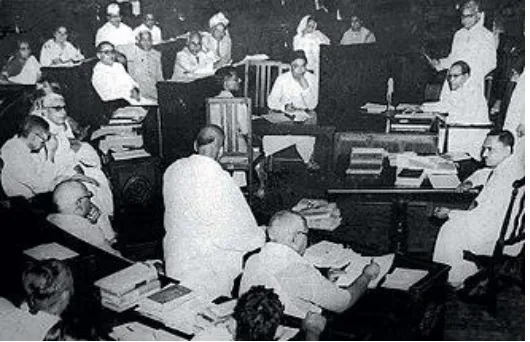
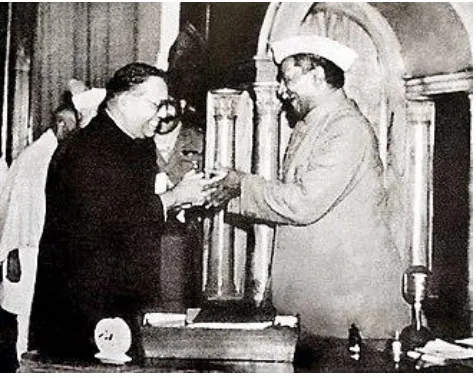
The Constitution was prepared by the Constituent Assembly, which was formed in 1946 to draft the governing document of independent India.
Important Facts
|
Feature |
Details |
|
Constituent Assembly formed |
1946 |
|
Initial members |
389 |
|
Final members |
299 |
|
Women members |
15 |
|
Chairman of Drafting Committee |
Dr. B.R. Ambedkar |
|
Adopted on |
26 November 1949 |
|
Came into force |
26 January 1950 |
The drafting process took nearly three years and involved discussions on governance, rights, and national values.

What Influenced the Indian Constitution?
The Constitution was inspired by India's freedom movement, its cultural traditions, and ideas borrowed from several democratic countries.
Major Influences
|
Source |
Contribution |
|
Freedom Movement |
Equality, justice, liberty |
|
Indian heritage |
Dharma and unity in diversity |
|
France |
Liberty, Equality, Fraternity |
|
Ireland |
Directive Principles |
|
United States |
Independent Judiciary |
How Does the Government Work?
The Constitution divides government powers among three independent organs.
-
Legislature
The Legislature makes laws for the country. In India, Parliament performs this function.
-
Executive
The Executive implements and enforces laws. It includes the President, Prime Minister, and Council of Ministers.
-
Judiciary
The Judiciary interprets laws, settles disputes, and protects citizens' rights through the courts.
-
Separation of Powers
The Constitution ensures that the Legislature, Executive, and Judiciary perform different responsibilities independently, helping maintain balance in governance.

What Is the Three-Tier System of Government?
India follows a three-tier system to distribute administrative responsibilities.
|
Level |
Institution |
|
Central |
Union Government |
|
State |
State Governments |
|
Local |
Panchayats and Municipal Bodies |
This system brings governance closer to the people and supports local decision-making.
What Are the Main Features of the Constitution?
The Constitution contains several important provisions that protect citizens and guide the government.
Fundamental Rights
Fundamental Rights guarantee important freedoms and equal treatment.
-
Right to Equality – Article 14
-
Right to Freedom – Article 21
-
Right to Education – Article 21A
Fundamental Duties
Every citizen also has responsibilities towards the nation.
Some important duties include:
-
Respect the Constitution and national symbols.
-
Protect the environment.
-
Promote harmony among people.
-
Preserve India's cultural heritage.
Directive Principles of State Policy
Directive Principles guide the government in promoting:
-
Social justice
-
Public health
-
Equal opportunities
-
Welfare of citizens
Although they are not legally enforceable, they help shape government policies.

What Does the Preamble Tell Us?
The Preamble introduces the Constitution and expresses the ideals on which India is based.
Meaning of Important Terms
|
Term |
Meaning |
|
Sovereign |
India is an independent nation |
|
Socialist |
Fair distribution of resources and opportunities |
|
Secular |
Equal respect for all religions |
|
Democratic |
People elect their representatives |
|
Republic |
The head of state is elected |
Core Constitutional Values
-
Justice
-
Liberty
-
Equality
-
Fraternity
The opening words, “We, the People of India,” show that the ultimate authority belongs to the citizens.
Why Is the Constitution Called a Living Document?
The Constitution can be changed through constitutional amendments to meet the changing needs of society.
Examples of Amendments
-
1976: Fundamental Duties were added.
-
1992: The 73rd Amendment strengthened Panchayati Raj institutions.
These changes allow the Constitution to remain relevant while preserving its core principles.
Why Does the Constitution Matter Today?
The Constitution continues to guide India's democratic system by protecting rights, defining government powers, and promoting fairness and unity.
Its principles influence:
-
Law and justice
-
Elections and governance
-
Citizen rights and responsibilities
-
Local self-government
-
National unity and democratic values
CBSE Class 7 Social Science Chapter 10 Notes PDF
Review the CBSE Class 7 Social Science Chapter 10 Notes PDF to revise the Constitution, the Preamble, Fundamental Rights, Fundamental Duties, Directive Principles, the three organs of government, constitutional amendments, and the values that guide Indian democracy.
CBSE Class 7 Social Science Chapter 10 Notes PDF
How Can Physics Wallah Class 7 Social Science Chapter 10 Notes Help You?
Physics Wallah Class 7 Social Science Chapter 10 Notes simplify the Constitution by explaining its principles, institutions, rights, and democratic values in a clear revision format.
-
Understand the Constitution: Learn its purpose, importance, and role in governing India.
-
Revise the Preamble: Recall the meaning of Sovereign, Socialist, Secular, Democratic, and Republic.
-
Learn Government Structure: Understand the Legislature, Executive, Judiciary, and separation of powers.
-
Remember Fundamental Rights: Revise important constitutional rights and their Articles.
-
Recall Fundamental Duties: Learn the responsibilities expected from every citizen.
-
Understand Directive Principles: Review how they guide government policies and welfare.
-
Study Constitutional Amendments: Revise the 1976 and 1992 amendments discussed in the chapter.
-
Prepare for Assessments: Strengthen your understanding of constitutional concepts before school examinations.
The Constitution provides the framework for India's democratic system by defining government powers, protecting citizens' rights, and promoting justice, liberty, equality, and fraternity. Revising this chapter helps you understand how constitutional values shape governance and strengthen your knowledge of India's democratic institutions.
Related Resources
-
CBSE Class 7 Social Science Important Questions
-
CBSE Class 7 Social Science Sample Paper
CBSE Class 7 Social Science Notes Chapter 10 FAQs
What is covered in CBSE Class 7 Social Science Notes Chapter 10?
Why is the Constitution important for India?
Are these notes useful for exam preparation?
Can students use these notes for self-study?














 Live & recorded classes available at easeDashboard for progress trackingMillions of practice questions at your fingertips

