Facts About Vitamins And Minerals: Check Introduction, Types
Vitamins and minerals are a form of nutrient (called micronutrients) that are needed in small amounts. Check this article to know more about the Vitamins And Minerals.
 Jasdeep Bhatia22 May, 2024
Share
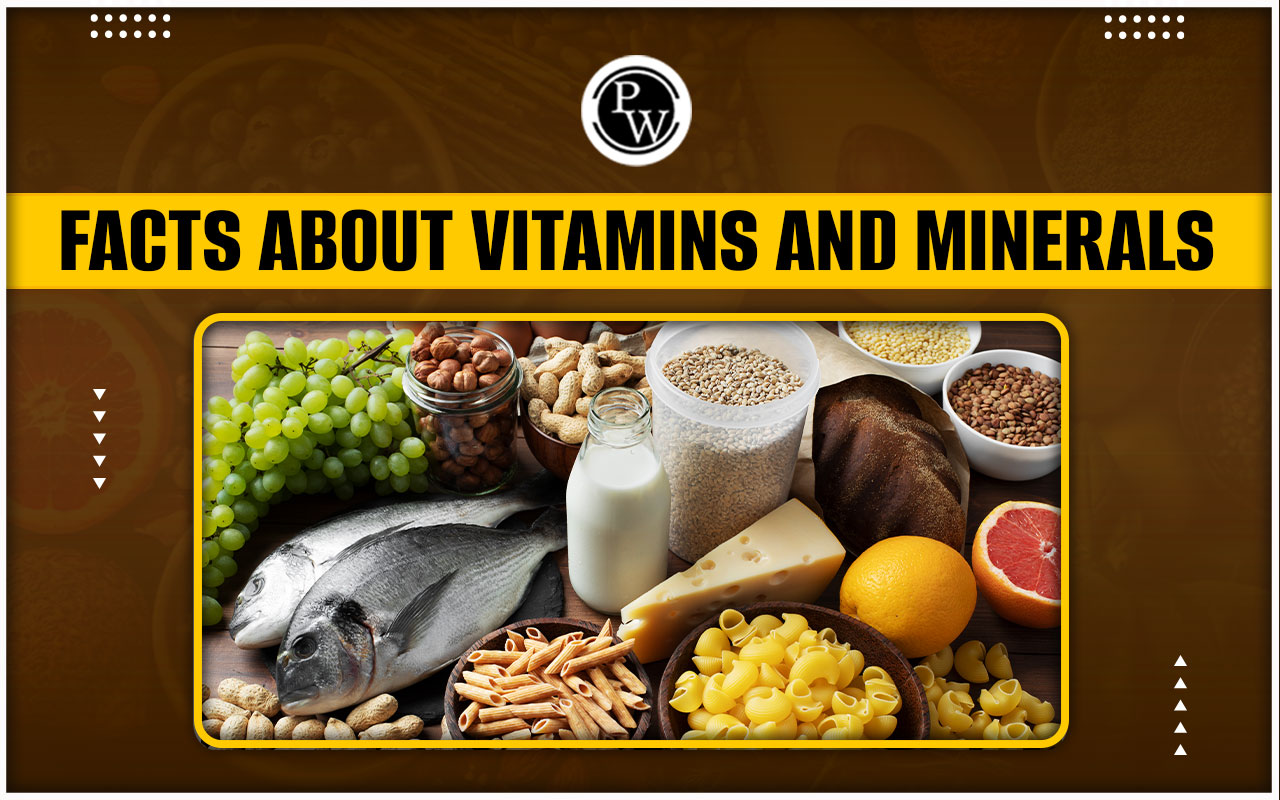
If you are looking for “facts about vitamins and minerals” , you have come to the right place!
Facts regarding vitamins and minerals will be covered in this article. The body cannot generate vitamins and minerals on its own. Thus they must be obtained externally as necessary components of the food. This article will also cover a variety of facts regarding vitamins and minerals, as well as which foods can give people which vitamins and minerals.What are Vitamins?
Vitamins are natural substances in fruits and vegetables that support the body's normal development and operation. Both water and fat-soluble forms of these vitamins are possible. For instance, although vitamins C and B complex are water-soluble, vitamins A, D, E, and K are fat-soluble. Vitamins are essential nutrients that must be obtained from food sources because the human body cannot create them independently. The body needs vitamins and minerals, so everyone should incorporate them daily. A total of 15 minerals and six vitamins are required to carry out various metabolic processes. Consequently, eating a balanced diet is crucial for preserving excellent health. Any dietary imbalance can result in excessive or inadequate intake of these vitamins and minerals. An excessive intake of vitamins and minerals can also be hazardous and result in mineral toxicity, while an inadequate intake can result in diseases caused by vitamin and mineral deficiencies.Types of Vitamins
The two primary categories of vitamins are those that are soluble in water and those that are soluble in fat.Fat-soluble Vitamins
Generally, fat-soluble vitamins that we consume are stored in our bodies fat tissues or cells or the liver. If human systems do not use them, these vitamins can be stored in the fat cells. The most prevalent vitamins in human bodies that are fat soluble include vitamin A, vitamin D, vitamin E, and vitamin K. There are many other fat-soluble vitamins.Fat-soluble vitamins and their function
- Vitamin A (Retinol): Retinol functions as an antioxidant and promotes skin, eyes, and respiratory system health. It also plays a protective role against cancer.
- Vitamin D (Cholecalciferol): Aids in developing strong bones and teeth.
- Vitamin E (Tocopherols): Maintains healthy cell membranes and functions as an antioxidant.
- Vitamin K , phylloquinone, is necessary for healthy blood coagulation.
Water-soluble Vitamins
Water-soluble vitamins are the other category of vitamins. These are distinct from fat soluble since they dissolve quickly in water. As a result, they are eliminated in wastewater and circulate through circulation rather than being retained in human bodies. Therefore, it is crucial to refill water-soluble vitamins continually. Vitamin C, the group of B vitamins including thiamin, riboflavin B2, niacin and Vitamin B6, biotin, and Vitamin B12 are examples of water-soluble vitamins.Water-soluble vitamins and their function
- Vitamin B1 (Thiamin): Allows carbs to be converted into energy.
- Vitamin B2 (riboflavin) , which supports healthy skin and eyes, releases energy from protein, fat, and carbohydrates.
- Niacin (Vitamin B3): Produces cholesterol and releases energy from protein, fat, and carbohydrates.
- Pantothenic Acid (Vitamin B5): Produces energy from carbohydrates, fats, and proteins.
- Vitamin B6 (Pyridoxine): Degrades protein and aids in the formation of red blood cells.
- Vitamin B12 (Cyanocobalamin): This breaks down fat and carbs and aids in producing red blood cells, nerve cells, and DNA.
- Folate (Folic acid): Aids in forming red blood cells and enzymes, as well as preventing neural tube problems; breaks down DNA material and lowers homocysteine levels (high levels are a risk factor for cardiovascular disease).
- Biotin: Degrades protein and lipids and encourages the development of solid nerve cells.
What are Minerals?
Minerals are abundant on the planet, from rocks to the soil where plants are grown. Minerals are the fundamental building blocks of various rocks, sand, soils, and the salt we consume. This suggests that minerals can be found above and below the earth's surface. The planet's minerals have been discovered and identified; gold, silver, platinum, and other well-known minerals are only a few. Some minerals, including salt, diamonds, and talc, are common in our environment.Major minerals and their function
- Calcium: Builds the structure of bones and teeth; helps with blood clotting, neuron function, muscular contraction, and muscle contraction.
- Iron: A vital component of numerous enzymes and muscle proteins, iron transports oxygen throughout the body via red blood cells.
- Magnesium: Controls muscle contractions and nerve signals; contributes to several enzyme systems; helps to form the structure of bones and teeth.
- Phosphorus: Releases energy from carbs, lipids, and proteins; an essential component of many enzymes and DNA; collaborates with calcium to form bones and teeth.
- Potassium: Works with sodium to maintain water and acid-base equilibrium in the body and nerve impulses; involved in many enzyme systems.
- Sodium: Works with potassium to maintain water and acid-base equilibrium in the body and nerve impulses.
Trace minerals and their function
- Chromium: By influencing insulin, chromium controls blood sugar levels.
- Copper: Produces colour pigments in the skin, hair, and eyes; supports the health of the neurological system and the production of red blood cells.
- Fluoride: Reduces tooth decay while strengthening teeth and bone.
- Iodine: Essential for healthy thyroid function and proper growth.
- Selenium: Selenium acts as an antioxidant, supports a robust immune system and disease resistance, and is essential for proper thyroid function.
- Zinc: Supports healthy development, wound healing, immune system function, reproduction, and sensory functions like taste, smell, and vision.
Environmental Issues and Solutions
Top Sources of Vitamins and Minerals
- Meat contains B1 vitamins (pork), B2, B6, and B12 vitamins, niacin, iron, magnesium, salt (cured meat), chromium, selenium, and zinc.
- Seafood contains vitamins A and D, calcium (found in oily fish), B vitamins (B2, B12), niacin, potassium, copper, iodine, selenium, and zinc.
- Kiwifruit, citrus fruits, and tomatoes are high in vitamin C and potassium.
- Red and orange veggies (carrots and capsicum) - Beta-carotene and vitamin C.
- Green vegetables provide vitamins B2, B6, C, and K, as well as niacin, folate, iron, and magnesium.
- Dried fruit contains calcium, iron, and potassium.
- Milk, yoghurt, and cheese are good sources of vitamins A, B2, B12, D, K, niacin, calcium, magnesium, potassium, sodium, chromium, iodine, and zinc.
- Nuts and seeds are good sources of vitamins B1, B2, B6, and E, calcium, magnesium, potassium, sodium (in salted nuts), copper, selenium, and zinc.
- Legumes/beans contain iron, zinc, and vitamin B1.
Facts About Vitamins and Minerals
- Except for folic acid, vitamins are best absorbed naturally rather than as supplements.
- Loss of nutrients and vitamins is caused by heat, oxygen (when a fruit or vegetable is cut open and exposed to air), and light. When users purchase pre-cut vegetables or boil and steam them, they should remember this. Although vitamins A and E also suffer in chopped fruits and vegetables, vitamin C has the most impact.
- For most vitamins, we rely on external sources (food), but there are three exceptions. We naturally manufacture these three: vitamin D from a cholesterol-based substance, vitamin K from gut bacteria, and niacin from the amino acid tryptophan.
- Only humans, nonhuman primates, guinea pigs, bats, and fish cannot synthesise vitamin C independently, which is an intriguing fact regarding vitamin C.
- Water-soluble vitamins (such as the C and B vitamins) are easily excreted by the body. Therefore they rarely cause toxicity when taken as supplements. Importantly, vitamin B6 is an exception. There have been reports of toxicity at high dosages of vitamin B6, which women take to relieve the symptoms of premenstrual syndrome. At doses of 200 mg/day or more significant, vitamin B6 toxicity can manifest as neuropathy symptoms such as numbness in the hands and feet and trouble walking. Sources of B6 toxicity have also been linked to energy drinks like NOS.
- Supplementing with folic acid can help prevent neural tube defects. The American College of OB/GYN (ACOG) advises women to take 600 mcg of folic acid when pregnant and 400 mcg one month before conception. For this reason, the United States began folic acid-fortifying breakfast cereals in 1998.
- Vitamin poisoning from food is uncommon; supplement toxicity from large doses is far more common. Toxic levels of vitamin A are present in the polar bear's liver. Consuming 1/10th of a gram of polar bear liver meets your recommended daily amount.
- For the mineral magnesium (Mg), the absorption and bioavailability of Mg from mineral water are equivalent to those of Mg from meals or supplements.
- Foods are frequently supplemented and fortified with vitamins and minerals. Foods that have been fortified contain nutrients that do not naturally exist; adding vitamin D to milk is one example. Restoring the micronutrients that were lost during processing results in enriched food. A common example is wheat flour, which has iron, riboflavin, and folic acid put back after processing.
- Unregulated vitamin supplements exist. The FDA does not mandate pre-market testing, and producers are not obligated to prove the efficacy or safety of their products. Additionally, vitamin producers are not required to prove that the ingredients listed on the label are present in the final product.
Related Links -
Facts About Vitamins And Minerals <span style=
Q1. What are the primary and essential minerals?
Ans: There are 15 major minerals, of which 8 are trace and only needed in trace levels, while seven are in considerable proportions. The necessary primary minerals are calcium, chloride, magnesium, molybdenum, phosphorus, potassium, and sodium because they are needed in substantial amounts.
Q2. What are minerals and vitamins?
Ans: Since vitamins are organic materials, plants or animals can produce them. Minerals are inorganic substances formed from soil and water and consumed by plants and animals. The body requires higher concentrations of specific minerals, such as calcium, to grow and maintain health.
Q3. What vitamins are kept in the body as reserves?
Ans: Vitamins A, D, E, and K are the four fat-soluble vitamins. The body can absorb these vitamins better when dietary fat is present. The body does not store water-soluble vitamins. Among the nine water-soluble vitamins are vitamin C and each of the B vitamins. The body eliminates any extra or residual quantities of chemicals through urine.
Q4. Which fruit is vitamin-rich?
Ans: There are many other options, but oranges, blueberries, apples, avocados, and bananas are among the best. Fruits also include a variety of antioxidants, including flavonoids, which are good for your health.
Q5. What exactly are metallic minerals?
Ans: Metallic minerals have shine in their appearance and are chemically composed of metals. These minerals are mineable and could serve as a supply of metal. Metallic minerals include, for instance, bauxite, iron ore, and manganese, which can be further classified as ferrous and non-ferrous metallic minerals.
🔥 Trending Blogs


Talk to a counsellorHave doubts? Our support team will be happy to assist you!


Join 15 Million students on the app today!
 Live & recorded classes available at easeDashboard for progress trackingMillions of practice questions at your fingertips


Free Learning Resources
PW Books
Notes (Class 10-12)
PW Study Materials
Notes (Class 6-9)
Ncert Solutions
Govt Exams
Our Other Websites
Class 6th to 12th Online Courses
Govt Job Exams Courses
UPSC Coaching
Defence Exam Coaching
Gate Exam Coaching
Other Exams
Know about Physics Wallah
Physics Wallah is an Indian edtech platform that provides accessible & comprehensive learning experiences to students from Class 6th to postgraduate level. We also provide extensive NCERT solutions, sample paper, NEET, JEE Mains, BITSAT previous year papers & more such resources to students. Physics Wallah also caters to over 3.5 million registered students and over 78 lakh+ Youtube subscribers with 4.8 rating on its app.
We Stand Out because
We provide students with intensive courses with India’s qualified & experienced faculties & mentors. PW strives to make the learning experience comprehensive and accessible for students of all sections of society. We believe in empowering every single student who couldn't dream of a good career in engineering and medical field earlier.
Our Key Focus Areas
Physics Wallah's main focus is to make the learning experience as economical as possible for all students. With our affordable courses like Lakshya, Udaan and Arjuna and many others, we have been able to provide a platform for lakhs of aspirants. From providing Chemistry, Maths, Physics formula to giving e-books of eminent authors like RD Sharma, RS Aggarwal and Lakhmir Singh, PW focuses on every single student's need for preparation.
What Makes Us Different
Physics Wallah strives to develop a comprehensive pedagogical structure for students, where they get a state-of-the-art learning experience with study material and resources. Apart from catering students preparing for JEE Mains and NEET, PW also provides study material for each state board like Uttar Pradesh, Bihar, and others
Copyright © 2026 Physicswallah Limited All rights reserved.