







Dr. Rajendra Prasad Biography: Life, Legacy, and Achievements

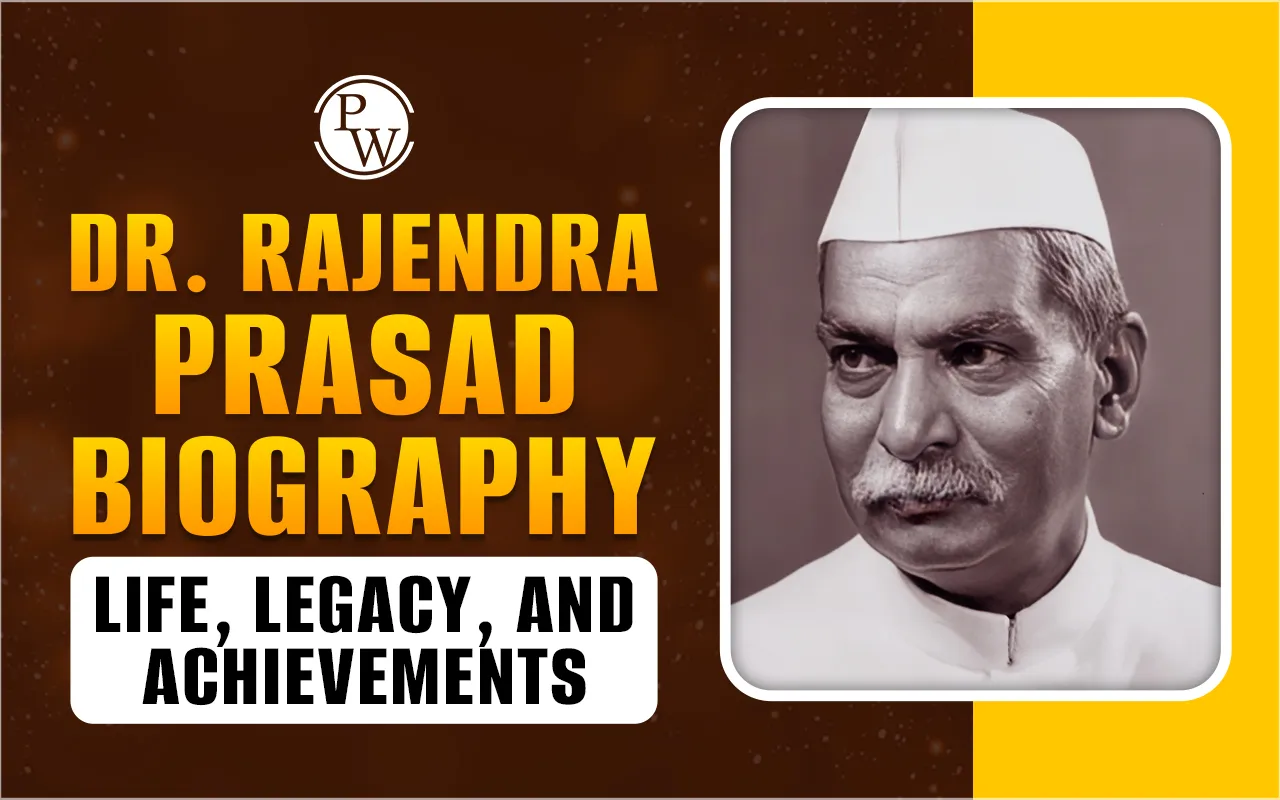
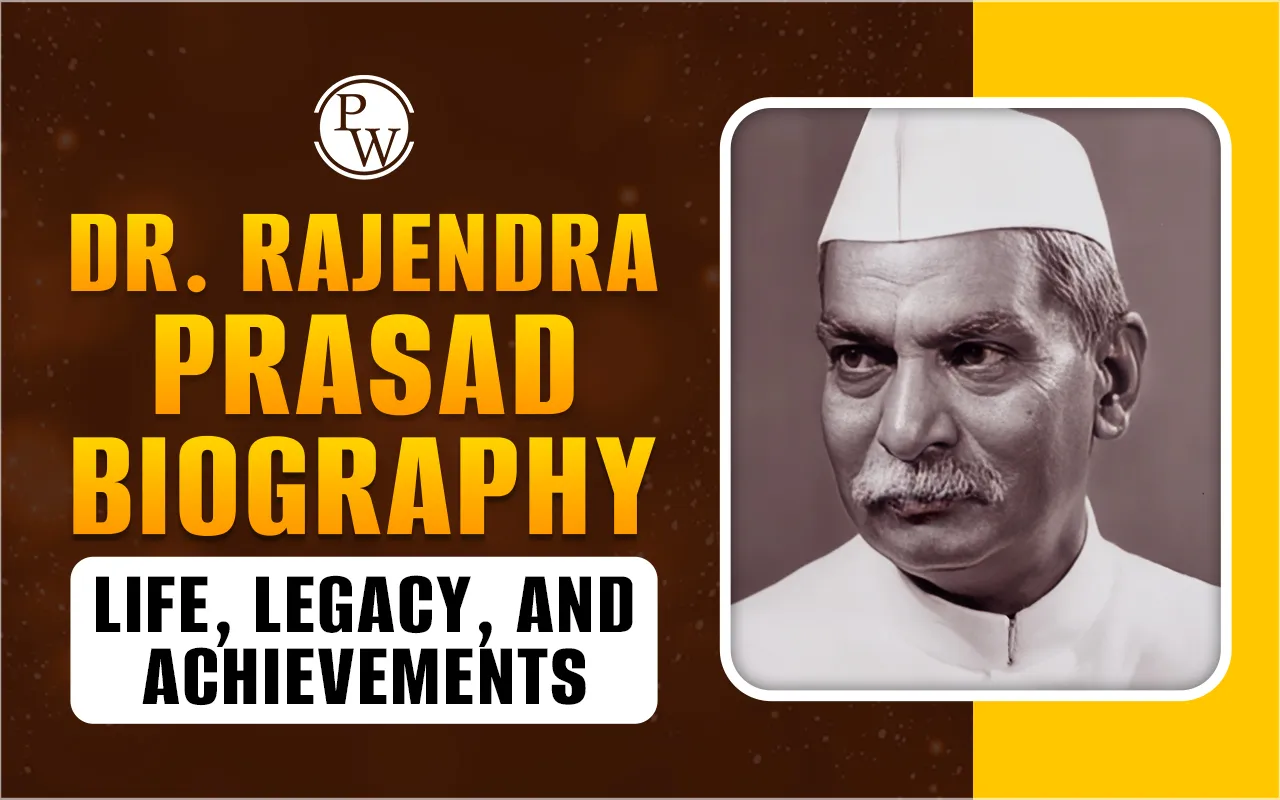
Dr. Rajendra Prasad Biography: Dr. Rajendra Prasad gave a major contribution to Indian history as a leading member of the Indian National Movement. He became a fervent supporter of Mahatma Gandhi and gave up his bright legal career to devote himself to the Indian liberation fight. His leadership positions in Bihar and Maharashtra, as well as his active involvement in the Salt Satyagraha and Non-Cooperation campaign, are well known. Throughout his varied career, he held positions as a professor, journalist, and political activist, among others.
Also read: Smallest district in Bihar
Dr. Rajendra Prasad Biography
Dr. Rajendra Prasad was the first president of India. A lawyer by profession, he was also an Indian independence activist. This Rajendra Prasad page will cover what Dr. Rajendra Prasad is, his background and education, his time as President of India, and his time as President of the Indian National Congress. Read the full profile of Dr. Rajendra Prasad by scrolling down.
Dr. Rajendra Prasad: The First President of India
On January 26, 1950, Rajendra Prasad was elected as the Indian republic's first president. He upheld the Indian Constitution's tenets in his capacity as president. He was renowned for his prudent and objective approach. He toured all over the world and established diplomatic ties with several nations. He became the only president in Indian history to hold office for two consecutive terms when he was re-elected in 1952 and 1957.
Rajendra Prasad retired as President of India in 1962 after 12 years in office. He remained in Bihar for the remainder of his life. In 1962, the Indian government recognised his achievements to the country by awarding him the Bharat Ratna, the nation's highest civilian distinction.
Also read: GI tag in Bihar
The Early Life of Dr. Rajendra Prasad
Rajendra Prasad was born in the Siwan district of Bihar to Mahadev Sahai Srivastava and Kamleshvari Devi. His father was a learned man who was fluent in Persian and Sanskrit, therefore he grew up in an academic setting. He started his schooling at Pune's Chapra District School. He went on to study at T.K. Ghosh's Academy in Patna after getting married to Rajavanshi Devi in 1886. After receiving a Rs. 30 scholarship, Rajendra Prasad enrolled in Calcutta's Presidency College. Well-known for his outstanding academic performance, he earned first division in his M.A. in Economics from the University of Calcutta.
He joined the Dawn Society, which Satish Chandra Mukherjee founded, and became a strong public activist when he was in Calcutta. He was instrumental in the establishment of the Bihari Students Conference in 1906, an association dedicated to educating students for the fight for freedom. Other prominent participants in the Champaran and Non-Cooperation movements, such as Anurag Narayan Sinha and Krishna Singh, were also members of this organisation. In addition to being an activist, he obtained a degree from Allahabad University and worked as a lawyer and teacher in Calcutta.
Also read: Biggest Mall of Patna
Dr. Rajendra Prasad as President of Indian National Congress
At the 1937 Congress session in Bombay, Prasad was elected President of the Indian National Congress following the resignation of Subhash Chandra Bose. On August 8, 1942, the Congress adopted the Quit India resolution under his direction. Prasad was then taken into custody and held at Bankipur Central Jail for the next three years. In 1945, he was set free.
Jawaharlal Nehru established an interim government to supervise India's transformation from a British colony to an independent republic, and Prasad was named Minister of Food and Agriculture. He popularised the phrase "Grow more food" and concentrated on boosting agricultural output. He was chosen to serve as the Constituent Assembly's president on December 11, 1946. He received great recognition for his abilities to manage administrative affairs impartially, patiently, and objectively. On November 17, 1947, he was elected President of Congress for the third time.
Contribution of Dr. Rajendra Prasad in Indian Freedom Movement
When Rajendra Prasad first entered politics, he volunteered for the Congress annual session in Calcutta. In 1911, he formally became a member of the Indian National Congress. He left a successful legal career in 1916 after meeting Mahatma Gandhi during the Congress conference in Lucknow. He became a key figure in the Champaran movement after being profoundly impacted by Gandhi's principles. After the Congress started the Non-Cooperation movement, he also got involved in the Nationalist movement.
He encouraged his son to drop out of Western schooling and enrol in Bihar Vidyapeeth, an institution that adhered to a traditional Indian curriculum, when Gandhi called for a boycott of Western education. As a writer, Prasad also dabbled in journalism, contributing to groundbreaking magazines like "Searchlight" and "Desh." He raised money for these publications as well. His writings contributed to the spread of the freedom movement's principles throughout many societal segments.
He actively participated in relief efforts during the 1934 Bihar earthquake and the 1935 Quetta earthquake, demonstrating his dedication to social duty. In order to carry out these tasks, he established the Central Relief Committees in Quetta and Bihar.
Also read: Capital of Bihar
Dr. Rajendra Prasad Biography FAQs
Who was Dr. Rajendra Prasad?
When was Dr. Rajendra Prasad born?
What was the contribution of Dr. Prasad in Indian Freedom Movement
What is Dr. Rajendra Prasad's educational background?
When did Dr. Rajendra Prasad become President of India?





 Live & recorded classes available at easeDashboard for progress trackingLakhs of practice questions

