The Geodesic Dome The House of The Future IELTS Reading Answers
 Porishmita .5 Jun, 2025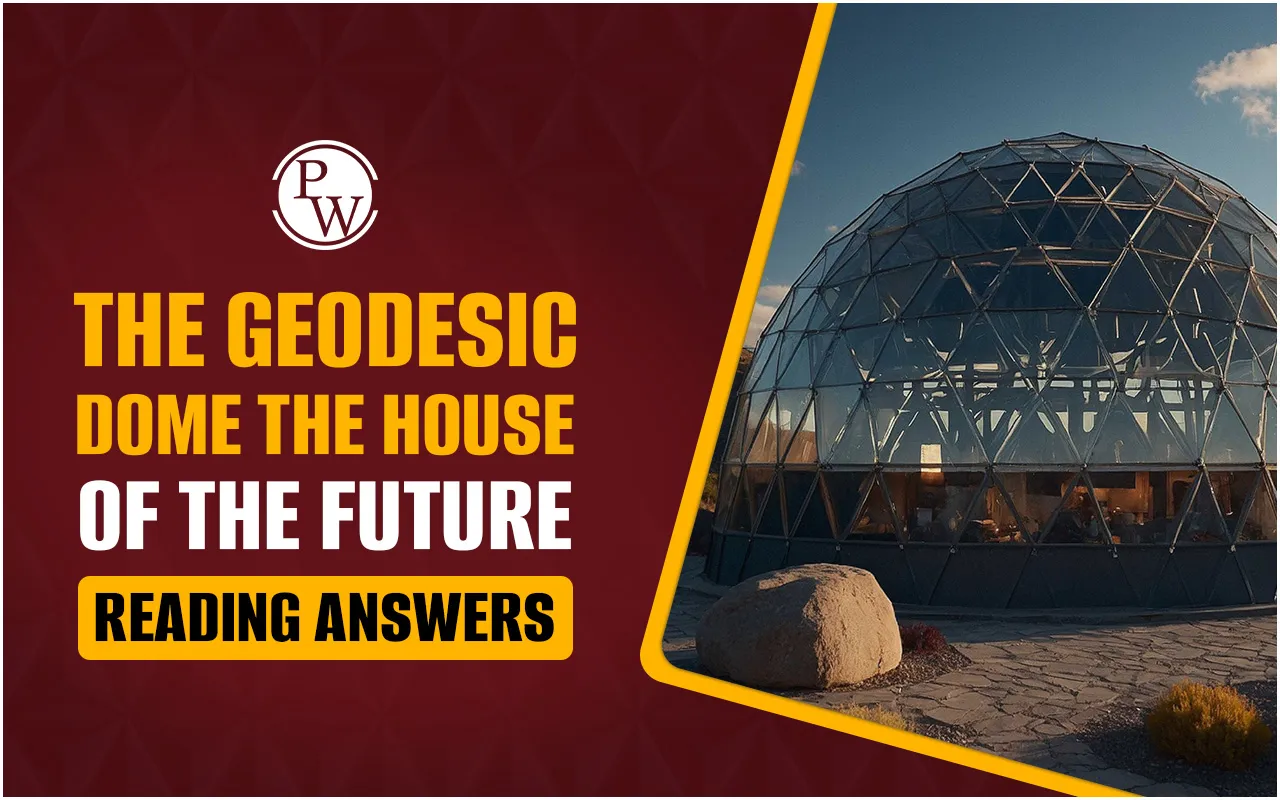
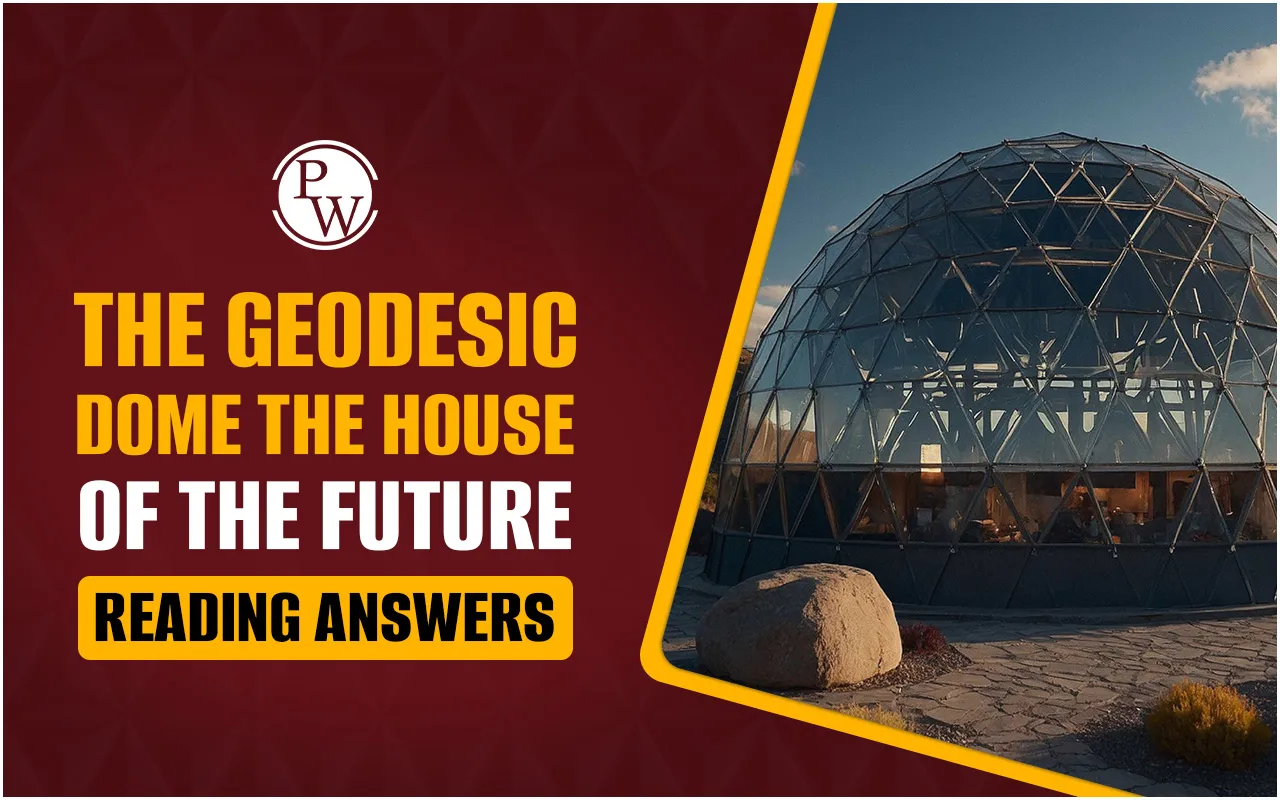
The Geodesic Dome The House of The Future IELTS Reading Answers: In the IELTS Academic Reading section, you may encounter passages related to science, architecture, or technological innovation, just like “The Geodesic Dome The House of The Future.” This passage centres around the pioneering ideas of Buckminster Fuller, an innovator who transformed shelter design with his concept of the geodesic dome.
To help you prepare effectively, this article provides detailed answers, locations, references, and explanations for IELTS Reading questions 1–13, including Multiple Choice and True/False/Not Given question types. Use this as a practice tool to understand how to locate keywords, interpret details, and develop strategies for tackling similar IELTS Reading passages.
ree IELTS Reading Practice Tests
The Geodesic Dome The House of The Future IELTS Reading Answers Passage
Questions 1-13, based on the Reading Passage below, should take you approximately 20 minutes to complete.
The Geodesic Dome – The House of The Future?
-
R. Buckminster Fuller spent much of the early 20th Century looking for ways to improve human shelter by applying modern technological know-how to shelter construction, making shelter more comfortable and efficient, and more economically available to a greater number of people.
-
After acquiring some experience in the building industry and discovering the traditional practices and perceptions which severely limit changes and improvements in construction practices, Fuller carefully examined, and improved, interior structure equipment, including the toilet, the shower, and the bathroom as a whole. He studied structure shells and devised a number of alternatives, each less expensive, lighter, and stronger than traditional wood, brick, and stone buildings.
-
In 1944, the United States suffered a serious housing shortage. Government officials knew that Fuller had developed a prototype of family dwelling which could be produced rapidly, using the same equipment which had previously built war-time airplanes. They could be “installed” anywhere, the way a telephone is installed, and with little additional difficulty. When one official flew to Wichita, Kansas to see this house, which Beech Aircraft and Fuller built, the man reportedly gasped, “My God! This is the house of the future!”
-
Soon, unsolicited checks poured in from people who wanted to purchase this new kind of house, but Fuller was never able to get it into full production. This was due to many obstacles such as only union contractors were able to hook the houses up to water, power, and sewers in many cities. However, because the houses were already wired and had the plumbing installed by the aircraft company, many construction trade unions made it clear that they would not work on the houses. There were also in-house differences between Fuller and the stockholders. Fuller did not feel the house design was complete; there were problems he wanted to fix. But the stockholders wanted to move ahead. However, the main obstruction was obtaining the financing for the tooling costs, which were purposefully not included in the negotiations with investors. No bank would finance the project with union problems and stockholder battles.
-
After the war, Fuller’s efforts focused on the problem of how to build a shelter which is so lightweight, it can be delivered by air. The shelter should be mobile which would require great breakthroughs in the weight-reduction of the materials. Technology would have to follow nature’s design as seen by the spider’s web which can float in a hurricane because of its high strength-to-weight ratio. New shelter would have to be designed that incorporates these principles and that was Fuller’s intent.
-
One of the ways Buckminster Fuller would describe the differences in strength between a rectangle and a triangle would be to apply pressure to both structures. The rectangle would fold up and be unstable but the triangle withstands the pressure and is much more rigid in fact, the triangle is twice as strong. This principle directed his studies toward creating a new architectural design, the geodesic dome, based also upon his idea of “doing more with less.” Fuller discovered that if a spherical structure was created from triangles, it would have unparalleled strength.
-
The sphere uses the “doing more with less” principle in that it encloses the largest volume of interior space with the least amount of surface area thus saving on materials and cost. Fuller reintroduced the idea that when the sphere’s diameter is doubled it will quadruple its square footage and produce eight times the volume.
-
The spherical structure of a dome is one of the most efficient interior atmospheres for human dwellings because air and energy are allowed to circulate without obstruction. This enables heating and cooling to occur naturally. Geodesic shelters have been built all around the world in different climates and temperatures and still, they have proven to be the most efficient human shelter one can find.
-
More specifically, the dome is energy efficient for many reasons: its decreased surface area requires less building materials; exposure to cold in the winter and heat in the summer is decreased because, being spherical, there is the least surface area per unit of volume per structure; the concave interior creates a natural airflow that allows the hot or cool air to flow evenly throughout the dome with the help of return air ducts; extreme wind turbulence is lessened because the winds that contribute to heat loss flow smoothly around the dome; it acts as a type of giant down-pointing headlight reflector and reflects and concentrates interior heat. This helps prevent radiant heat loss.
-
The net annual energy savings for a dome owner is 30% less than normal rectilinear homes according to the Oregon Dome Co. This is quite an improvement and helps save the environment from wasted energy. Domes have been designed by Fuller and others to withstand high winds and extreme temperatures as seen in the Polar Regions.
-
Many dome manufacturers offer various designs in geodesic dome housing with little assembly time required. Some houses can be assembled in less than a day with others taking up to six months. Many also come in dome kits that buyers can build themselves or with the help of friends.
-
Buckminster Fuller’s first worldwide acceptance by the architectural community occurred with the 1954 Triennale where his cardboard dome was displayed for the first time. The Milan Triennale was established to stage international exhibitions aimed to present the most innovative accomplishments in the fields of design, crafts, architecture and city planning.
-
The theme for 1954 was Life Between Artifact and Nature: Design and the Environmental Challenge, which fit in perfectly with Fuller’s work. Fuller had begun efforts towards the development of a Comprehensive Anticipatory Design Science, which he defined as, “the effective application of the principles of science to the conscious design of our total environment in order to help make the Earth’s finite resources meet the needs of all humanity without disrupting the ecological processes of the planet.” The cardboard shelter that was part of his exhibit could be easily shipped and assembled with the directions printed right on the cardboard. The 42-foot paperboard Geodesic was installed in the old Sforza garden in Milan and came away with the highest award, the Gran Premio.
Also Read:
The Geodesic Dome The House of The Future IELTS Reading Answers Sample Questions
IELTS Reading Multiple Choice Questions (Q.1–7)
Choose the correct letter A, B, C, or D.
Q1. What was Fuller’s main aim in developing new shelter designs?
A. To make homes aesthetically pleasing
B. To increase employment in the construction sector
C. To create efficient and affordable housing for more people
D. To replace traditional architectural styles
Q2. What was a major reason why Fuller’s early housing model failed to enter mass production?
A. High production costs
B. Lack of interest from the public
C. Disagreements with military officials
D. Resistance from trade unions and lack of funding
Q3. How did Fuller’s designs reflect the principle of “doing more with less”?
A. By using recycled building materials
B. By eliminating the need for plumbing
C. By maximising interior volume with minimal surface area
D. By designing houses with shared communal spaces
Q4. Why is the triangle preferred in Fuller’s geodesic dome design?
A. It allows for easier construction
B. It is more visually appealing
C. It has greater stability and strength
D. It can be bent into any shape
Q5. According to the passage, what environmental benefit do geodesic domes provide?
A. They reduce the use of fossil fuels entirely
B. They allow more sunlight to enter the house
C. They help lower overall energy consumption
D. They eliminate the need for air-conditioning systems
Q6. What does the passage suggest about assembling geodesic domes?
A. They are extremely difficult to construct
B. They require professional contractors only
C. They can be assembled quickly and easily
D. They require approval from government bodies
Q7. Why was the 1954 Milan Triennale significant in Fuller’s career?
A. He launched his own construction company there
B. His design received an international award
C. He developed a new form of insulation
D. He introduced solar-powered domes
IELTS Reading True/False/Not Given (Q.8–13)
Do the following statements agree with the information given in the passage?
Write TRUE if the statement agrees with the information,
FALSE if the statement contradicts the information,
NOT GIVEN if there is no information on this.
Q8. Fuller’s early designs included prefabricated houses produced using wartime aircraft machinery.
Q9. Fuller believed domes could not be constructed in regions with extreme weather.
Q10. Fuller’s dome design was inspired by the structural efficiency of spider webs.
Q11. The geodesic dome shape reduces energy bills by up to 50%.
Q12. The geodesic dome was introduced to the public for the first time in 1960.
Q13. Fuller believed scientific principles should guide the future design of the environment.
The Geodesic Dome The House of The Future IELTS Reading Answers with Explanations
Question 1. What was Fuller’s main aim in developing new shelter designs?
Answer: C. To create efficient and affordable housing for more people
Location: Paragraph 1
Reference: “...making shelter more comfortable and efficient, and more economically available to a greater number of people.”
Explanation: Fuller aimed to modernise shelter by improving comfort and efficiency while making it accessible for more people.
Question 2. What was a major reason why Fuller’s early housing model failed to enter mass production?
Answer: D. Resistance from trade unions and lack of funding
Location: Paragraph 4
Reference: “...union contractors were able to hook the houses up to water, power, and sewers... no bank would finance the project with union problems and stockholder battles.”
Explanation: Although demand existed, union resistance and financial issues prevented full-scale production.
Question 3. What inspired Fuller’s idea to build lighter shelters?
Answer: B. Natural designs like spider webs
Location: Paragraph 5
Reference: “...technology would have to follow nature’s design as seen by the spider’s web...”
Explanation: Fuller observed that spider webs could float in storms due to high strength-to-weight ratio and applied this to his design philosophy.
Question 4. What structural shape did Fuller find to be strongest under pressure?
Answer: A. The triangle
Location: Paragraph 6
Reference: “...the triangle withstands the pressure and is much more rigid... the triangle is twice as strong.”
Explanation: Fuller compared the strength of shapes and found that triangles are more structurally stable than rectangles.
Question 5. What is a key benefit of the dome’s spherical structure?
Answer: D. It maximises volume while minimising surface area
Location: Paragraph 7
Reference: “...encloses the largest volume of interior space with the least amount of surface area...”
Explanation: The dome's geometry allows for more space with less material, aligning with Fuller’s principle of “doing more with less”.
Question 6. Why are geodesic domes energy efficient?
Answer: C. They reduce heat loss and use less material
Location: Paragraph 8
Reference: “...decreased surface area requires less building materials... prevents radiant heat loss.”
Explanation: The dome shape conserves heat, reduces energy use, and needs fewer materials due to its design.
Question 7. What was significant about Fuller’s cardboard dome shown in Milan in 1954?
Answer: A. It gained international recognition and won an award
Location: Paragraph 10
Reference: “...came away with the highest award, the Gran Premio.”
Explanation: The dome was well received and won the top award at the Milan Triennale, marking global recognition.
Question 8. Fuller initially developed the geodesic dome design for military use.
Answer: False
Location: Paragraphs 1 and 3
Reference: Fuller’s initial goal was improving shelter for civilians.
Explanation: His designs were not initially intended for the military but aimed at solving post-war housing issues.
Question 9. The houses Fuller built came fully equipped with internal wiring and plumbing.
Answer: True
Location: Paragraph 4
Reference: “...houses were already wired and had the plumbing installed by the aircraft company...”
Explanation: The houses were pre-equipped, which caused conflict with trade unions.
Question 10. Fuller refused to let investors be involved in his project.
Answer: False
Location: Paragraph 4
Reference: “...there were in-house differences between Fuller and the stockholders...”
Explanation: He worked with investors, but disagreements arose regarding the project’s direction.
Question 11. Domes built using Fuller’s principles can survive extreme weather.
Answer: True
Location: Paragraph 9
Reference: “...designed... to withstand high winds and extreme temperatures as seen in the Polar Regions.”
Explanation: The passage confirms domes were effective in extreme environments.
Question 12. All geodesic domes take months to assemble.
Answer: False
Location: Paragraph 10
Reference: “Some houses can be assembled in less than a day with others taking up to six months.”
Explanation: Not all domes take months; some are assembled within a day.
Answer: Not Given
Location: Not Given
Reference: “The theme for 1954 was... which fit in perfectly with Fuller’s work.”
Explanation: The theme aligned with Fuller’s ideas, but the passage doesn’t state it was chosen because of him.
| IELTS Reading Band Score | IELTS Listening Band Score |
| IELTS Speaking Band Score | IELTS Writing Band Score |
Guidance of PW IELTS
Physics Wallah offers a few popular online IELTS courses for all students. Follow the latest IELTS articles to better prepare for the exam.
| IELTS Registration | IELTS Eligibility Criteria |
| IELTS Exam Pattern | IELTS Syllabus |
| IELTS Exam Dates | IDP IELTS Test Centers |
The Geodesic Dome The House of The Future IELTS Reading Answers FAQs
What is the main idea of the passage The Geodesic Dome The House of The Future?
What problems did Fuller face in getting his dome houses into mass production?
Why is the geodesic dome considered energy-efficient?
What is the significance of triangles in Fullers dome design?
Where did Fuller gain international recognition for his geodesic dome concept?

 Live & recorded classes available at easeDashboard for progress trackingLakhs of practice questions