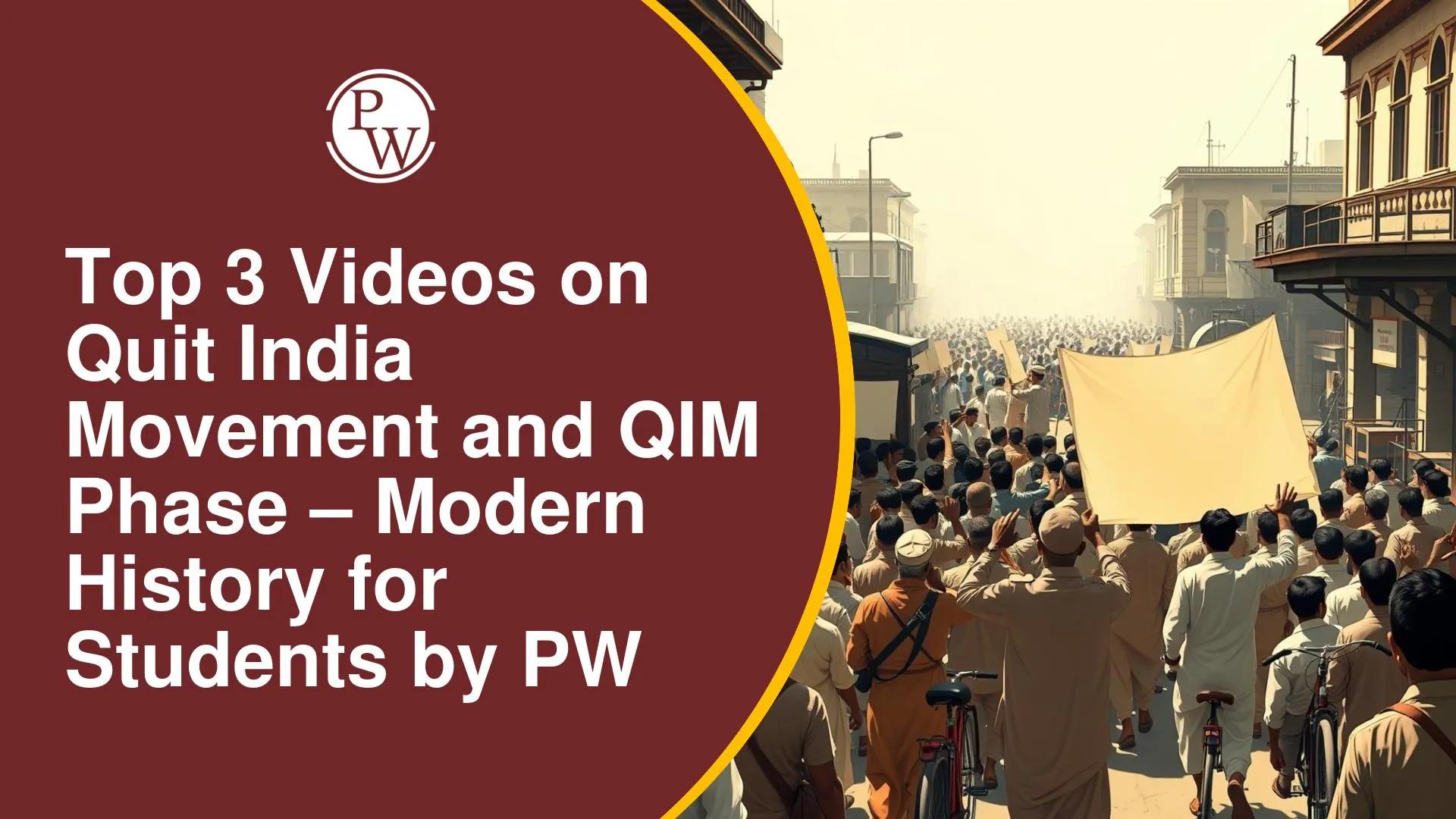
Top 3 Videos on Quit India Movement for UPSC Modern History by PW


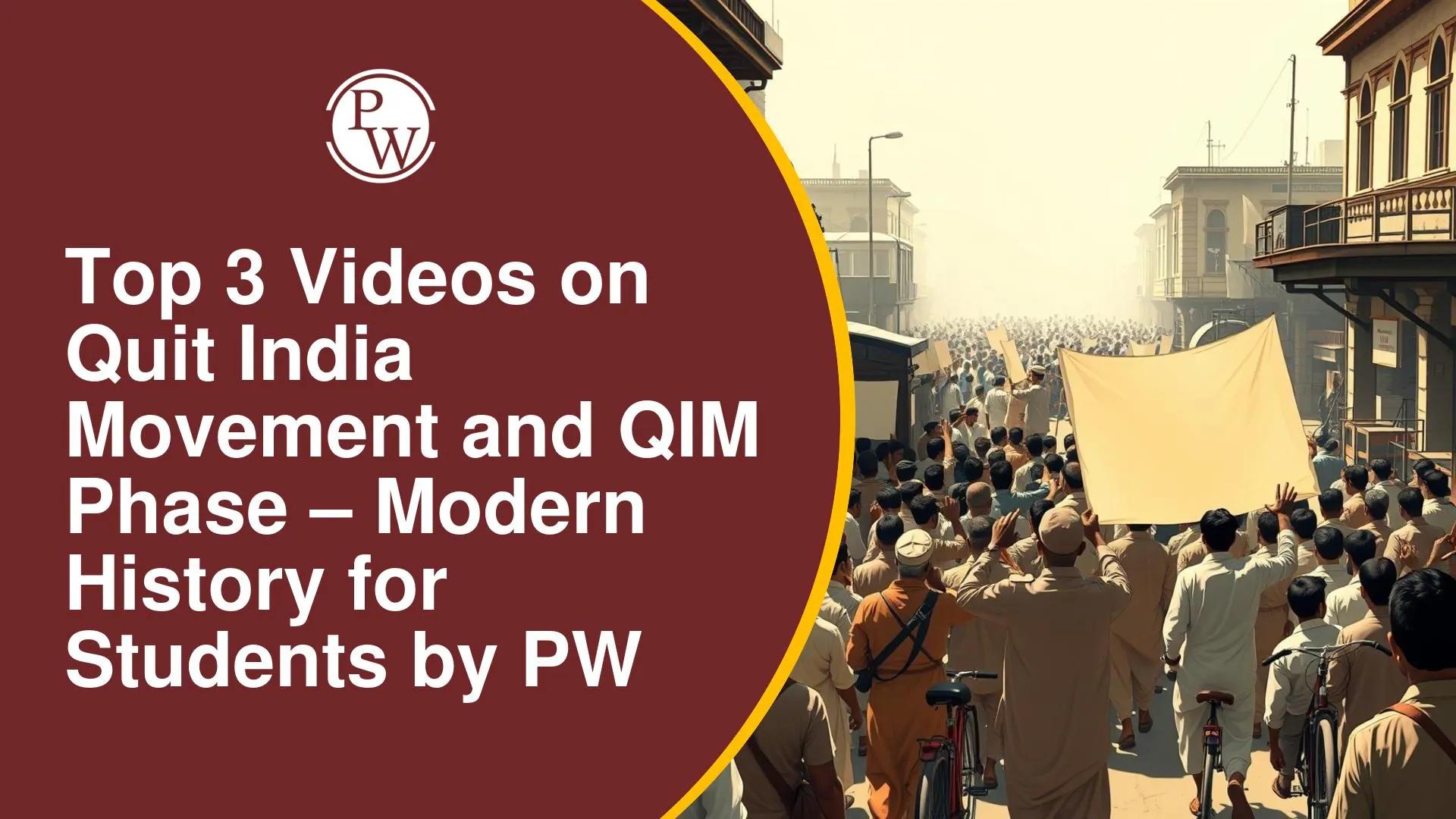
For UPSC aspirants, the Quit India Movement and its phases can be challenging because you must remember numerous events, leaders, causes, and consequences in the right chronological order. Confusion often arises between the movement’s distinct phases, British suppression, underground resistance, parallel governments, and the wider World War II context during revision.
Physics Wallah videos make the Quit India Movement and QIM phases easier to revise for UPSC through clear explanations and connected timelines. You can grasp the historical background, recall key developments accurately, link the movement with Subhas Chandra Bose's INA, and structure sharper Mains answers for efficient exam revision.
Video 1: Build Full Chapter Understanding Of Quit India Movement, Pakistan Demand, And INA
In this video, you study the movement’s background and major developments, the Rajagopalachari Formula, Desai–Liaquat Pact, Wavell’s Plan, and Subhas Chandra Bose’s role in the INA. These topics provide a clear understanding of India's freedom struggle during World War II and help you revise important historical events for your UPSC exams.
Use this lesson when you need a structured first reading of connected Modern History topics. It is suitable for building timelines, revising important political developments, and improving recall before school or competitive examinations.
Video 2: Revise Quit India Movement And INA With Events, Trials, And Consequences
The lesson begins by explaining the impact of World War II on India and the negotiations between the British and Indian leaders, covering important developments such as the August Offer, Individual Satyagraha, and Cripps Mission.
It then takes you through the Quit India Movement, Gandhi’s famous Do or Die call, its different phases, British suppression, underground activities, and the formation of parallel governments. You’ll also learn about the role of imprisoned leaders, the movement’s outcomes, Subhas Chandra Bose and the INA, the Red Fort trials, public reactions, and the Royal Indian Navy Mutiny.
Choose this lecture for a full revision cycle after studying the chapter. Its wide coverage supports event linking, cause-and-effect answers, and faster recall of the movement’s connection with India’s independence.
Also Read: Get UPSC Mains PYQs in text format for GS Paper 1, 2, 3 and 4
Video 3: Strengthen Quit India Movement Recall Through Focused Chapter Revision
The lesson takes you through the Quit India Movement and explains why it became an important turning point in India’s freedom struggle. It covers the reasons behind the movement, its launch by Mahatma Gandhi, the famous Do or Die slogan, major events, different phases, and the contributions of key leaders.
If you need a short chapter recap, you can use this lesson before an examination or while revising Modern History notes. It improves timeline recall, helps organise written answers, and supports accurate review of major developments.
Explore Modern History Last 30 Years PYQs for UPSC to practise previous year questions and strengthen your exam preparation.
Why Watch PW Videos on Quit India Movement and QIM Phase?
What these PW Videos on the Quit India Movement and QIM Phase are for:
- UPSC-Focused Coverage: Connects Spectrum Modern History chapters directly with Prelims factual details and Mains analytical themes.
- Clear Chronology: Breaks down overlapping World War II negotiations, QIM phases, parallel governments, and INA trials in easy-to-follow sequences.
- Concept Linking: Explains cause-and-effect relationships between Cripps Mission failure, mass uprisings, underground networks, and post-war British exit.
- Saves Revision Time: Condenses lengthy textbook chapters into crisp, visual timelines ideal for quick last-minute review.
Together, these Physics Wallah videos support preparation through full chapter explanation, connected historical events, focused revision, and exam-oriented recall. You can study the Quit India Movement, QIM Phase, INA, trials, and consequences in sequence, improving accuracy, revision speed, and confidence for upcoming examinations.