






Enterprise Information Systems Concepts, ERP Systems, IT Controls
 Tabassum Mustafa18 Jun, 2025
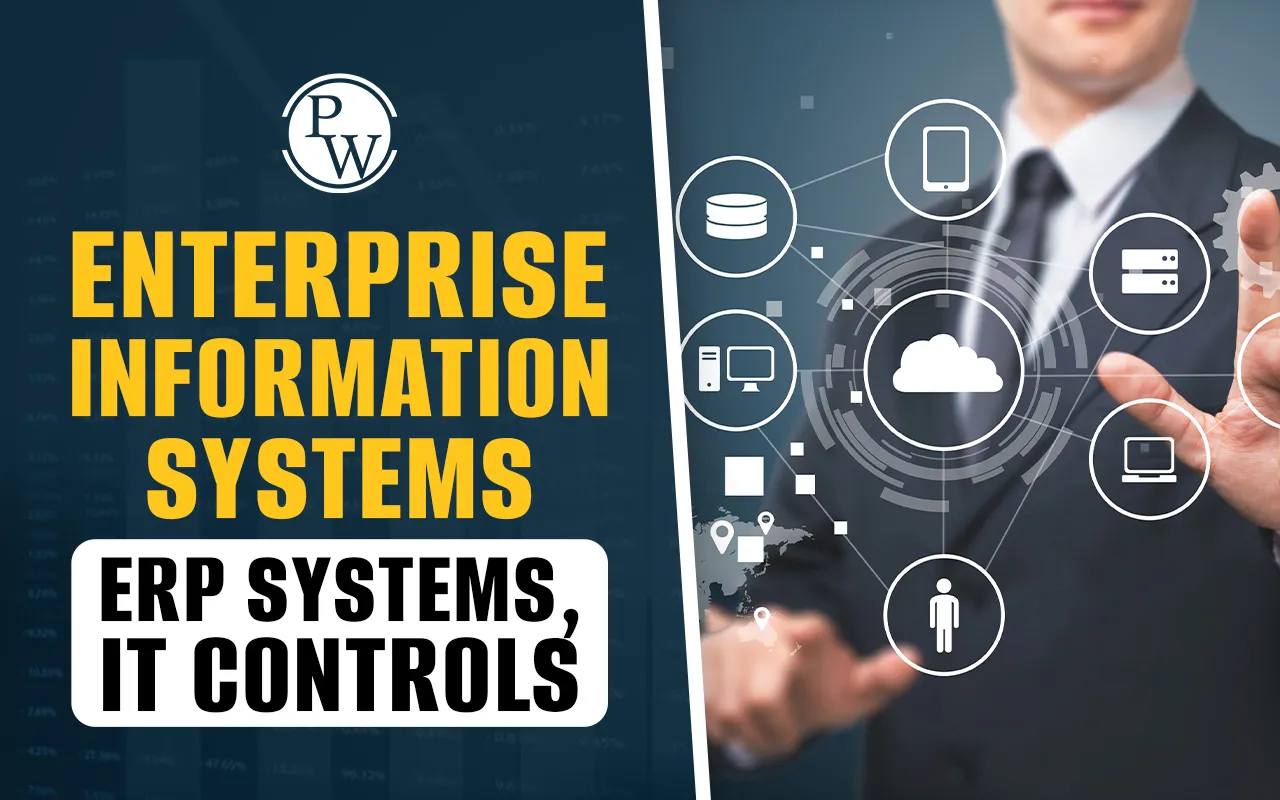
Enterprise Information Systems Concepts: In today’s tech-driven business scenario, besides handling numbers, CAs need to understand how information flows across an organisation. That’s where the Enterprise Information System (EIS) comes in. EIS is crucial to understand how technology supports business processes. Additionally, it enables managers in informed decision-making and ensures data security and efficiency across various departments like finance, HR, procurement, and operations.
Understanding Enterprise Information Systems concepts like ERP systems, IT controls, and data integration helps develop strategies for effective business management and compliance. Whether it's evaluating internal systems or ensuring smooth financial reporting, EIS knowledge helps meet the expectations of modern corporate environments, where accuracy, speed, and transparency are essential.
Besides professional applications, Enterprise Information Systems forms a crucial section of CA Intermediate exams. Candidates preparing for the exam must understand the key topics and concepts provided below to enhance their knowledge and know the importance of EIS in the professional landscape.
Understanding Enterprise Information Systems Concepts
An Enterprise Information System, or EIS, is a powerful technology solution designed to streamline and unify a company’s various business functions. Its main role is to ensure that data and processes across a company's departments are seamlessly connected to ensure efficient communication and decision-making throughout the organisation.
EIS is typically used in large-scale enterprises to handle massive volumes of data and is built to deliver high reliability and performance. However, many medium-sized businesses also rely on Enterprise Information System concepts to align operations through a centralised system.
Modern EIS platforms often work alongside tools like Customer Relationship Management (CRM) and Supply Chain Management (SCM) systems. This process allows businesses to automate routine workflows and improve coordination. The system acts as a backbone for information sharing, ensuring that all departments, from top-level executives to operational teams, have access to accurate and timely data.
Implementing an EIS can lead to shorter turnaround times, faster product development, more efficient marketing campaigns, and improved overall productivity. While the immediate benefits are mostly operational, long-term gains can include cost reductions and streamlined management across the board.
Key Functions of Enterprise Information Systems
Enterprise Information Systems serve two core purposes. These are enhancing daily operations and delivering meaningful insights through data. Here are the significant functions of EIS in operations and providing information:
Operational Functions
The operational functions of EIS in a business are:
-
Automates routine business transactions to reduce manual work.
-
Enhances speed and accuracy in completing daily tasks.
-
Promotes consistency and standardisation across departments.
-
Improves coordination by integrating processes across different units.
Informational Functions
EIS performs the following informational functions in a business:
-
Provides decision-makers with relevant, contextual data.
-
Transforms raw data into useful insights for strategic planning.
-
Ensures easy access to accurate and timely information.
-
Focuses on providing high-quality information, not just large amounts of data.
-
Supports informed decision-making at all organisational levels.
What are ERP Systems in Enterprise Information Systems Concepts?
An ERP system, also known as Enterprise Resource Planning system, is a unified software solution designed to oversee and streamline various core operations within an organisation. ERP systems serve as a centralised platform that connects departments such as finance, accounting, procurement, project management, manufacturing, and supply chain, enabling smooth coordination and data sharing across functions.
These systems can be deployed either in the cloud or on-site. Thus, they offer flexibility depending on business needs. Additionally, ERP software ensures that business activities run efficiently by managing workflows, tracking resources, and maintaining accurate records across the organization.
Besides streamlining routine operations, ERP tools also enhance visibility into company performance by combining data from different departments. This helps leaders make informed decisions with real-time insights into processes like production schedules, inventory levels, or financial outcomes.
Benefits of ERP Systems for Business Growth
Modern businesses increasingly rely on ERP systems to bring together scattered processes, departments, and data under one digital roof. This unification plays a major role in strengthening efficiency, reducing costs, and improving decision-making.
Here are the key benefits of implementing ERP systems in a business:
-
Real-time insights empower leaders to make better, faster decisions based on accurate, up-to-date data.
-
ERP helps reduce costs by eliminating unnecessary tasks and streamlining operations.
-
Facilitates stronger collaboration by allowing departments to work with connected data.
-
Boost productivity with uniform interfaces and standardised processes that simplify operations and execution.
-
Promotes consistency with a unified experience across systems.
-
Helps in easier adoption through intuitive, familiar interfaces that reduce the learning time for employees.
-
Through improved data accuracy and control, ERP minimises the risk of errors and strengthens compliance and accountability.
What are IT Controls in Enterprise Information Systems Concepts?
IT controls are foundational rules and procedures that shape how an organisation manages its technology environment. These controls ensure that systems are developed, used, and maintained securely and efficiently. Within the Enterprise Information Systems concepts, IT controls serve as a backbone for maintaining data integrity, protecting sensitive information, and supporting efficient system performance across the enterprise.
IT controls typically cover a wide range of functions, such as:
-
Managing access to data, systems, and physical infrastructure.
-
Controlling how software is installed and updated.
-
Managing user account setup and permission levels.
-
Protecting sensitive information and regulating how it’s stored and shared.
-
Ensuring the integrity and security of applications and IT infrastructure.
-
Implementing reliable backup procedures and recovery processes.
-
Applying consistent change and configuration management practices.
| Related Links | |
| Advanced Accounting Concepts | Corporate Laws and Governance |
| Cost and Management Accounting | Taxation |
| Time Management Strategies | Equity Capital Markets |
Enterprise Information Systems Concepts FAQs
What is the concept of enterprise information system?
What is the concept of ERP system?
Is ERP an IT system?
What are the three types of enterprise systems?
What is the purpose of the enterprise information system?











 Live & recorded classes available at easeDashboard for progress trackingMillions of practice questions at your fingertips

