
Mechanical Reasoning for UCEED & NID Exams 2027

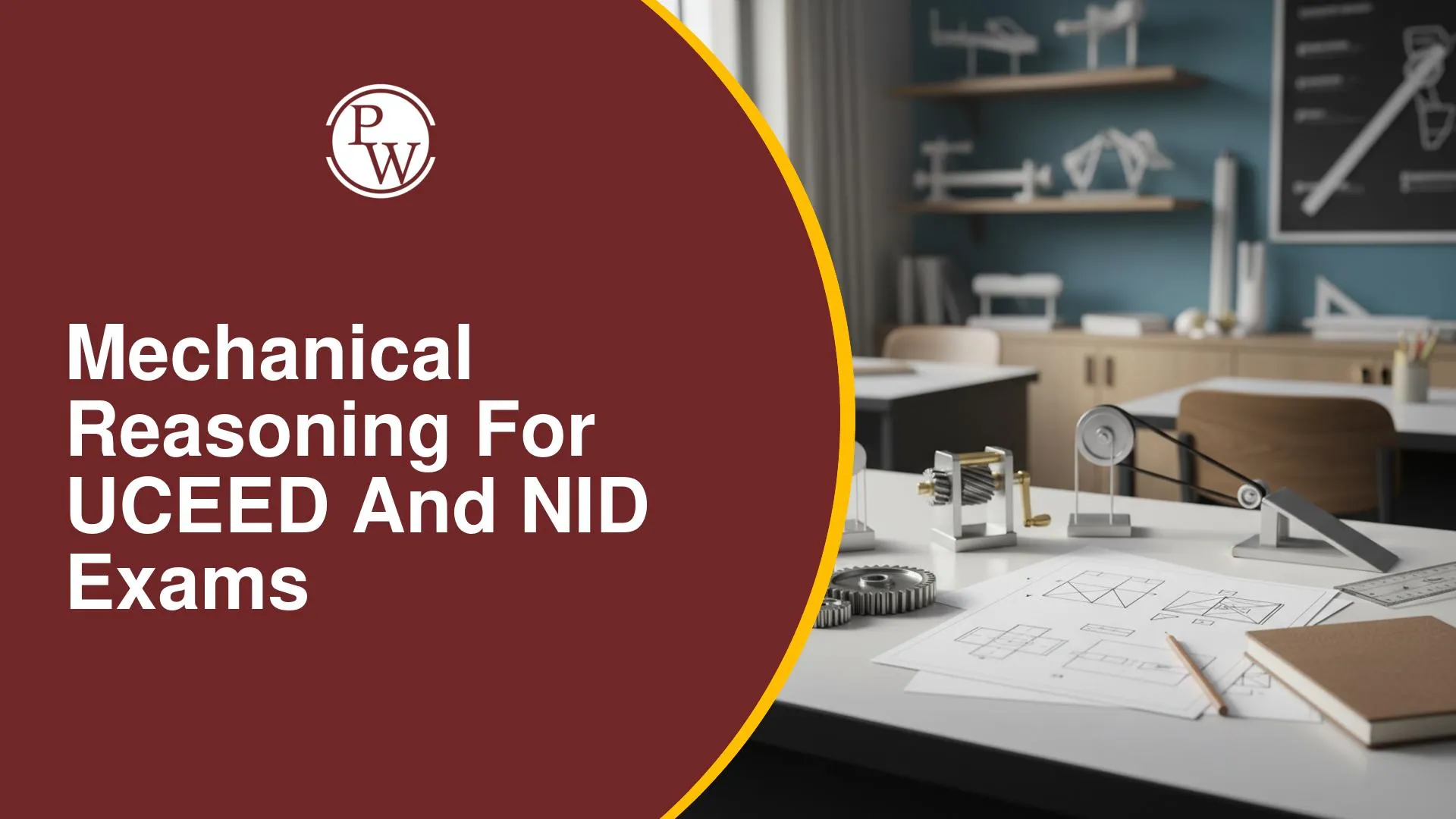
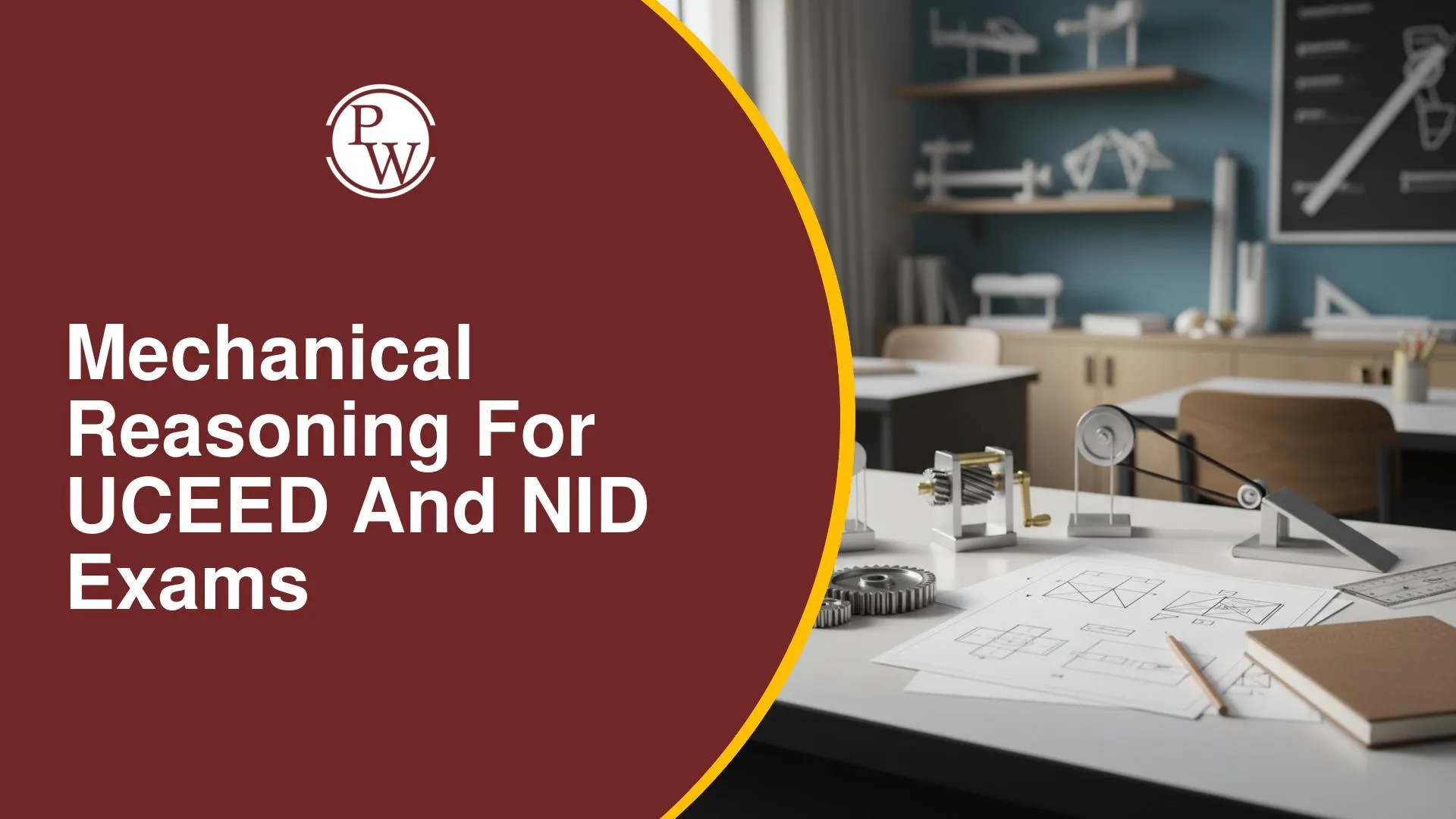
Mechanical reasoning is an important part of aptitude preparation for design entrance exams such as UCEED and NID. It tests your ability to understand how objects move and how simple machines work. Topics such as gears, pulleys, springs and levers can help you prepare for questions based on direction, force, speed and balance.
For UCEED 2027 preparation, focus on understanding the basic concepts and practising different types of mechanical reasoning questions. Learning the rules behind each mechanism will help you solve problems more accurately.
Importance of Mechanical Reasoning for UCEED and NID Exams
Mechanical reasoning tests how well you understand the movement and behaviour of objects. In design entrance exams, these questions may involve diagrams of machines or everyday objects. You may need to identify the direction of rotation, compare forces or determine how a mechanism will behave.
Mechanical reasoning for NID and UCEED can help you develop:
-
Logical thinking: Understand how different parts of a mechanism work together.
-
Visualisation skills: Predict movement by looking at diagrams.
-
Problem-solving ability: Apply basic mechanical principles to unfamiliar situations.
-
Accuracy and speed: Solve aptitude questions using concepts rather than guesswork.
Practise regularly and learn to identify the type of mechanism before solving a question.
Physics Wallah Design Online Batches
Mechanical Reasoning for UCEED and NID Exams 2027 Video Lecture
Watch the video below to learn about mechanical reasoning for UCEED and NID exams. It can help you understand concepts related to gears, pulleys, springs and levers, along with practice questions on gear rotation, force, speed ratios and mechanical systems.
Tips to Prepare for Mechanical Reasoning in UCEED 2027
Use these tips to practise mechanical reasoning for UCEED and NID exams.
-
Learn the basic rules first: Understand how gears, pulleys, springs and levers work before attempting complex questions.
-
Practise with diagrams: Draw arrows to mark rotation and movement. This makes it easier to track the direction of each component.
-
Revise key formulas: Remember the lever equilibrium principle, Hooke's law and the gear speed relationship.
-
Solve questions without guessing: Write down the known values and identify the concept being tested.
-
Practise under time limits: Once you understand the concepts, solve mixed aptitude questions within a set time.
-
Review your mistakes: Check whether an error occurred because of a wrong formula, a calculation mistake or an incorrect interpretation of the diagram.
-
Check the official syllabus and previous papers: Use the latest official UCEED and NID resources to understand the relevant exam pattern and question styles.
Mechanical reasoning for UCEED and NID exams becomes easier when you understand the principles behind each mechanism. Focus on lever equilibrium, spring arrangements, gear rotation and pulley systems. Practise a variety of questions and learn to interpret diagrams carefully. Regular revision of concepts and formulas can help improve your accuracy during UCEED 2027 preparation.
PW supports UCEED preparation with complete UCEED syllabus coverage, live and recorded classes, DPPs, e-modules, question banks, mock tests, sectional and topic-wise tests, PYQs and personalised feedback on drawing assignments.
Mechanical Reasoning for UCEED and NID Exams FAQs
What is mechanical reasoning for UCEED?
Which topics should I practise for UCEED mechanical reasoning?
How do gears rotate in opposite directions?




 Live & recorded classes available at easeDashboard for progress trackingMillions of practice questions at your fingertips