






Difference Between Blood and Plasma, Composition and Functions
 Krati Saraswat7 Jun, 2025
Share
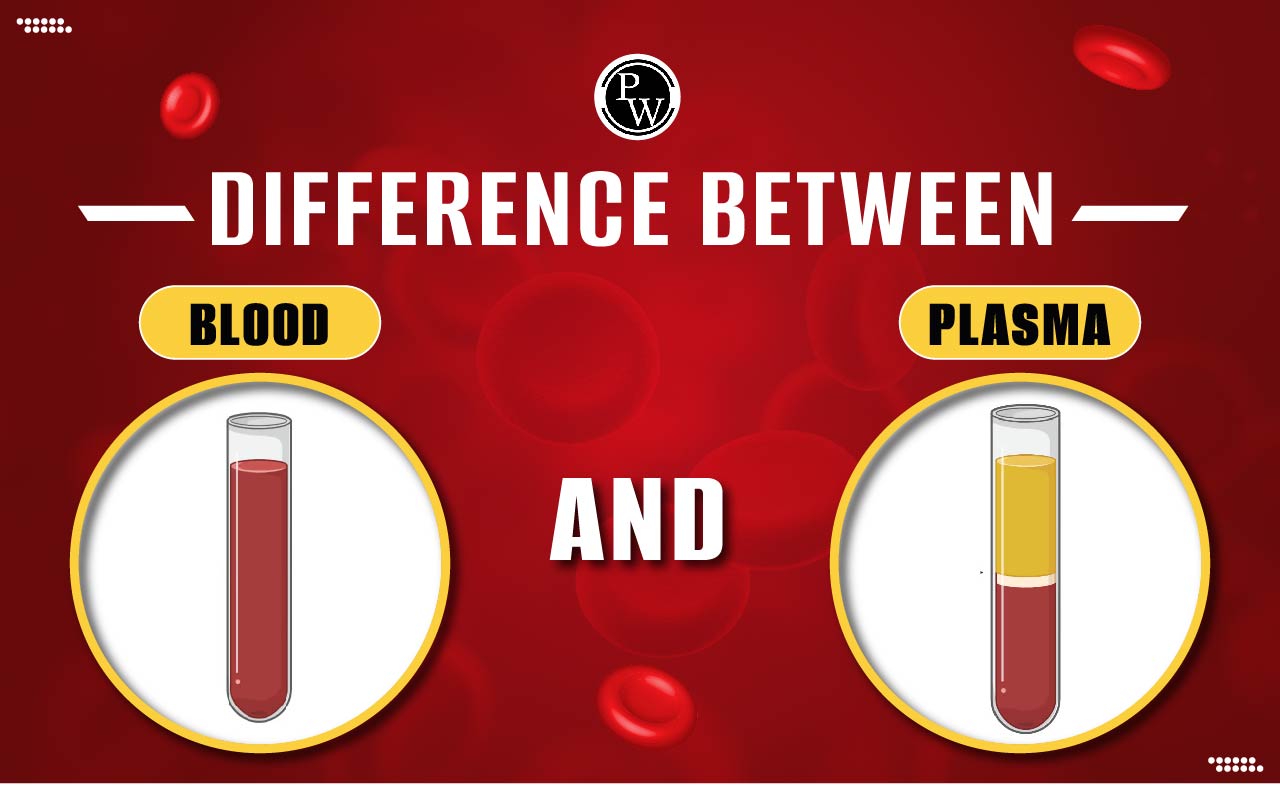
Difference Between Blood and Plasma: The primary difference between blood and plasma is their physical state, with plasma existing in a fluid form and blood encompassing the circulating fluid within the body. Blood is the primary medium for transporting vital nutrients, oxygen, carbon dioxide, and waste products to and from cells. Plasma, a translucent yellowish liquid containing water, salts, and various enzymes, makes up approximately 55% of blood composition.
| NEET Biology Syllabus | NEET Biology Diagrams |
| NEET Biology MCQ | NEET Biology Chapter wise Weightage |
| NEET Biology Notes | NEET Previous Year Question papers |
Blood, on the other hand, is made up of plasma as well as a variety of cellular components such as red blood cells (erythrocytes), white blood cells (leukocytes), and platelets (thrombocytes). It is worth noting that the density of blood is very similar to that of pure water, measuring 1060 kg/m3. The following article will go into greater detail about the differences between blood and plasma.
Difference Between Blood and Plasma Overview
Blood is the primary bodily fluid for transporting essential nutrients, oxygen, carbon dioxide, and waste products to and from cells. Plasma, the liquid component of blood, is a yellowish substance that makes up approximately 55% of the total blood volume. Plasma comprises mainly water (90%), along with proteins such as albumin, fibrinogen, and globulins, nutrients like glucose, fatty acids, and amino acids, as well as waste products including urea, uric acid, lactic acid, and creatinine.
Additionally, plasma contains clotting factors, minerals, immunoglobulins, hormones, and carbon dioxide. Apart from plasma, blood also contains red blood cells (erythrocytes), white blood cells (leukocytes), and platelets (thrombocytes). While plasma is the liquid component of blood, after clotting, the remaining fluid lacks clotting substances but retains other proteins found in plasma.
Difference Between Blood and Plasma
Exploring the intricacies of the human body reveals two crucial elements: blood and plasma. Plasma, the liquid portion of blood, constitutes a significant portion of this essential bodily fluid. It accounts for around 55% of the total blood volume, facilitating the transportation of various substances throughout the circulatory system.
In contrast, blood, recognized as a fluid connective tissue, comprises both plasma and blood cells, with plasma being the predominant component. Plasma can be considered a foundational element within the broader framework of blood. Further clarification of the difference between blood and plasma is provided in the table below:
| Difference Between Blood and Plasma | ||
| Factors | Blood | Plasma |
| Composition | Contains white and red blood cells, plasma, platelets | Consists of glucose, water, dissolved carbon dioxide, amino acids, salts, vitamins, minerals, proteins, antibodies |
| Circulatory Fluid | Primary circulatory body fluid | Fluid component within blood |
| Cellular Components | Includes cellular elements | Does not contain cellular components |
| Transfusion Risk | Carries a risk of incompatibility | No risk of incompatibility during transfusion |
| Clotting Behavior | Forms solid clots when exposed to external environment | Clotting leads to the transformation into serum |
| Role in Cell Production | Responsible for the creation of white and red blood cells, as well as platelets | Produces fat cells and cartilage |
| Antibody Functionality | Generates antibodies | Carries antibodies |
Blood Definition
Blood is an essential component of life in humans and other animals. Its primary function is to transport oxygen and essential nutrients to cells while also removing metabolic waste products. In humans, blood comprises approximately 55% plasma, along with red blood cells (erythrocytes), white blood cells (leukocytes), and platelets (thrombocytes). In addition, vertebrate blood contains haemoglobin, an iron-rich protein that transports oxygen in the bloodstream. Among its various functions, blood:
- Improves the delivery of oxygen and nutrients to tissues.
- Helps eliminate carbon dioxide and waste materials from tissues.
- Promotes the formation of blood clots at injury sites via platelet action.
- Helps regulate the body's temperature and pH.
Plasma Definition
Plasma is an important component of blood, consisting primarily of water and accounting for approximately 95% of the volume. It also contains vital proteins, clotting factors, glucose, electrolytes, CO2, and hormones. Plasma is an important medical resource because it helps to protect the body from infections and blood-related disorders. Fresh frozen plasma is one such plasma-derived product that is essential for treating various injuries and trauma and is thus routinely stored in hospitals and emergency trauma centers. Plasma serves many functions, including:
- Maintaining electrolyte and fluid balance in the body.
- Boosting immune function and improving blood clotting.
- Acting as a protein reservoir in the body.
Difference Between Blood and Plasma FAQs
What are the differences between blood plasma and tissue fluid?
What are two differences between blood cells and plasma?
How do blood plasma and tissue fluid differ?
What distinguishes blood serum from plasma?
What is the color of blood plasma?










 Live & recorded classes available at easeDashboard for progress trackingMillions of practice questions at your fingertips

