Physics Wallah

Coordinate Geometry Class 10 Maths Chapter 7 Exercise 7.1​ PDF

Get clear Class 10 Maths Chapter 7 Exercise 7.1 Solutions , covering key coordinate geometry concepts like plotting points, distance formula, and midpoint formula. These step-by-step solutions help improve accuracy and boost exam preparation for Class 10 Maths.

NCERT Solutions for Class 10 Maths Chapter 7 Exercise 7.1: Coordinate Geometry Class 10 Exercise 7.1 is an important part of the CBSE Class 10 Maths syllabus, helping students understand the basics of locating points on the Cartesian plane.

This exercise builds a foundation for advanced concepts by teaching how to plot points using ordered pairs and interpret their positions on the x–y plane.

Practicing Exercise 7.1 improves accuracy, strengthens conceptual clarity, and boosts problem-solving skills—making it highly valuable for scoring well in exams. Regular practice of such exercises not only enhances confidence but also prepares students effectively for higher-level mathematics.

Class 10 Maths Coordinate Geometry Exercise 7.1 With Solutions 

Solve the following Questions.

1. Find the distance between the following pairs of points:
(i) (2, 3), (4,1)
(ii) (–5, 7), (–1, 3)
(iii) (a, b), (–a, –b)

Answer:

(i) Distance between the points is given by
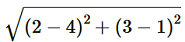
 
Therefore the distance between (2,3) and (4,1) is given by l = chapter 7-Coordinate Geometry Exercise 7.1/image002.png = chapter 7-Coordinate Geometry Exercise 7.1/image002.png = √4+4 = √8 = 2√2

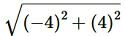
(ii)Applying Distance Formula to find distance between points (–5, 7) and (–1, 3), 

we get l = chapter 7-Coordinate Geometry Exercise 7.1/image002.png = chapter 7-Coordinate Geometry Exercise 7.1/image002.png = √16+16 = √32 = 4√2
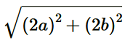
(iii) Applying Distance Formula to find distance between points (a, b) and (–a, –b),
we get l = chapter 7-Coordinate Geometry Exercise 7.1/image002.png = chapter 7-Coordinate Geometry Exercise 7.1/image002.png = chapter 7-Coordinate Geometry Exercise 7.1/image002.png

 
2. Find the distance between the points (0, 0) and (36, 15). Also, find the distance between towns A and B if town B is located at 36 km east and15 km north of town A.

Answer:

Applying the Distance Formula to find the distance between points (0, 0) and (36, 15), 

we get = chapter 7-Coordinate Geometry Exercise 7.1/image004.png = √1296 + 225 = √1521 = 39. Yes, we can find the distance between the given towns A and B.
Assume town A at the origin point (0, 0). Therefore, town B will be at point (36, 15) with respect to town A. And hence, as calculated above, the distance between town A and B will be 39km. 

3. Determine if the points (1, 5), (2, 3), and (–2, –11) are collinear. 

Answer:

Let A = (1, 5), B = (2, 3) and C = (–2, –11). Using the Distance Formula to find the distance AB, BC, and CA.

 chapter 7-Coordinate Geometry Exercise 7.1/image007.png
BC = chapter 7-Coordinate Geometry Exercise 7.1/image008.png
CA = chapter 7-Coordinate Geometry Exercise 7.1/image009.png

Since AB+BC ≠ CA, therefore, the points (1, 5), (2, 3), and (−2, 11) are not collinear. 


4. Check whether (5, –2), (6, 4), and (7, –2) are the vertices of an isosceles triangle. 

Answer:

Let A = (5, –2), B = (6, 4), and C = (7, –2). Using the Distance Formula to find distances AB, BC, and CA.


AB = chapter 7-Coordinate Geometry Exercise 7.1/image011.png
BC = chapter 7-Coordinate Geometry Exercise 7.1/image012.png
CA = chapter 7-Coordinate Geometry Exercise 7.1/image013.png
Since AB = BC. Therefore, A, B, and C are the vertices of an isosceles triangle. 

 
5. In a classroom, 4 friends are seated at the points A (3, 4), B (6, 7), C (9, 4), and D (6, 1). Champa and Chameli walk into the class and after observing for a few minutes Champa asks Chameli. “Don’t you think ABCD is a 
square?”Chameli disagrees. Using the distance formula, find which of them is correct.  NCERT solutions for class 10 maths/image014.jpg

Answer:

We have A = (3, 4), B = (6, 7), C = (9, 4) and D = (6, 1) Using Distance Formula to find distances AB, BC, CD and DA, we get


AB = NCERT solutions for class 10 maths/image015.png
BC = NCERT solutions for class 10 maths/image016.png
CD = NCERT solutions for class 10 maths/image017.png
AD = NCERT solutions for class 10 maths/image018.png
Therefore, All the sides of ABCD are equal here Now, we will check the length of its diagonals. NCERT solutions for class 10 maths/image019.png
AC = NCERT solutions for class 10 maths/image019.png BD = NCERT solutions for class 10 maths/image020.png
So, the Diagonals of ABCD are also equal. We can definitely say that ABCD is a square. Therefore, Champa is correct. 


6. Name the type of quadrilateral formed, if any, by the following points, and give reasons for your answer. 

(i) (–1, –2), (1, 0), (–1, 2), (–3, 0)
(ii) (–3, 5), (3, 1), (0, 3), (–1, –4)
(iii) (4, 5), (7, 6), (4, 3), (1, 2)

Answer:

(i) Let A = (–1, –2), B = (1, 0), C= (–1, 2) and D = (–3, 0) Using Distance Formula to find distances AB, BC, CD and DA,
we get AB = NCERT solutions for class 10 maths/image021.png

BC = NCERT solutions for class 10 maths/image022.png
CD = NCERT solutions for class 10 maths/image023.png
AD = NCERT solutions for class 10 maths/image024.png
Therefore, all four sides of quadrilateral are equal. Now, we will check the length of diagonals.
AC = NCERT solutions for class 10 maths/image025.png
BD = NCERT solutions for class 10 maths/image026.png
Therefore, diagonals of quadrilateral ABCD are also equal. we can say that ABCD is a square.
(ii)Let A = (–3, 5), B= (3, 1), C= (0, 3) and D= (–1, –4)
Using Distance Formula to find distances AB, BC, CD and DA,
we get AB = NCERT solutions for class 10 maths/image027.png

BC = NCERT solutions for class 10 maths/image028.png
CD = NCERT solutions for class 10 maths/image029.png
DA = NCERT solutions for class 10 maths/image030.png
We cannot find any relation between the lengths of different sides. Therefore, we cannot give any name to the quadrilateral ABCD.

(iii)Let A = (4, 5), B= (7, 6), C= (4, 3) and D= (1, 2) Using the Distance Formula to find distances AB, BC, CD, and DA,
we get AB = NCERT solutions for class 10 maths/image031.png

BC = NCERT solutions for class 10 maths/image032.png
CD = NCERT solutions for class 10 maths/image033.png
DA = NCERT solutions for class 10 maths/image034.png
Here opposite sides of quadrilateral ABCD are equal. We can now find out the lengths of diagonals.
AC = NCERT solutions for class 10 maths/image035.png
BD = NCERT solutions for class 10 maths/image036.png
Here diagonals of ABCD are not equal. We can say that ABCD is not a rectangle, therefore it is a parallelogram. 

7. Find the point on the x–axis which is equidistant from (2, –5) and (–2, 9). 

Answer:

Let the point be (x, 0) on x–axis which is equidistant from (2, –5) and (–2, 9).
Using Distance Formula and according to given conditions
we have: NCERT solutions for class 10 maths/image037.pngNCERT solutions for class 10 maths/image038.png
Squaring both sides, we get ⇒ NCERT solutions for class 10 maths/image039.png
(x-2)² + 25 = (x+2)² + 81 x² + 4 - 4x + 25 = x² + 4 + 4x + 81 8x = - 25 - 81 8x = -56 x = - 7
Therefore, point on the x–axis which is equidistant from (2, –5) and (–2, 9) is (–7, 0) 


8. Find the values of y for which the distance between the points P (2, –3) and Q (10, y) is 10 units. 

Answer:

Using the Distance formula,
we have NCERT solutions for class 10 maths/image041.pngNCERT solutions for class 10 maths/image042.png ⇒ 64 + (y +3)² = 100 ⇒ (y+3)² = 100-64 = 36 ⇒ y+3 = ± 6 ⇒ y+3=6 or y+3 = - 6
Therefore, y = 3 or -9

9. If Q (0, 1) is equ
idistant from P (5, –3) and R (x, 6), find the values of x. Also, find the distances QR and PR. 

Answer:

It is given that Q is equidistant from P and R. Using the Distance Formula,
 
we get PQ = RQ NCERT solutions for class 10 maths/image047.png NCERT solutions for class 10 maths/image047.png ⇒√25+16 = √x² + 25 ⇒41 = x² + 25 16 = x² x = ± 4. Thus, R is (4, 6) or (–4, 6). 

When point R is (4,6), PR = NCERT solutions for class 10 maths/image054.png QR = NCERT solutions for class 10 maths/image055.png
When point R is (- 4,6) PR = NCERT solutions for class 10 maths/image056.png QR = NCERT solutions for class 10 maths/image057.png
 

10. Find a relation between x and y such that the point (x, y) is equidistant from the points (3, 6) and (–3, 4). 

Answer:

It is given that (x, y) is equidistant from (3, 6) and (–3, 4). Using Distance formula,
we can write NCERT solutions for class 10 maths/image060.pngNCERT solutions for class 10 maths/image061.png
⇒ (x-3)² + (y-6)² = (x+3)² + (y-4)² ⇒ x² + 9 -6x + y² + 36 - 12y = x² + 9 + 6x + y² + 16 - 8y ⇒36- 16 = 6x + 6x + 12y  - 8y ⇒20 = 12x + 4y ⇒3x + y = 5 ⇒3x + y - 5 = 0

Class 10 Maths Coordinate Geometry Chapter Exercise 7.1

Exercise 7.1 introduces students to the basics of coordinate geometry, including plotting points on the Cartesian plane, understanding coordinates, and interpreting positions accurately.

A detailed PDF with clear, step-by-step solutions is provided to make learning easier and revision faster. This resource is perfect for students preparing Coordinate Geometry Class 10 Exercise 7.1 and aiming to strengthen their fundamentals for exams.

Class 10 Maths Coordinate Geometry Chapter Exercise 7.1


NCERT Solutions for Class 10 Maths Chapter 7 Exercise 7.1 FAQs

What does Exercise 7.1 of Class 10 Coordinate Geometry cover?

It covers plotting points on the Cartesian plane, distance formula, and midpoint formula.

How does this exercise help in exams?

It builds a strong foundation for coordinate geometry, which is essential for scoring well in Class 10 Maths.

What is the importance of the midpoint formula in coordinate geometry?

The midpoint formula is crucial for finding the center point between two given points, which is often needed in problems related to geometry, symmetry, and constructing shapes.

Are there any tricky questions in this exercise?

The exercise is primarily focused on the application of the distance and midpoint formulas, but some problems may involve multi-step solutions or require careful attention to coordinate signs (positive or negative). However, with practice, these problems become easier to tackle.
Free Learning Resources
Know about Physics Wallah
Physics Wallah is an Indian edtech platform that provides accessible & comprehensive learning experiences to students from Class 6th to postgraduate level. We also provide extensive NCERT solutions, sample paper, NEET, JEE Mains, BITSAT previous year papers & more such resources to students. Physics Wallah also caters to over 3.5 million registered students and over 78 lakh+ Youtube subscribers with 4.8 rating on its app.
We Stand Out because
We provide students with intensive courses with India’s qualified & experienced faculties & mentors. PW strives to make the learning experience comprehensive and accessible for students of all sections of society. We believe in empowering every single student who couldn't dream of a good career in engineering and medical field earlier.
Our Key Focus Areas
Physics Wallah's main focus is to make the learning experience as economical as possible for all students. With our affordable courses like Lakshya, Udaan and Arjuna and many others, we have been able to provide a platform for lakhs of aspirants. From providing Chemistry, Maths, Physics formula to giving e-books of eminent authors like RD Sharma, RS Aggarwal and Lakhmir Singh, PW focuses on every single student's need for preparation.
What Makes Us Different
Physics Wallah strives to develop a comprehensive pedagogical structure for students, where they get a state-of-the-art learning experience with study material and resources. Apart from catering students preparing for JEE Mains and NEET, PW also provides study material for each state board like Uttar Pradesh, Bihar, and others

Copyright © 2025 Physicswallah Limited All rights reserved.