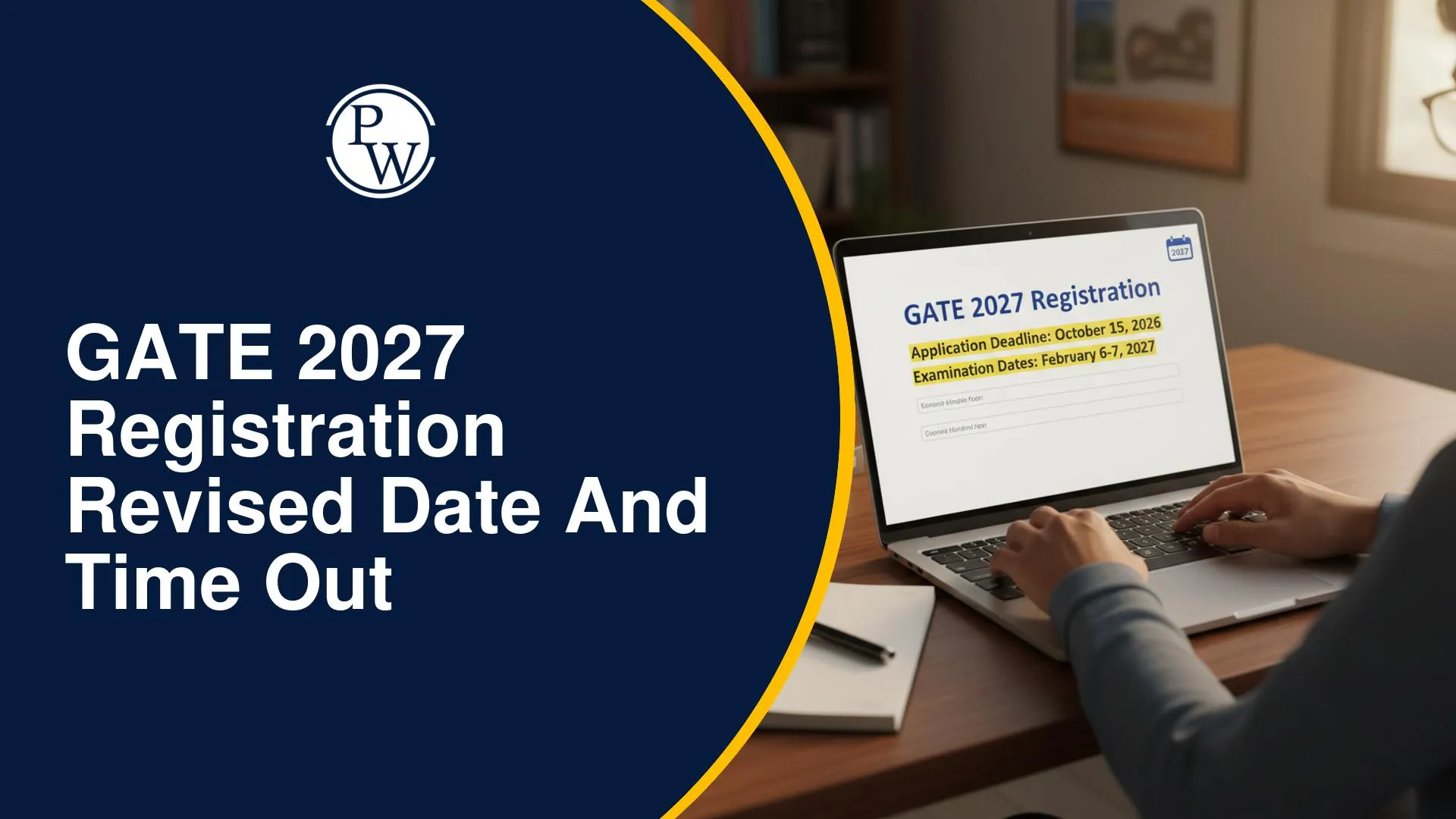
GATE 2027 Trend Analysis: Competition Trends Across All Engineering Branches



The Graduate Aptitude Test in Engineering (GATE) is one of India's most competitive engineering entrance exams. It not only provides admission to M.Tech programmes at IITs, NITs, and IIITs but also opens opportunities in PSUs, research organisations, higher education, fellowships, and even management programmes.
As the engineering job market continues to evolve, the level of competition across GATE papers is also changing. While some branches are witnessing a sharp rise in applicants, others have seen comparatively stable or declining competition. Understanding these trends can help you make informed decisions about your preparation and career.
Also, read:
GATE 2027 Official Website Released
Major GATE 2027 Competition Trends
The level of competition in GATE varies across engineering disciplines and is influenced by factors such as industry demand, career opportunities, higher education prospects, and candidate preferences. Understanding these branch-wise trends can help aspirants make informed decisions about their preparation strategy and set realistic expectations for GATE 2027.
Computer Science (CS) Continues to Lead
Computer Science remains the most competitive GATE paper. Over the past few years, the number of candidates has increased significantly, driven by growing interest in higher studies, PSU jobs, and the changing employment market.
With demand for software professionals and AI-related roles continuing to grow, CS is expected to remain one of the toughest GATE papers in 2027. Aspirants should focus on building strong conceptual understanding and regular practice to secure a competitive rank.
Data Science & Artificial Intelligence (DA) Is Growing Rapidly
Since its introduction as a separate GATE paper, Data Science & Artificial Intelligence (DA) has attracted a large number of candidates. The paper has recorded one of the fastest growth rates among all GATE disciplines.
As industries increasingly adopt AI, machine learning, and data analytics, interest in this paper is expected to rise further. Candidates planning to appear for GATE DA 2027 should prepare thoroughly, as competition is likely to become even stronger.
Electronics Engineering (EC) Is Becoming More Competitive
Electronics Engineering has witnessed steady growth in the number of candidates in recent years. The expansion of the semiconductor industry, VLSI design, embedded systems, and electronics manufacturing has increased career opportunities for EC graduates.
As a result, GATE EC is expected to see higher cutoffs and tougher competition in 2027 than in previous years.
Electrical Engineering (EE) Shows Stable Competition
Unlike CS and EC, the number of Electrical Engineering candidates has remained relatively stable. While competition continues to be healthy, there has not been any significant increase or decrease in recent years.
A good preparation strategy can still help candidates secure admission to top institutes and PSU opportunities.
Civil and Mechanical Engineering Offer Moderate Competition
Civil Engineering and Mechanical Engineering have seen a slight decline in the number of GATE applicants over the past few years. Since the number of seats in premier institutes has remained largely unchanged, the competition per seat has become relatively moderate.
However, this should not be interpreted as an easier examination. Candidates still need a strong score to secure admission to top IITs or recruitment in leading government organisations.
Trends in Other GATE Papers
Other engineering disciplines have shown mixed trends.
-
Instrumentation Engineering (IN): Candidate numbers have increased steadily, resulting in slightly higher competition.
-
Engineering Sciences (XE): Competition has reduced compared to previous years.
-
Chemical Engineering (CH), Production & Industrial Engineering (PI), Aerospace Engineering (AE), and Environmental Science & Engineering (ES): Competition levels have remained relatively stable.
Real Competition Is Smaller Than It Appears
Although lakhs of candidates register for GATE every year, not everyone prepares with the same level of dedication. In reality, the toughest competition comes from a much smaller group of serious aspirants who prepare consistently throughout the year.
This means that disciplined preparation, regular revision, and mock tests can significantly improve your chances of securing a good rank.
How These Trends Can Help You Choose Your GATE Paper
When selecting a GATE paper, it is important to consider both your interests and long-term career goals instead of choosing a branch based only on competition levels.
Highly competitive papers such as CS, DA, and EC often provide excellent placement opportunities and career growth, but they also require stronger preparation due to higher cut-offs.
On the other hand, branches such as Civil, Mechanical, and Electrical Engineering continue to offer opportunities in higher education, PSUs, and government organisations, while maintaining relatively balanced competition.
Choose the paper that best matches your academic background, interests, and career plans.
What Can GATE 2027 Aspirants Expect?
The demand for engineers with interdisciplinary skills is increasing. Professionals who combine core engineering knowledge with emerging technologies—such as coding, AI, automation, or data analytics are becoming more valuable across industries.
As a result, GATE 2027 is expected to witness growing interest in both traditional and emerging engineering disciplines.
Common Myths About GATE
Many GATE aspirants make decisions based on common misconceptions about branches, admissions, and career opportunities. Understanding the reality behind these myths can help you set realistic expectations and make informed choices during your GATE 2027 preparation.
Myth 1: Choosing Computer Science guarantees a job
A CS background may offer more opportunities, but a good placement still depends on your GATE score, technical skills, and interview performance.
Myth 2: Getting into an IIT guarantees placement
Admission to a top institute is only the beginning. Building technical expertise, completing projects, and developing industry-relevant skills remain equally important for successful placements.
Preparation Tips for GATE 2027
The best preparation strategy is to stay consistent rather than looking for shortcuts.
Focus on:
-
Building strong conceptual understanding.
-
Following a realistic study schedule.
-
Solving previous years' question papers.
-
Taking regular mock tests.
-
Revising frequently.
-
Improving time management and accuracy.
Steady preparation over several months is far more effective than last-minute studying.
Elevate your GATE readiness with Physics Wallah’s GATE Online Courses. PW GATE Online Coaching offers comprehensive live sessions tailored to the syllabus, invaluable study materials, practice tests, and much more.
GATE 2027 Trend Analysis FAQs
Which GATE papers are expected to have the highest competition in 2027?
Has competition reduced in Civil and Mechanical Engineering?
Is Data Science & Artificial Intelligence a good choice for GATE 2027?
Does a higher number of applicants mean it is impossible to get a good rank?


Have questions about your prep?
Our experts can answer all your questions

 Live & recorded classes available at easeDashboard for progress trackingMillions of practice questions at your fingertips