







Sacred Groves: Names, Significance, Protection
Sacred groves are patches of trees that are deeply respected by local communities. There are approximately 100,000 to 150,000 sacred groves in India.
 Deeksha Dixit27 Dec, 2024
Sacred groves are unique forested areas that hold significant cultural and spiritual value for local communities. These spaces are often safeguarded by traditional beliefs and practices, serving as vital habitats for various plants and animals.
In a recent judgment, the Supreme Court directed the Union government to formulate a comprehensive policy for the management of sacred groves across India. Read on to learn more about sacred groves and their significance.What Are Sacred Groves?
Sacred groves are small patches of trees and vegetation that are traditionally protected by local communities. These areas are often dedicated to specific deities or spirits and are considered sacred. The belief systems surrounding sacred groves ensure that they are not harmed. In India, approximately 100,000 to 150,000 sacred groves are found in various regions, each with its unique characteristics and significance. They are often associated with rituals, festivals, and community gatherings, and therefore activities like logging, hunting, or even plucking flowers are strictly prohibited.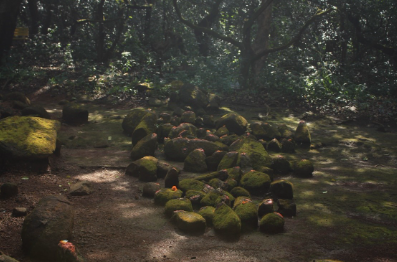 Image Credit: IUCN
Sacred Groves of India
Sacred groves in India are scattered across the country, with a significant presence in states like Uttarakhand, Maharashtra, Karnataka, Kerala, and Tamil Nadu. Each region has its own unique practices and beliefs associated with these groves. In Maharashtra, for example, sacred groves are known as "Devarai" or "Devarakadu." The protection of sacred groves in India is supported by important statutory provisions. The Wild Life (Protection) Act, 1972 empowers state governments to declare private or community land as community reserves. This means that sacred groves can be officially recognized and protected as community reserves under this law. Moreover, the National Forest Policy, 1988 , further strengthens these efforts by encouraging communities with traditional rights over forests to take an active role in protecting and improving these natural resources.Different Names for Sacred Groves
Sacred groves are known by various names across different regions of India. Here are some of the most common names:| Sacred Grove Name | State |
| Sarna | Bihar |
| Dev Van | Himachal Pradesh |
| Devarakadu | Karnataka |
| Kavu | Kerala |
| Dev | Madhya Pradesh |
| Devarahati or Devarai | Maharashtra |
| Lai Umang | Manipur |
| Law Kyntang or Asong Khosi | Meghalaya |
| Oran | Rajasthan |
| Kovil Kadu or Sarpa Kavu | Tamil Nadu |
Significance of Sacred Groves
The importance of sacred groves goes beyond their ecological value. They play a key role in preserving biodiversity and maintaining a healthy environment. Here is why sacred groves are significant:- Biodiversity Conservation: Sacred groves are home to many rare and endangered species. These areas offer protection to plants and animals that may not survive in other environments.
- Cultural and Spiritual Importance: Sacred groves have a strong cultural and spiritual value. Local communities often consider these areas to be the home of gods, spirits, or ancestors. They are often linked to rituals and festivals, enriching the cultural landscape.
- Water Conservation: Some sacred groves help in conserving water. These groves act as natural water catchments, helping to recharge groundwater. This ensures that water remains available for the surrounding areas, especially in rural regions.
- Ecological Balance: Sacred groves maintain ecological balance by preventing soil erosion, promoting biodiversity, and supporting local flora and fauna. They act as green lungs, improving air quality and offering a peaceful environment.
Piplantri Model
One of the most inspiring examples of sacred grove conservation is the Piplantri model in Rajasthan . In this village, the community has taken significant steps to protect and restore their sacred groves. The Piplantri model emphasizes the importance of community involvement in conservation efforts. When a girl is born in the village, the community plants 111 trees in her honor. The villagers believe that protecting the environment is a collective responsibility. They have established rules to ensure that the sacred groves are not harmed. In summary, sacred groves are an essential part of India’s natural and cultural heritage. These groves protect biodiversity, support local traditions, and help maintain ecological balance. Sacred groves must be preserved for future generations. Explore more about these unique ecosystems and stay updated on relevant topics by checking out PW UPSC Courses!| UPSC Related Articles | ||
| Panama Canal | Ken Betwa Link Project | Goa Liberation Day |
| Who Takes UPSC Interview | International Civil Aviation Day | World Soil Day |
Sacred Groves FAQs
What is the meaning of sacred groves?
Sacred groves refer to areas of natural vegetation that hold religious importance and are preserved through traditional beliefs.
Why are sacred groves important?
Sacred groves help conserve biodiversity, maintain ecological balance, and support cultural traditions.
How sacred groves are protected?
Sacred groves are protected by community rules and traditional practices. Some groves are also legally protected by the government.
Where are sacred groves found in India?
Sacred groves are found in many parts of India, including Kerala, Karnataka, Meghalaya, Assam, and Rajasthan.
What is the Piplantri Model?
The Piplantri Model is a community-based effort in Rajasthan, where villagers plant trees to celebrate the birth of girls and protect sacred groves.



🔥 Trending Blogs


Talk to a counsellorHave doubts? Our support team will be happy to assist you!


Check out these Related Articles










Join 15 Million students on the app today!
 Live & recorded classes available at easeDashboard for progress trackingMillions of practice questions at your fingertips


Free Learning Resources
PW Books
Notes (Class 10-12)
PW Study Materials
Notes (Class 6-9)
Ncert Solutions
Govt Exams
Our Other Websites
Class 6th to 12th Online Courses
Govt Job Exams Courses
UPSC Coaching
Defence Exam Coaching
Gate Exam Coaching
Other Exams
Know about Physics Wallah
Physics Wallah is an Indian edtech platform that provides accessible & comprehensive learning experiences to students from Class 6th to postgraduate level. We also provide extensive NCERT solutions, sample paper, NEET, JEE Mains, BITSAT previous year papers & more such resources to students. Physics Wallah also caters to over 3.5 million registered students and over 78 lakh+ Youtube subscribers with 4.8 rating on its app.
We Stand Out because
We provide students with intensive courses with India’s qualified & experienced faculties & mentors. PW strives to make the learning experience comprehensive and accessible for students of all sections of society. We believe in empowering every single student who couldn't dream of a good career in engineering and medical field earlier.
Our Key Focus Areas
Physics Wallah's main focus is to make the learning experience as economical as possible for all students. With our affordable courses like Lakshya, Udaan and Arjuna and many others, we have been able to provide a platform for lakhs of aspirants. From providing Chemistry, Maths, Physics formula to giving e-books of eminent authors like RD Sharma, RS Aggarwal and Lakhmir Singh, PW focuses on every single student's need for preparation.
What Makes Us Different
Physics Wallah strives to develop a comprehensive pedagogical structure for students, where they get a state-of-the-art learning experience with study material and resources. Apart from catering students preparing for JEE Mains and NEET, PW also provides study material for each state board like Uttar Pradesh, Bihar, and others
Copyright © 2026 Physicswallah Limited All rights reserved.