






Learning and Having Fun with Magnets
Magnets have been a source of fascination for centuries, captivating both young and old with their mysterious abilities to attract and repel. In this blog, we'll have fun with magnets, and understand their basic principles to mind-bending experiments and real-world applications.
 Yashasvi Tyagi28 Dec, 2023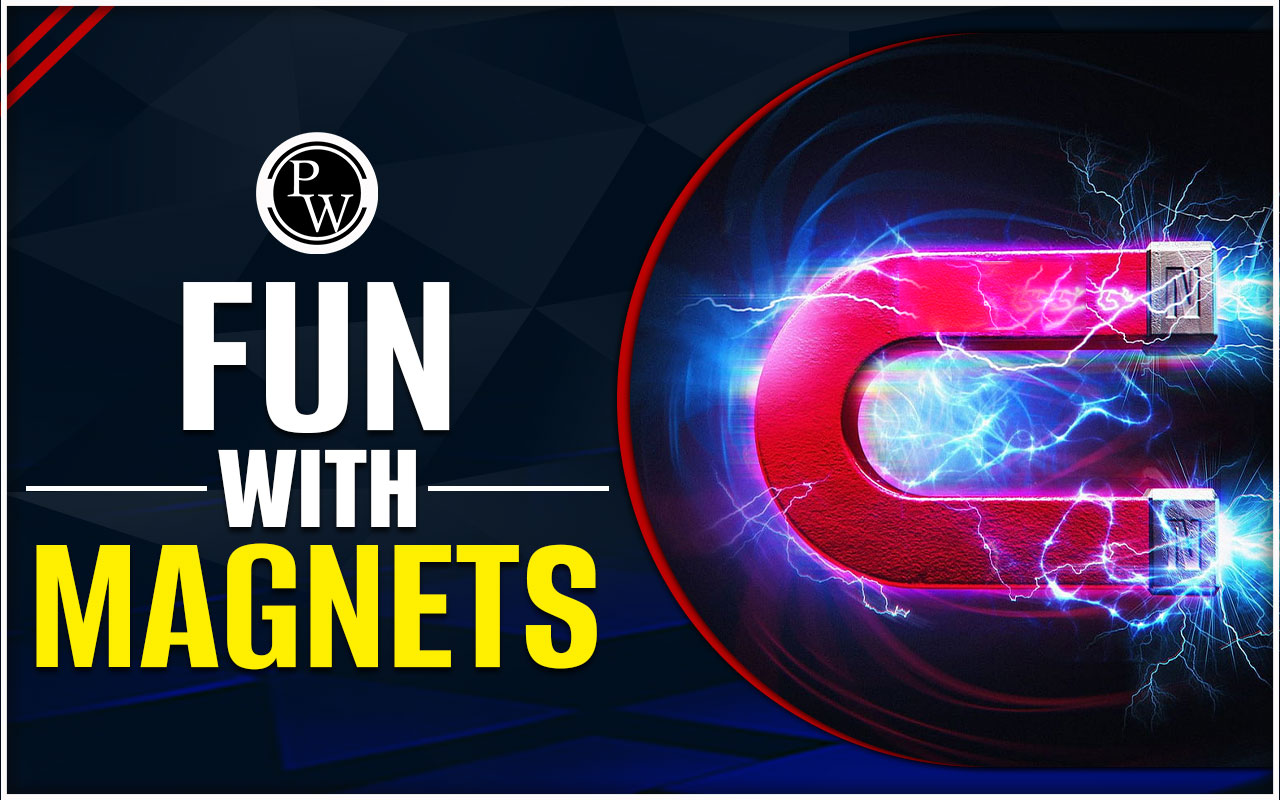
Magnet
Fun with Magnets: magnet is a fascinating natural or man-made object that exerts an invisible force known as magnetism. This force can attract certain materials and align them in a specific manner.Magnetic Materials
Magnetic materials are substances that can be magnetized and are strongly influenced by magnetic fields. They possess domains, regions where atomic magnetic moments align in the same direction, creating a net magnetic effect. There are three types of magnetic materials: Ferromagnetic Materials: Ferromagnetic materials, such as iron, nickel, and cobalt, possess powerful magnetic properties and are capable of being magnetized permanently. The domains within these materials can align and maintain alignment even without an external magnetic field present, allowing the material to retain its magnetism.Light, Shadows, and Reflections
Paramagnetic Materials: Paramagnetic materials are substances that exhibit a weak attraction towards magnets and can become temporarily magnetized when in the presence of a magnetic field. However, once the external magnetic field is removed, these materials lose their magnetism. Examples of paramagnetic substances include aluminum and oxygen. Diamagnetic Materials: Diamagnetic materials exhibit weak repulsion when placed in a magnetic field. Unlike paramagnetic and ferromagnetic materials, diamagnetic materials have all their atomic moments paired, resulting in a canceling out of magnetic effects. Examples of diamagnetic materials include water, copper, and gold.Non-magnetic Materials
Non-magnetic materials, as the name suggests, are substances that do not exhibit strong magnetic properties and are not easily influenced by magnetic fields. They can't be magnetized or attracted to magnets. These materials consist of atoms with paired electron spins, resulting in the cancellation of any overall magnetic effect. Common non-magnetic materials include wood, plastic, glass, and rubber.Application of Magnets
- Electric Motors: Electric motors rely on magnets to generate magnetic fields. These fields then interact with electric currents, resulting in rotational motion. Magnets hold a crucial role in making electric motors work efficiently.
- Magnetic Storage: Hard drives and magnetic tapes utilize the principle of magnetism to store and retrieve data, encoding it in binary code.
- Medical Imaging: Magnetic resonance imaging (MRI) is a medical technique that utilizes strong magnets to produce highly detailed images of internal body structures.
- Magnetic Separation: Magnetic materials are utilized in industries to separate magnetic substances from non-magnetic ones, a process crucial in recycling and waste management.
- Compasses and Navigation: The magnetic properties of the Earth are harnessed in compasses for navigation purposes.
Living Organisms and their Surroundings
Types of Magnets
Magnets are truly fascinating objects. They possess the extraordinary power to attract specific materials, like iron, and generate a magnetic field around themselves. These remarkable tools come in various shapes and sizes, each with its own distinctive properties and countless practical applications. Let's explore some of the most commonly encountered types of magnets:- Bar Magnets: Bar magnets, the most basic and easily identifiable type of magnet, typically have a rectangular or cylindrical shape with a north pole at one end and a south pole at the other. The magnetic field lines flow from the north pole to the south pole. They are frequently employed in educational environments to illustrate fundamental magnetic concepts.
- Dumbbell-Shaped Magnets: Dumbbell-shaped magnets, also known as double-bar magnets, consist of two bar magnets connected at their poles. This configuration enhances the magnetic field strength between the poles, making them more powerful than individual bar magnets. They find applications in devices like magnetic separators and various scientific experiments.
- Horseshoe Magnets: Horseshoe magnets are shaped like a U, resembling an actual horseshoe. The north and south poles are found at the two ends of this U-shape. This design allows the magnetic field to be concentrated between the poles, resulting in a stronger magnet compared to a simple bar magnet of similar size. Horseshoe magnets find applications in various fields that require a powerful magnetic field, such as generators and certain lifting equipment.
- Cylindrical magnets: Cylindrical magnets, as their name implies, have a distinct cylindrical shape. One circular face of the magnet is its north pole, while the opposite circular face serves as its south pole. Within cylindrical magnets, the magnetic field lines typically flow from one pole to the other through the curved surface. This particular design proves beneficial in various applications, such as electric motors and loudspeakers, where their unique shape and radial magnetic field offer advantages.
Magnetic Compass
The magnetic compass is a fundamental navigational tool used to determine direction by utilizing the Earth's magnetic field. It has been a crucial instrument for navigation, both on land and at sea, for centuries. The concept underlying the magnetic compass is straightforward: a magnetized needle suspended freely points in alignment with the Earth's magnetic field, indicating the direction of magnetic north. The basic components of a magnetic compass include:- Magnetic Needle: The heart of the compass is a thin, magnetized needle that is usually balanced on a pivot point so it can move freely. The needle is magnetized to have a north-seeking end (the red or marked end) and a south-seeking end. When the compass is not influenced by external magnetic fields, the needle aligns itself parallel to the Earth's magnetic field lines.
- Compass Housing: The needle is typically enclosed within a circular housing that contains a compass rose. The compass rose is a circular card with markings indicating cardinal directions (north, south, east, and west) and sometimes additional intermediate points.
- Damping Mechanism: To prevent the needle from swinging wildly due to motion or vibration, a damping mechanism is often incorporated. This can be in the form of a liquid-filled chamber that the needle moves through, which dampens its motion and allows it to settle relatively quickly.
- Lubber Line or Index Line: A lubber line or index line is a reference mark on the compass housing that corresponds to the front of the compass. This line is used to read the direction in which the compass is pointing relative to the cardinal directions.
What is Magnetism?
Magnetism is a fundamental force of nature, closely related to electricity, that produces attractive or repulsive effects between objects with magnetic properties. These effects are most commonly observed in magnets, substances that exert magnetic influence. Magnets are essential components in many devices and systems, ranging from everyday items like refrigerator magnets to complex machines such as electric generators and MRI scanners.Magnetite
Magnetite, an iron oxide mineral that occurs naturally and has the chemical formula Fe3O4, plays a significant role in understanding magnetism. Its distinctive crystal structure grants it magnetic properties even in its natural form. Moreover, magnetite is commonly discovered within the Earth's crust and serves as a prevalent constituent in diverse rocks and soils. The mineral known as magnetite derives its name from its magnetic properties. When in its crystalline form, the arrangement of ions within magnetite causes their magnetic moments to align. This alignment results in a macroscopic magnetic field that possesses the ability to interact with other magnetic materials. Magnetite has played a significant role throughout history, particularly as a navigational aid. Ancient mariners discovered that lodestone, a type of magnetite, could align itself with the Earth's magnetic field, providing a basic form of compass. This discovery revolutionized navigation and exploration.Modern Applications of Magnetite
In addition to its historical importance, magnetite continues to be essential in modern technology and industry. Some notable applications include:- Magnetic Recording: Magnetite nanoparticles are used in magnetic storage media like hard drives and tapes for data recording and storage.
- Medical Imaging: Magnetite-based nanoparticles are utilized in MRI contrast agents, enhancing the visibility of tissues and structures in medical imaging.
- Environmental Remediation: Magnetite's ability to adsorb heavy metals from water has led to its use in environmental cleanup efforts.
- Electromagnetic Shielding: Magnetite-containing composites can be used to create materials that shield against electromagnetic interference.
Discovery of Magnets
The discovery of magnets dates back to ancient times, with the earliest records found in ancient Greece and China. The Greeks observed the natural magnetic rock, lodestone, which could attract iron. In China, around 200 BCE, the first compasses were created using magnetic properties. These discoveries paved the way for further exploration into the mysterious forces of magnetism. It wasn't until the 16th century that William Gilbert coined the term "magnetism" and conducted systematic experiments, laying the foundation for modern understanding.Poles of a Magnet
Magnetism is a fascinating phenomenon observed in various aspects of the natural world, and one of its key features is the existence of magnetic poles. These poles are the regions of a magnet where its magnetic field is the strongest and where the magnetic forces originate. There are two types of magnetic poles:- North Magnetic Pole (N): This is the end of a magnet that, when freely suspended, points towards the Earth's geographic North Pole. It's important to note that the north pole of a magnet is not the same as the geographic North Pole; they are actually located in different places. The north-seeking end of a compass needle is attracted to the Earth's magnetic north pole, which is located near the geographic North Pole.
- South Magnetic Pole (S): This is the end of a magnet that, when freely suspended, points towards the Earth's geographic South Pole. Similarly, the south pole of a magnet is not the same as the geographic South Pole; they are distinct points.
Understanding Earth's Magnetic Poles
The Earth acts like a giant magnet due to the molten iron and nickel flowing in its outer core. This movement generates a magnetic field that extends from the planet's interior into space, creating two primary points of interest: the North Magnetic Pole and the South Magnetic Pole.Using Magnets to Find Directions
One of the most straightforward ways to use magnets for navigation is by creating a simple magnetic compass. Here's how you can do it:Materials Needed
- A lightweight, magnetized needle or a piece of magnetized metal (e.g., a sewing needle or paperclip)
- A small, still body of water (such as a bowl of water)
- A leaf or a piece of cork
- Optional: a small piece of wax or clay
Steps
- Magnetize the Needle: Rub the needle or piece of metal in one direction against a magnet. This process aligns the particles in the metal along the magnetic field lines, essentially turning it into a tiny magnet itself.
- Prepare the Leaf or Cork: Attach the magnetized needle to a lightweight object, such as a leaf or a piece of cork, using the wax or clay. Ensure the needle can move freely.
- Float in Water: Place the leaf or cork with the attached needle gently onto the water's surface in the bowl. Allow it to find its equilibrium and settle.
- Observe the Needle's Alignment: As the needle settles, it will align itself with the Earth's magnetic field. One end of the needle will point toward the North Magnetic Pole, while the other end will point toward the South Magnetic Pole.
- Determine Directions: Now that you know which end of the needle points north, you can use this information to find cardinal directions. For example, if the north-seeking end of the needle is pointing at you, you are facing the north. The opposite end of the needle indicates south, and the other two sides correspond to east and west.
Do Opposite Poles of Magnets Really Attract?
In a magnetic field, there are two types of poles: north and south. According to the law of magnetic attraction, opposite poles – north and south – attract each other, while like poles – north and north, or south and south – repel each other. This behavior can be explained by the way magnetic fields are generated by moving electric charges, such as electrons in atoms. At the atomic level, magnetic fields are produced by the alignment of electron spins in atoms. When these electron spins align in the same direction, they create a net magnetic field, resulting in a magnetic domain. When many of these domains align in a material, it becomes magnetized. When two magnets with opposite poles are brought close together, their magnetic fields interact. The magnetic field lines, which are invisible but depict the direction of the force, loop out from the north pole of one magnet and enter the south pole of the other. This alignment of field lines causes an attractive force between the two magnets, pulling them together. The phenomenon of magnetic attraction has significant practical applications. For instance, it's what allows magnets to stick to metal surfaces, making them useful in various industries, from manufacturing to medicine. Magnetic attraction is also behind the operation of electric motors and generators, where the interaction between magnetic fields and electric currents produces motion or electricity. The understanding of magnetic attraction has deepened over the years with advancements in quantum mechanics and our understanding of electromagnetism. In particle physics, the study of subatomic particles has provided insight into the nature of fundamental forces like magnetism.Final Thoughts
Magnets are incredibly cool and exciting! They can stick together, pull things, and even make things move without touching them. From playing with fridge magnets to creating simple experiments, there's so much fun to have with magnets. Remember, magnets are like magic that's real! So, keep exploring and enjoying the wonders of magnets. Looking for a fun and educational way to learn about science? The Fundo Experiment Kit is for you! With its wide variety of experiments, you're sure to find something that interests you. Order your kit today and start exploring the world of science! Related LinksCan magnets lose their power over time?
Yes, magnets can gradually lose their magnetism due to factors like heat, shock, or exposure to other strong magnetic fields. Keep them away from high temperatures to maintain their strength.
Can I create art with magnets?
Absolutely! You can craft intriguing sculptures, interactive magnetic mosaics, and even floating artwork using repelling magnets. It's a unique way to blend creativity with science.
Are magnetic toys safe for kids?
While magnetic toys can be fun, it's crucial to ensure they're designed for the appropriate age group. Small, powerful magnets pose a swallowing hazard, so always supervise playtime.







Check out these Related Articles








Join 15 Million students on the app today!
 Live & recorded classes available at easeDashboard for progress trackingMillions of practice questions at your fingertips


Free Learning Resources
PW Books
Notes (Class 10-12)
PW Study Materials
Notes (Class 6-9)
Ncert Solutions
Govt Exams
Our Other Websites
Class 6th to 12th Online Courses
Govt Job Exams Courses
UPSC Coaching
Defence Exam Coaching
Gate Exam Coaching
Other Exams
Know about Physics Wallah
Physics Wallah is an Indian edtech platform that provides accessible & comprehensive learning experiences to students from Class 6th to postgraduate level. We also provide extensive NCERT solutions, sample paper, NEET, JEE Mains, BITSAT previous year papers & more such resources to students. Physics Wallah also caters to over 3.5 million registered students and over 78 lakh+ Youtube subscribers with 4.8 rating on its app.
We Stand Out because
We provide students with intensive courses with India’s qualified & experienced faculties & mentors. PW strives to make the learning experience comprehensive and accessible for students of all sections of society. We believe in empowering every single student who couldn't dream of a good career in engineering and medical field earlier.
Our Key Focus Areas
Physics Wallah's main focus is to make the learning experience as economical as possible for all students. With our affordable courses like Lakshya, Udaan and Arjuna and many others, we have been able to provide a platform for lakhs of aspirants. From providing Chemistry, Maths, Physics formula to giving e-books of eminent authors like RD Sharma, RS Aggarwal and Lakhmir Singh, PW focuses on every single student's need for preparation.
What Makes Us Different
Physics Wallah strives to develop a comprehensive pedagogical structure for students, where they get a state-of-the-art learning experience with study material and resources. Apart from catering students preparing for JEE Mains and NEET, PW also provides study material for each state board like Uttar Pradesh, Bihar, and others
Copyright © 2026 Physicswallah Limited All rights reserved.