Disorders of Voice, Types, Symptoms & Treatment
Voice disorders affect your ability to speak clearly. Common causes include overuse, benign growths on your larynx or vocal cord tightness. Read the article to know more
 Nivedita Dar30 Sept, 2024
Share
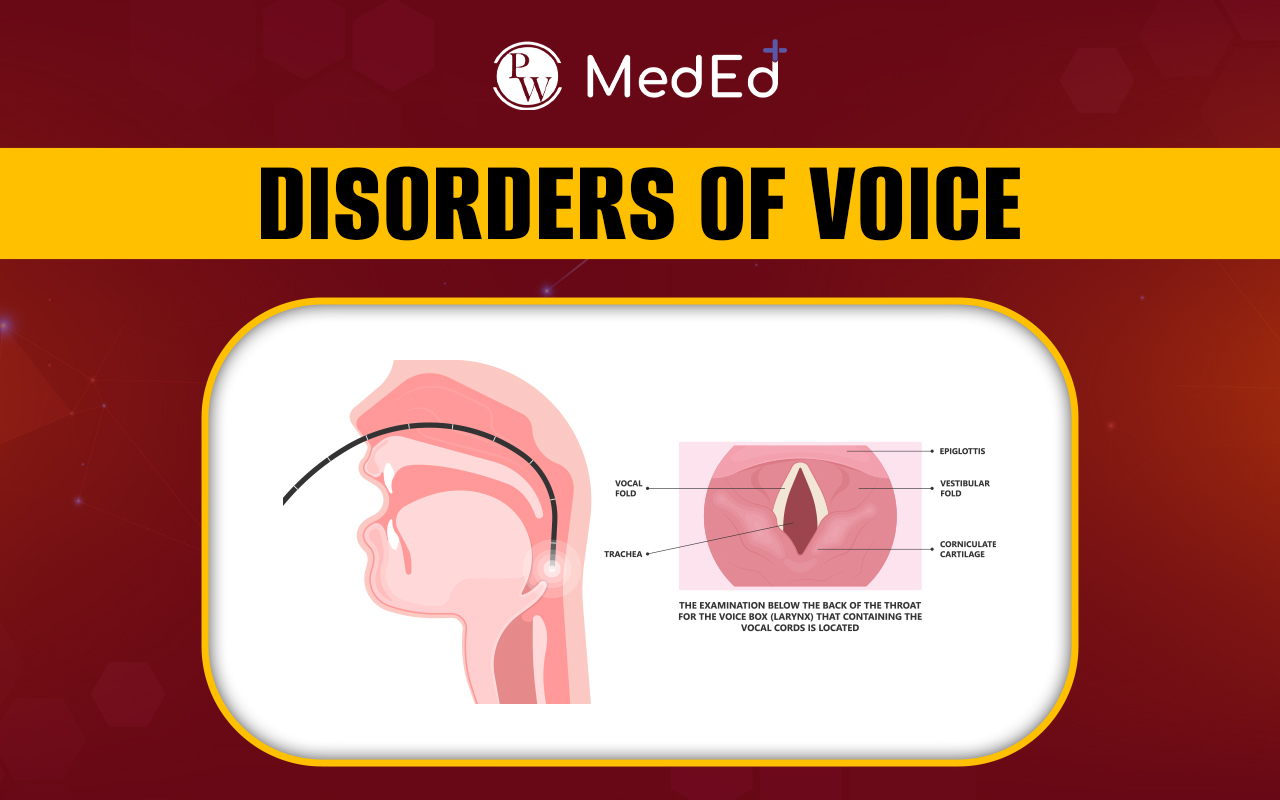
Disorders of Voice: Different Pathologies of sound production. Our voice plays an essential role in communication, allowing us to express ourselves and connect with others. But like other parts of the body, the voice can develop issues that affect how it sounds or how well it functions. These problems are known as voice disorders. While most of us may experience temporary changes in our voice, like hoarseness from a cold, some people experience long-term or recurring voice issues that require medical attention.
Visit - MedEd App
Read More - Pharyngeal Arches
What Are Voice Disorders?
Voice disorders occur when there are problems with the vocal cords or other parts of the throat that produce sound. The vocal cords are two bands of muscle inside the larynx (voice box) that vibrate to create sound when we speak or sing. When they don’t work correctly, the voice can become strained, hoarse, weak, or even disappear entirely. Voice disorders can affect anyone, but they are more common among people who use their voices a lot in their work, such as teachers, singers, or public speakers. They can also affect people with certain medical conditions or habits that strain the vocal cords.Read More - Radiodiagnosis
Common Types of Voice Disorders
There are several types of voice disorders, but we will focus on the most common ones: 1.Laryngitis Laryngitis is inflammation of the vocal cords, which can result in hoarseness or a complete loss of voice. It is often caused by viral infections, like a cold or the flu, and can also occur from overusing the voice, such as shouting or talking loudly for long periods. Laryngitis is usually temporary and goes away with rest and proper care. 2.Vocal Nodules and Polyps Vocal nodules, also known as singer’s nodules, are small, non-cancerous growths on the vocal cords that result from overuse or misuse of the voice. They are common among people who talk or sing a lot without taking breaks. Polyps are larger growths that can also develop on the vocal cords from vocal strain or injury. Both nodules and polyps can make the voice sound hoarse or breathy. 3.Vocal Cord Paralysis Vocal cord paralysis occurs when one or both vocal cords cannot move properly. This can result in a weak or breathy voice, difficulty speaking loudly, or even trouble breathing. Paralysis can happen due to nerve damage, injury, or underlying health conditions like stroke or tumors. 4.Spasmodic Dysphonia Spasmodic dysphonia is a rare neurological disorder that causes involuntary spasms of the vocal cords. This can make the voice sound shaky, strained, or choppy. The exact cause of spasmodic dysphonia is not well understood, but it is thought to be related to issues in the brain’s nervous system. 5.Muscle Tension Dysphonia Muscle tension dysphonia happens when there is excessive strain in the muscles around the vocal cords, leading to a tight or strained voice. It can be caused by overuse of the voice, stress, or improper speaking techniques.Read More - Pelvis and Perineum
Causes of Voice Disorders
Overuse or Misuse of the Voice: Speaking or singing too loudly, talking for long periods without resting, or using poor vocal techniques can strain the vocal cords. Infections : Viral infections, like colds or the flu, can cause temporary problems like laryngitis. Smoking and Alcohol : Smoking irritates the vocal cords and can lead to chronic inflammation, while alcohol can dry out the throat and increase the risk of vocal cord damage. Medical Conditions: Conditions like acid reflux, allergies, and thyroid problems can affect the voice. In some cases, surgery or injury to the throat can also lead to voice disorders. Aging : As we age, the muscles in our vocal cords can weaken, leading to changes in voice quality.Symptoms of Voice Disorders
The symptoms of a voice disorder can vary depending on the type and severity of the problem. Common symptoms include:- Hoarseness or a raspy voice
- Loss of voice or difficulty projecting the voice
- A breathy or weak voice
- Throat pain or discomfort when speaking
- A strained or tight voice
- Difficulty breathing when speaking
Treatment of Voice Disorders
The treatment for a voice disorder depends on the cause and severity of the condition. Common treatment options include: Voice Rest: Resting the voice and avoiding excessive talking or shouting can help heal the vocal cords, especially in cases of laryngitis or vocal strain. Speech Therapy: A speech-language pathologist can teach techniques to improve vocal function and prevent future problems. This can include exercises to reduce tension, improve breathing, and use the voice more efficiently. Medications : In cases where voice disorders are caused by infections, allergies, or acid reflux, medications can be prescribed to treat the underlying cause.Disorders of Voice FAQs
What is the difference between true and false vocal cords?
True vocal cords produce sound by vibrating, while false vocal cords do not produce sound but help close the airway during swallowing.
What is the nerve responsible for voice generation?
The vagus nerve, specifically its branch, the recurrent laryngeal nerve, controls the muscles responsible for voice production.
How can gastroesophageal reflux disease (GERD) cause voice disorders?
GERD can irritate the vocal cords when stomach acid flows back into the throat, causing inflammation, hoarseness, or other voice issues.
What is laryngeal electromyography?
Laryngeal electromyography (EMG) is a test that measures the electrical activity of the muscles in the larynx (voice box) to diagnose nerve or muscle problems affecting the voice.

🔥 Trending Blogs


Talk to a counsellorHave doubts? Our support team will be happy to assist you!


Join 15 Million students on the app today!
 Live & recorded classes available at easeDashboard for progress trackingMillions of practice questions at your fingertips


Free Learning Resources
PW Books
Notes (Class 10-12)
PW Study Materials
Notes (Class 6-9)
Ncert Solutions
Govt Exams
Our Other Websites
Class 6th to 12th Online Courses
Govt Job Exams Courses
UPSC Coaching
Defence Exam Coaching
Gate Exam Coaching
Other Exams
Know about Physics Wallah
Physics Wallah is an Indian edtech platform that provides accessible & comprehensive learning experiences to students from Class 6th to postgraduate level. We also provide extensive NCERT solutions, sample paper, NEET, JEE Mains, BITSAT previous year papers & more such resources to students. Physics Wallah also caters to over 3.5 million registered students and over 78 lakh+ Youtube subscribers with 4.8 rating on its app.
We Stand Out because
We provide students with intensive courses with India’s qualified & experienced faculties & mentors. PW strives to make the learning experience comprehensive and accessible for students of all sections of society. We believe in empowering every single student who couldn't dream of a good career in engineering and medical field earlier.
Our Key Focus Areas
Physics Wallah's main focus is to make the learning experience as economical as possible for all students. With our affordable courses like Lakshya, Udaan and Arjuna and many others, we have been able to provide a platform for lakhs of aspirants. From providing Chemistry, Maths, Physics formula to giving e-books of eminent authors like RD Sharma, RS Aggarwal and Lakhmir Singh, PW focuses on every single student's need for preparation.
What Makes Us Different
Physics Wallah strives to develop a comprehensive pedagogical structure for students, where they get a state-of-the-art learning experience with study material and resources. Apart from catering students preparing for JEE Mains and NEET, PW also provides study material for each state board like Uttar Pradesh, Bihar, and others
Copyright © 2026 Physicswallah Limited All rights reserved.