







NEET 2026 Re-Exam: Biology Easy, Chemistry & Physics Tough
The NEET UG 2026 Re-Exam (ReNEET 2026) held on 21 June 2026 has now concluded. Candidates can check the latest paper analysis, memory-based question papers, answer keys, Physics, Chemistry and Biology reviews, student reactions, and expert solutions updated after the examination.

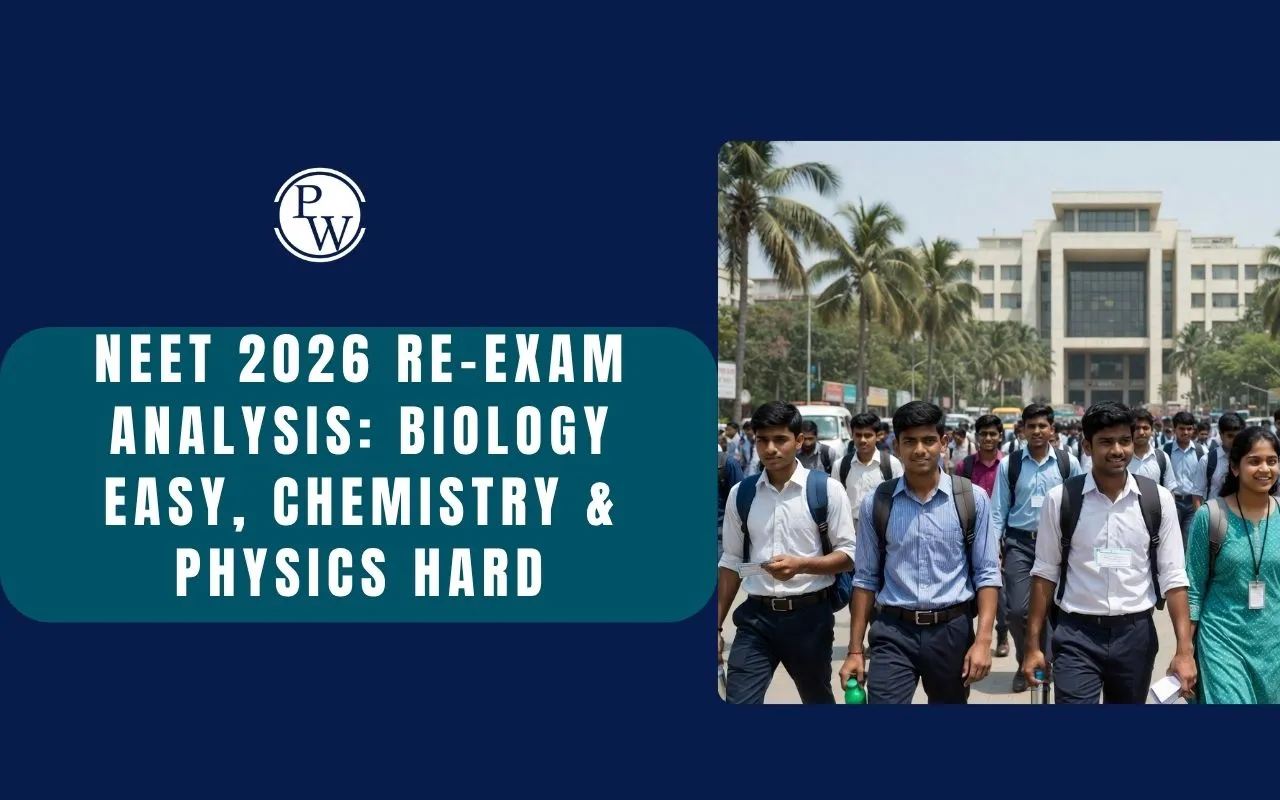
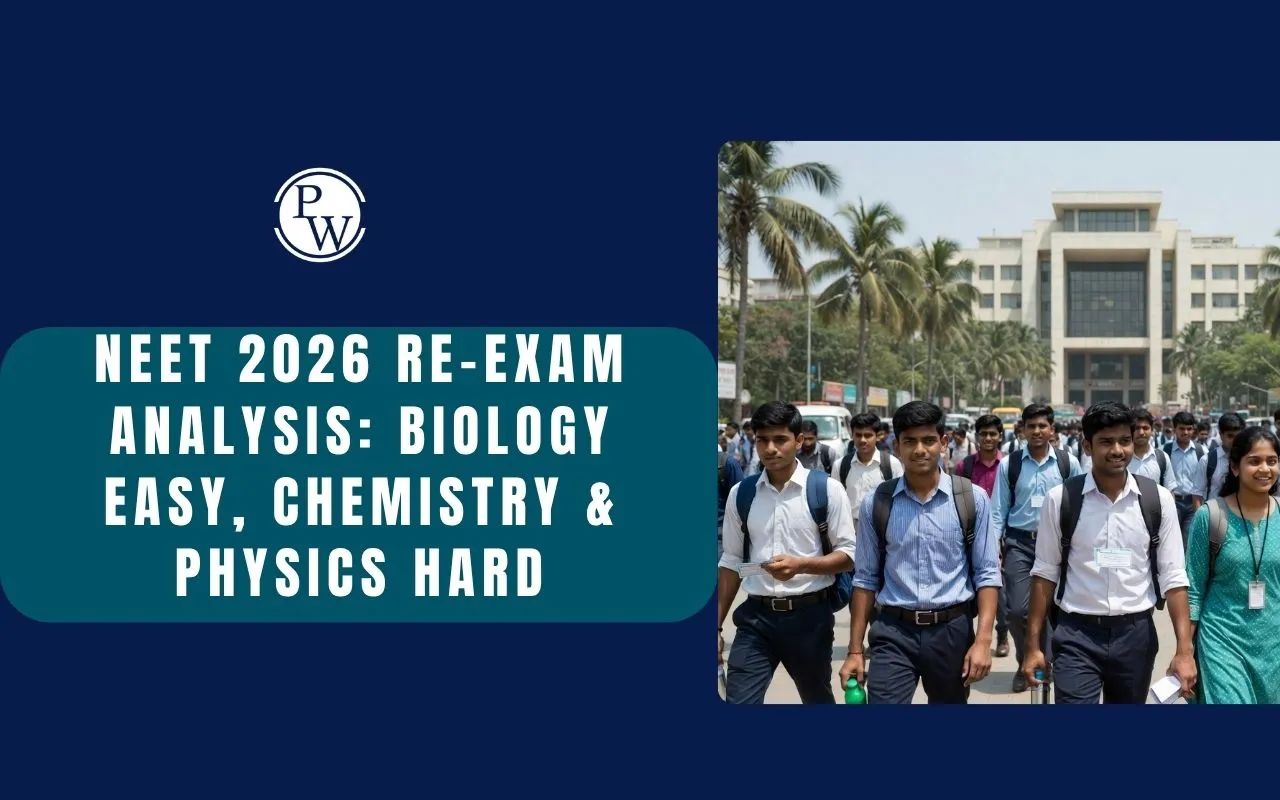
The National Testing Agency conducted the NEET UG 2026 re-examination today, Sunday, June 21, from 2:00 PM to 5:15 PM in pen-and-paper mode across 551 cities in India and 14 cities abroad, for more than 22.8 lakh aspirants. Here's the complete, subject-wise difficulty analysis based on candidate exits and early faculty review.
Why This Was a Re-Exam: The 60-Second Recap
NEET UG 2026 was first conducted on May 3, but NTA cancelled that paper on May 12 after the Rajasthan SOG confirmed a leak that matched a large number of actual questions. Today's June 21 sitting used a completely fresh paper — none of the May 3 questions were repeated — and came with tightened security: biometric checks, CCTV coverage, GPS-tracked transport of question paper boxes, over 2 lakh personnel on duty, and a temporary restriction on Telegram in India to choke off fake "leaked paper" scams targeting anxious students in the run-up to the exam.
Overall Difficulty Level: Moderate, Leaning Tougher Than May 3
The first wave of candidate reactions outside centres in Delhi and Chennai points to a paper that was moderate overall but noticeably more demanding than the cancelled May exam, mainly because of Physics. A Delhi candidate described the set as moderate with Physics running long and harder than May 3, Biology comfortable, and Chemistry sitting in between. In Chennai, a student named Tarun told reporters outside his centre that he'd done well but felt "the exam was tougher than last time." That pattern — Biology cushioning the blow, Physics doing the damage — is consistent with how NEET has trended for several years running.
Subject-Wise NEET 2026 Re-Exam Difficulty Level
Biology — Easy to Moderate (Highest-Scoring Section)
Biology, worth 360 of the 720 total marks across Botany and Zoology, again came through as the most scoring section of the day. Most questions were direct, NCERT-based, and leaned on factual recall and diagram-based items rather than analytical traps. Genetics, Human Physiology, Plant Physiology, Reproduction, and Ecology carried the heaviest weightage. Faculty estimate a good attempt in Biology sits around 75–78 out of 90 questions for well-prepared candidates who'd revised NCERT line by line.
Chemistry — Medium to Hard
Chemistry didn't play it as safe as in some past years. Early reads describe it as a balanced but genuinely tricky mix of Organic, Inorganic, and Physical Chemistry, with Organic Chemistry carrying significant weight and a noticeable share of NCERT-based statement and assertion-reasoning questions designed to test conceptual clarity rather than rote memorisation. Several candidates flagged Physical Chemistry numericals as the section's bigger time-sink, even though Organic itself was largely manageable.
Physics — Medium to Hard (Toughest, Most Time-Consuming Section)
Physics held its reputation as NEET's decider. The section leaned heavily on formula-based, calculation-intensive, and application-driven questions, with Class 12 topics carrying slightly more weight than Class 11. Mechanics, Electrodynamics, Modern Physics, and Thermodynamics dominated the question mix, and time pressure was the single most repeated complaint among students leaving centres — echoing the same "Physics eats your clock" pattern seen on May 3, only sharper this time.
NEET 2026 Re-Exam: Quick Snapshot
| Detail | Information |
| Exam date | Sunday, June 21, 2026 |
| Timing | 2:00 PM – 5:15 PM IST |
| Mode | Offline, pen-and-paper |
| Total questions | 180 (out of 200 printed; 20 optional) |
| Total marks | 720 |
| Marking scheme | +4 correct, −1 incorrect, 0 unattempted |
| Candidates | Over 22.8 lakh |
| Centres | 551 in India + 14 abroad |
| Biology difficulty | Easy to Moderate |
| Chemistry difficulty | Medium to Hard |
| Physics difficulty | Medium to Hard |
| Overall difficulty | Moderate, tougher than May 3 |
What This Means for the NEET 2026 Cutoff
A paper that's harder in Physics and Chemistry but still forgiving in Biology typically produces one of two outcomes: either the cutoff holds close to last year's range because strong Biology scores cushion overall percentiles, or it dips slightly if enough candidates lost significant time to Physics and couldn't complete their Biology attempts. Experts also point to a second factor pushing cutoffs upward this year — competition is unusually intense because this is effectively medical aspirants' second shot at the same admission cycle, with extra revision weeks baked in for everyone. NTA will confirm the actual cutoff only alongside the official result; any number floating online before that is an estimate, not a notification.
What Happens Next
NTA is expected to release the provisional answer key within 10–15 days, opening a brief objection window where candidates can challenge specific questions for a fee per challenge. The final answer key and result typically follow a few weeks after that. Counselling through MCC for the 15% All India Quota and central institutes is broadly expected to open in the first week of August, with the first seat allotment round around mid-August — though these remain provisional timelines pending official NTA notification.
NEET 2026 Re-Exam Paper Analysis FAQs
Was NEET 2026 re-exam harder than May 3?
Which subject was hardest in NEET 2026 re-exam?
.Which subject was easiest?
Where can I download ReNEET 2026 question paper PDF?
Is ReNEET 2026 answer key available?
















 Live & recorded classes available at easeDashboard for progress trackingMillions of practice questions at your fingertips

