

Physics Oscillation and Waves Syllabus for NEET 2026

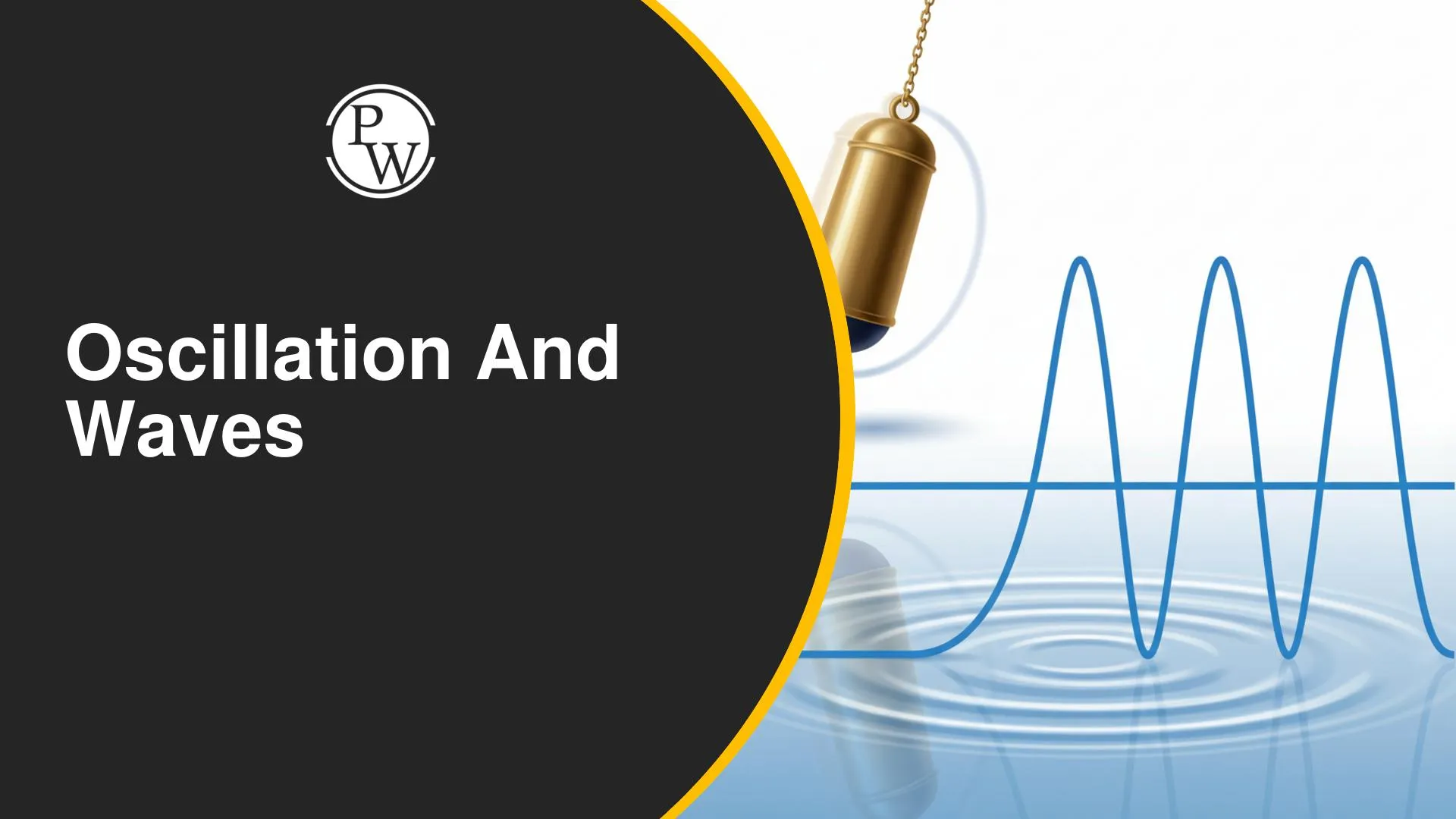
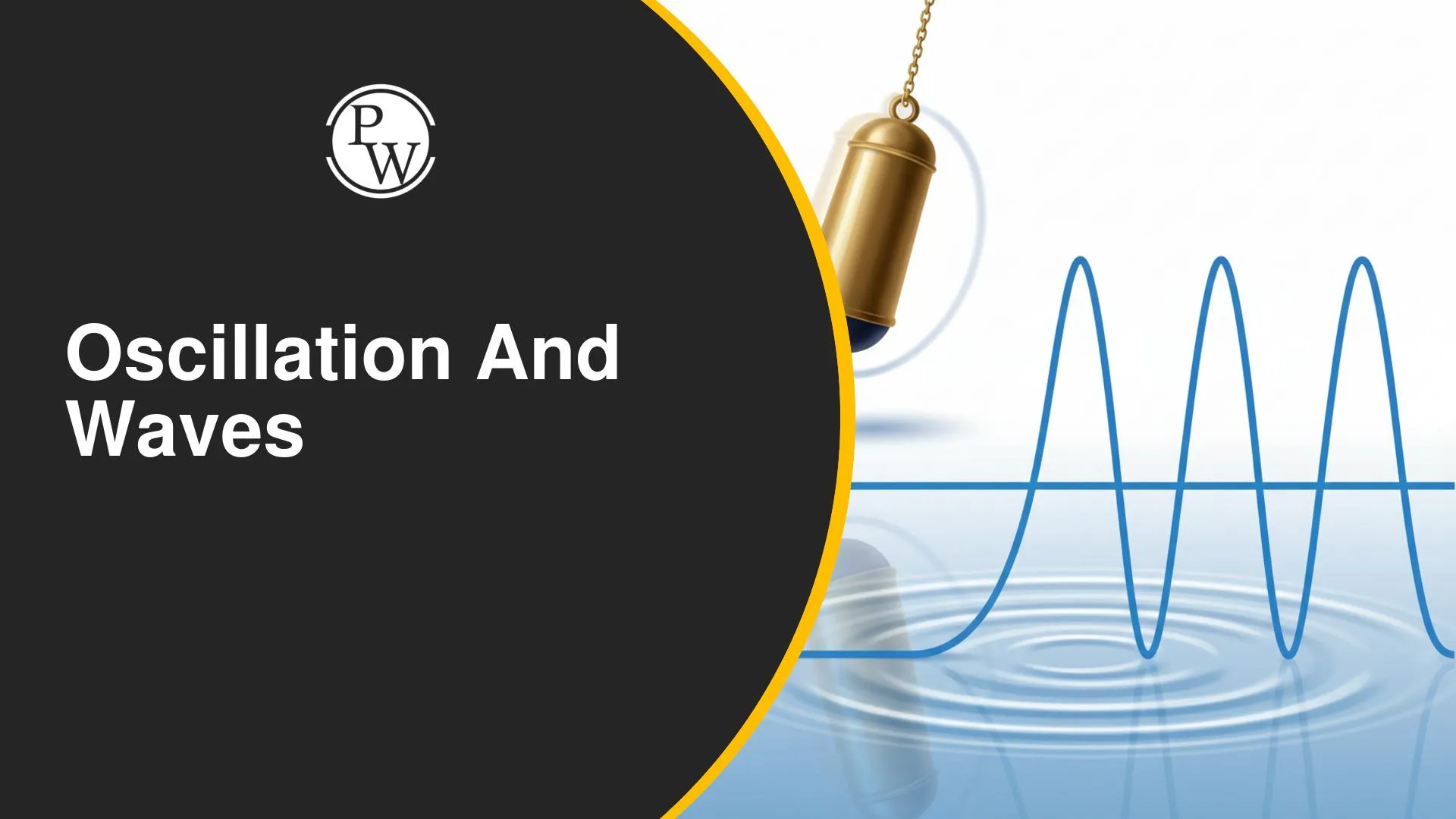
Many natural phenomena in Physics involve repeated motion and the transfer of disturbances through a medium. Oscillations and waves help explain vibrations, sound production, resonance, and energy transfer in systems ranging from springs to musical instruments.
This unit develops the mathematical and physical understanding of periodic motion, restoring forces, and wave behaviour. Concepts from this unit are used in mechanics, acoustics, and modern physics applications.
Periodic Motion and Simple Harmonic Motion
Periodic motion repeats itself after equal intervals of time. Simple Harmonic Motion (SHM) is a special type of oscillation where the restoring force acts toward the mean position and is directly proportional to displacement.
Important quantities in SHM include:
-
Time period
-
Frequency
-
Amplitude
-
Phase
Spring systems and vibrating particles are common examples of SHM.
Oscillations of Spring and Simple Pendulum
A spring-mass system performs oscillatory motion because of the restoring force. The force constant determines how strongly the spring resists displacement.
During SHM, energy continuously changes between:
-
Kinetic energy
-
Potential energy
A simple pendulum also performs periodic motion. Its time period depends mainly on the length of the pendulum and the acceleration due to gravity.
Wave Motion and Types of Waves
Wave motion transfers energy from one point to another without the actual transfer of matter.
Waves are mainly classified as:
-
Longitudinal waves → Particles vibrate parallel to wave direction
-
Transverse waves → Particles vibrate perpendicular to the wave direction
Wave speed depends on frequency and wavelength. Progressive waves continuously transfer energy through the medium.
Superposition, Standing Waves, and Beats
The principle of superposition states that overlapping waves combine algebraically to produce a resultant displacement.
Standing waves are formed due to the interference of two waves travelling in opposite directions. These waves produce nodes and antinodes.
Important applications include:
-
Vibrating strings
-
Organ pipes
-
Harmonics and overtones
Beats are produced when two sound waves of slightly different frequencies interfere.
Oscillation and Waves: Complete Study Resources By PW
Strong preparation for this unit requires formula revision, graph interpretation, and numerical problem-solving practice. Below are the PW study resources for Oscillation and Waves:
|
Resource |
Access |
|
Oscillation and Waves PYQs |
TBR |
|
Oscillation and Waves MCQs |
TBR |
|
Oscillation and Waves Formula Sheet |
TBR |
|
Oscillation and Waves Mind Maps |
TBR |
Oscillation and Waves FAQs
What is simple harmonic motion?
What are standing waves?
What are beats?
What is the role of restoring force in SHM?