







UGC NET History Unit 1 PYQs, Important Questions
UGC NET History Unit 1 PYQs cover early Indian history, including Neolithic settlements, Harappan Civilization, Vedic culture, Buddhism, Jainism, Mauryan administration, Ashokan policies, and important archaeological sites questions. Practicing PYQs helps candidates understand exam trends, strengthen concepts, and revise key facts effectively for better performance in the UGC NET History exam.
 Ekta Rakesh Singh9 Jun, 2026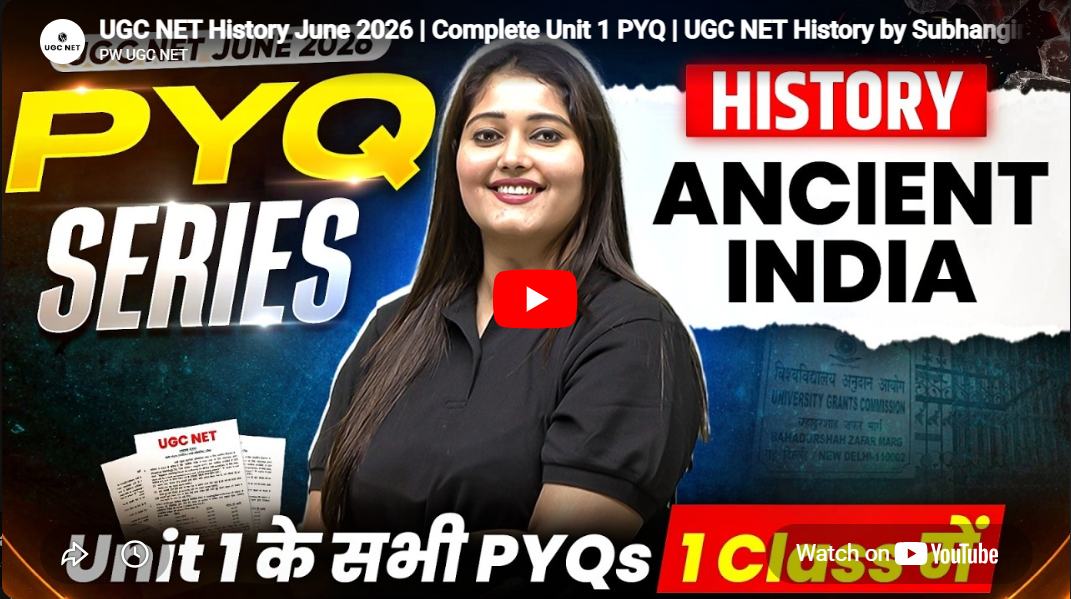
UGC NET History Unit 1 focuses on early Indian history, which is one of the most important sections of Paper 2. It includes topics such as prehistoric cultures, Neolithic settlements, the Indus Valley Civilization, Vedic society, Buddhism and Jainism, Mauryan administration, Ashokan policies, and key archaeological discoveries.
Previous Year Questions (PYQs) from this unit are highly valuable as they highlight frequently asked concepts, important factual details, and exam patterns. Regular practice of these PYQs helps candidates improve conceptual clarity, accuracy, and revision efficiency for the UGC NET History exam.
UGC NET History Unit 1 PYQs
Below are some important UGC NET History Unit 1 PYQs based on early Indian history concepts for quick practice and revision.
Q1. The Neolithic period is mainly associated with:
A) Hunting-gathering
B) Settled agricultural life
C) Urbanization
D) Industrial production
Answer: B
Q2. The “Priest-King” theory of Harappan Civilization was proposed by:
A) R.S. Sharma
B) Stuart Piggott
C) Romila Thapar
D) B.B. Lal
Answer: B
Q3. The author of the Arthashastra is:
A) Ashoka
B) Kautilya
C) Kalidasa
D) Banabhatta
Answer: B
Q4. Ashoka’s Dhamma mainly emphasized:
A) Tax collection
B) Military expansion
C) Ahimsa (non-violence)
D) Caste superiority
Answer: C
Q5. The language used by Buddha for teaching was:
A) Sanskrit
B) Pali
C) Prakrit
D) Tamil
Answer: B
Q6. The Dhammapada is associated with:
A) Jainism
B) Buddhism
C) Vedic religion
D) Ajivikas
Answer: B
Q7. The concept of Syadvada belongs to:
A) Buddhism
B) Jainism
C) Hinduism
D) Charvaka
Answer: B
Q8. Bhimbetka rock paintings were discovered by:
A) Alexander Cunningham
B) V.S. Wakankar
C) John Marshall
D) Mortimer Wheeler
Answer: B
Q9. The Harappan Civilization’s mature phase is dated between:
A) 5000–3000 BCE
B) 2600–1900 BCE
C) 1500–500 BCE
D) 600–200 BCE
Answer: B
Q10. The earliest deciphered script in India is:
A) Kharosthi
B) Brahmi
C) Harappan
D) Devanagari
Answer: B
Q11. Rigveda is divided into how many Mandalas?
A) 8
B) 9
C) 10
D) 12
Answer: C
Q12. The term “Metrology” refers to:
A) Study of coins by weight
B) Study of fossils
C) Study of inscriptions
D) Study of scripts
Answer: A
Q13. The Fourth Buddhist Council was held at:
A) Rajagriha
B) Vaishali
C) Kashmir
D) Pataliputra
Answer: C
Q14. Ajivika sect believed in:
A) Karma theory
B) Niyati (fate)
C) Ahimsa
D) Moksha through devotion
Answer: B
Q15. The Harappan site Kalibangan is known for:
A) Dockyard
B) Camel bones
C) Great Bath
D) Rock paintings
Answer: B
Q16. The Mahajanapada Avanti was located in:
A) Punjab
B) Malwa region
C) Bengal
D) Bihar
Answer: B
Q17. “Man is a political animal” was said by:
A) Plato
B) Aristotle
C) Hobbes
D) Locke
Answer: B
Q18. The “Philosopher King” concept is associated with:
A) Aristotle
B) Plato
C) Rousseau
D) Machiavelli
Answer: B
Q19. The earliest rock paintings in India were discovered by:
A) V.S. Wakankar
B) A.C.L. Carlleyle
C) Mortimer Wheeler
D) B.B. Lal
Answer: B
Q20. The Gupta Era started in:
A) 58 BCE
B) 78 CE
C) 319–320 CE
D) 600 CE
Answer: C
Benefits of Using UGC NET History Unit 1 PYQs
Practicing UGC NET History Unit 1 PYQs is one of the most effective ways to strengthen exam preparation. It helps candidates understand important topics, question patterns, and improve overall accuracy.
-
Helps understand the exam pattern and question style of early Indian history.
-
Highlights frequently asked topics like Harappan Civilization, Buddhism, Jainism, and Vedic culture.
-
Improves concept clarity by linking facts with real exam questions.
-
Boosts revision efficiency before exams.
-
Helps identify important and high-weightage areas.
-
Improves accuracy and speed in solving MCQs.
-
Builds confidence through practice of real exam-level questions.
-
Reduces the chances of repeating common mistakes in the exam.
UGC NET History Unit 1 PYQs FAQs
Q1. What does Unit 1 of UGC NET History cover?
Q2. Why are PYQs important for Unit 1?
Q3. Which topics are most important in Unit 1?
Q4. What type of questions are asked in Unit 1?
Q5. Is Unit 1 scoring in UGC NET History?







Get Free Counselling Today
and Clear up all your Doubts
 Live & recorded classes available at easeDashboard for progress trackingLakhs of practice questions

