







UGC NET History Unit 6 PYQs, Question and Answers
UGC NET History Unit 6 PYQs help candidates revise important Medieval India topics, including the Delhi Sultanate, Mughal Empire, Vijayanagara Kingdom, Bahmani Sultanate, administration, literature, art, architecture, and historical sources. Regular practice of previous year questions improves conceptual clarity, exam readiness, accuracy, and confidence for the UGC NET History examination.
 Aarti .17 Jun, 2026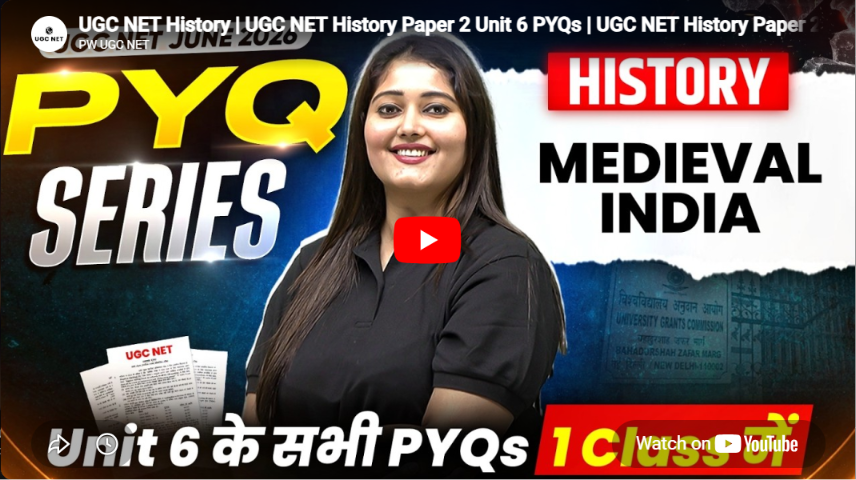
UGC NET History Unit 6 focuses on Medieval India and covers important topics such as the Delhi Sultanate, Vijayanagara Empire, Bahmani Kingdom, Mughal administration, literature, art and architecture, religious movements, and historical sources. Questions from this unit frequently appear in the examination, making it an important area for revision and practice.
Practising UGC NET History Unit 6 PYQs helps candidates understand the exam pattern, identify frequently asked topics, and improve their accuracy in answering objective questions. By revising previous year questions along with key concepts and factual information, aspirants can strengthen their preparation and enhance their chances of scoring well in the UGC NET History examination.
UGC NET History Unit 6 PYQs
The following UGC NET History Unit 6 PYQs have been compiled from previous exam papers to help candidates revise important Medieval India topics and understand the type of questions asked in the examination.
1. Khazain-ul-Futuh was written by:
A. Ziauddin Barani
B. Amir Khusrau
C. Minhaj-us-Siraj
D. Abdul Hamid Lahori
Answer: B. Amir Khusrau
2. The Diwan-i-Kohi was established by:
A. Alauddin Khalji
B. Firuz Shah Tughlaq
C. Muhammad bin Tughlaq
D. Balban
Answer: C. Muhammad bin Tughlaq
3. Who founded the city of Siri?
A. Balban
B. Alauddin Khalji
C. Iltutmish
D. Ghiyasuddin Tughlaq
Answer: B. Alauddin Khalji
4. The work Akbarnama was written by:
A. Ziauddin Barani
B. Amir Khusrau
C. Minhaj-us-Siraj
D. Abdul Hamid Lahori
Answer: B. Abul Fazl
5. Which Mughal emperor appointed Muhtasibs in all provinces?
A. Akbar
B. Jahangir
C. Shah Jahan
D. Aurangzeb
Answer: D. Aurangzeb
6. The term "Sondhar" refers to:
A. Land Revenue
B. Agricultural Loan
C. Military Tax
D. Trade Duty
Answer: B. Agricultural Loan
7. Who introduced Sijda and Paibos in the Delhi Sultanate?
A. Iltutmish
B. Alauddin Khalji
C. Balban
D. Firuz Shah Tughlaq
Answer: C. Balban
8. The Baharistan-i-Shahi is related to the history of:
A. Bengal
B. Gujarat
C. Kashmir
D. Malwa
Answer: C. Kashmir
9. The Battle of Talikota was fought in:
A. 1526
B. 1556
C. 1565
D. 1605
Answer: C. 1565
10. The Nuskha-i-Dilkusha was written by:
A. Khafi Khan
B. Bhimsen
C. Barani
D. Inayat Khan
Answer: B. Bhimsen
11. Match List-I with List-II:
| List-I | List-II |
| A. Polaj | 1. Uncultivated land for 5 years or more |
| B. Parauti | 2. Cultivated every year |
| C. Chachar | 3. Left fallow for some time |
| D. Banjar | 4. Left fallow for 3–4 years |
Answer: A-2, B-3, C-4, D-1
12. Who described Vijayanagara as having "300 ports"?
A. Nicolo Conti
B. Domingo Paes
C. Abdur Razzak
D. Nuniz
Answer: C. Abdur Razzak
13. The Aiyagar System belonged to:
A. Mughal Empire
B. Bahmani Kingdom
C. Vijayanagara Empire
D. Delhi Sultanate
Answer: C. Vijayanagara Empire
14. Who was known as "Kavisarvabhauma" in the Vijayanagara Empire?
A. Allasani Peddana
B. Srinatha
C. Tenali Rama
D. Nandi Thimmana
Answer: B. Srinatha
15. Which traveler compared Daulatabad with Delhi?
A. Ibn Battuta
B. Al-Biruni
C. Marco Polo
D. Tavernier
Answer: A. Ibn Battuta
Benefits of Using UGC NET History Unit 6 PYQs
Practicing UGC NET History Unit 6 PYQs offers several advantages for candidates preparing for the examination. Previous year questions help students understand the types of questions asked from Medieval India and identify the topics that carry significant weight in the exam.
-
Familiarise candidates with the UGC NET exam pattern and question style.
-
Highlight frequently asked topics from Medieval India.
-
Improve conceptual understanding of important historical events, rulers, and administrative systems.
-
Strengthen knowledge of historical sources, literature, art, and architecture.
-
Enhance accuracy and time management during the examination.
-
Help identify strong and weak areas for focused revision.
-
Boost confidence through regular practice.
-
Support effective revision of important facts, dates, and historical terminology.
-
Improve problem-solving and analytical skills required for objective-type questions.
-
Increase overall preparedness for the UGC NET History examination.
UGC NET History Unit 6 PYQs FAQs
What was the primary purpose of the Diwan-i-Kohi department, and who established it?
Who were the 'Khas Khel' during the Bahmani Sultanate, and under which ruler were they significant?
What practices did Balban introduce in the Delhi Sultanate to establish a clear hierarchy?
Name two important literary works by Amir Khusrau and their subjects.
What was the 'Aiyagar system' in the Vijayanagara Empire?







Get Free Counselling Today
and Clear up all your Doubts
 Live & recorded classes available at easeDashboard for progress trackingLakhs of practice questions

