







UGC NET History Unit 2 PYQs, Important Questions with Answers
UGC NET History Unit 2 PYQs help candidates revise Ancient Indian History through exam-oriented previous year questions. These questions cover key topics such as Buddhism, Jainism, the Mauryan and Gupta Empires, Sangam literature, inscriptions, coins, art, architecture, Vedic culture, and chronology. Regular practice improves factual recall, strengthens conceptual understanding, identifies frequently asked areas, and helps candidates become familiar with the UGC NET History Paper 2 exam pattern.
 Neha Tanna22 Jun, 2026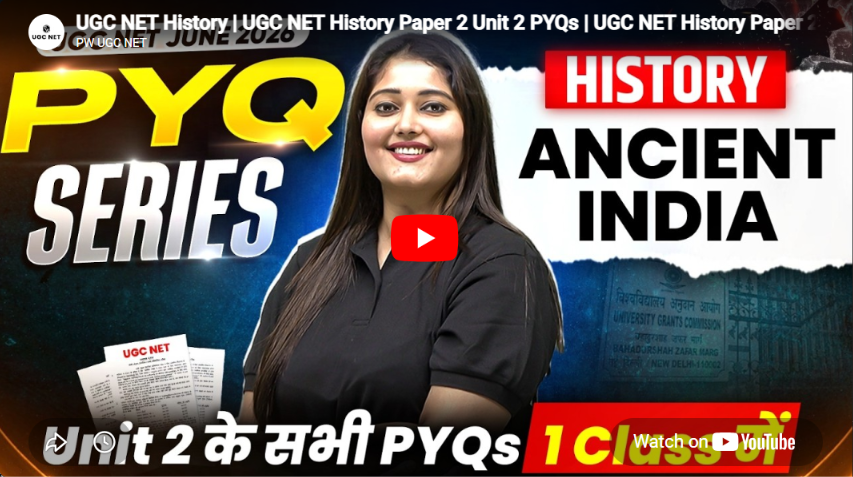
UGC NET History Unit 2 PYQs are useful for revising important topics from Ancient Indian History in an exam-focused way. These previous year questions help candidates understand the question pattern, difficulty level, and frequently asked areas such as Buddhism, Jainism, Mauryan Empire, Gupta period, Sangam literature, inscriptions, coins, art, architecture, and chronology.
Practising Unit 2 PYQs also improves factual recall and helps in quick revision before the exam. Candidates preparing for UGC NET History should solve these questions regularly to identify important trends and strengthen their preparation for Paper 2.
UGC NET History Unit 2 PYQs
Check below for UGC NET History Unit 2 PYQs with answers, covering important Ancient Indian History topics such as Buddhism, Jainism, Mauryan Empire, Gupta period, Sangam literature, inscriptions, coins, art, architecture, and chronology. These questions help students revise faster and understand the exam pattern clearly.
Q1. Which of the following statements are correct about the Gana-Sanghas of Ancient India?
A. They had no single hereditary monarch.
B. They were exactly similar to modern democracies.
C. A permanent standing army was their greatest asset.
D. The procedure of Buddhist monastic organisation was imbibed from the Ganas.
E. In the Licchavis, there were 7707 Rajas.
Correct Answer: A, D and E
Q2. Arrange the following in chronological order.
A. Coronation of Ashoka, the Mauryan king
B. Yuchi tribe was defeated and expelled from Chinese Turkistan
C. Assassination of Brihadratha, the last Mauryan ruler, by Pushyamitra
D. Alexander defeated Darius III and burnt Persepolis
E. Battle between Alexander and Porus
Correct Order: D → E → A → C → B
Q3. Which of the following statements about Buddhism are correct?
A. Buddhists believe in three jewels: Buddha, Dhamma, and Sangha.
B. Sariputta and Tathagata are two different people.
C. Both Theravadins and Mahayanists believed in Buddha’s teachings.
D. Buddha delivered his first sermon at Bodh Gaya.
E. Ashoka’s Lion Capital was installed at Sarnath near Banaras.
Correct Answer: A, C, and E
Q4. The term Akshavapa in the Later Vedic period means:
A. Dice keeper
B. Distributor
C. Charioteer / Sarathi
D. Courier
Correct Answer: A. Dice keeper
Q5. Which texts are associated with the earliest reference of Radha as the beloved of Krishna?
A. Ashtanga Hridaya Samhita
B. Gita Govinda
C. Harsha Charita
D. Brahma Vaivarta Purana
Correct Answer: B and D
Q6. Which of the following statements about ancient Indian art are correct?
A. Didarganj Yakshi belongs to the Mauryan school of art.
B. Sanchi Torso is a famous Gupta sculpture.
C. The Sultanganj Buddha is dated to the Gupta period.
D. Sarnath Buddha in Dharmachakra Mudra is a specimen of Gupta sculpture.
E. The Trimurti Shiva at Elephanta belongs to the Gupta school.
Correct Answer: A, B, C, and D
Q7. Who was the founder of the Vakataka dynasty?
A. Prithvisena I
B. Pravarasena
C. Rudrasena
D. Vindhyashakti
Correct Answer: D. Vindhyashakti
Q8. What are the Satavahanas called in the Puranas?
A. Satakarni
B. Andhras
C. Parashurama
D. Shalivahanas
Correct Answer: B. Andhras
Q9. Varahamihira’s Brihat Samhita talks about:
A. Method of measuring rainfall
B. Astronomical observations
C. Construction of houses and temples
D. Grafting of plants to improve fruit quality
Correct Answer: All of the above
Q10. Neminatha, the 22nd Tirthankara, is associated with:
A. Balarama
B. Rama
C. Krishna
D. Vishnu
Correct Answer: C. Krishna
Q11. Brahmi is a:
A. God
B. Script
C. Language
D. Name of a village
Correct Answer: B. Script
Q12. Hastyayurveda, which deals with the diagnosis and treatment of major diseases of elephants, was written by:
A. Vagbhata
B. Kashyapa
C. Palakapya
D. Sushruta
Correct Answer: C. Palakapya
Q13. Literary sources for the study of history include:
A. Srimad Ramayana
B. Coins
C. Mahabharata
D. Indica of Megasthenes
E. Arthashastra of Kautilya
Correct Answer: A, C, D and E
Q14. Numismatics helps us study:
A. Economy of the time
B. Denomination of coins
C. Metal used in coins
D. Wood industry
E. Portraits of rulers
Correct Answer: A, B, C and E
Q15. Match the following works with their themes.
A. Kumarasambhava
B. Vikramorvashiyam
C. Ritusamhara
D. Malavikagnimitram
-
Fairy-tale love story of a nymph with a mortal
-
Wedding of Shiva and Parvati and birth of Kumar
-
Drama and court comedy of Shunga times
-
Description of six seasons
Correct Matching: A-2, B-1, C-4, D-3
Q16. Which of the following statements about Kanishka are correct?
A. Kanishka was a follower of Mahayana Buddhism.
B. Buddhist council was held in Kashmir.
C. Taxila was built by Kanishka.
D. The stupa at Peshawar was constructed by a Greek architect named Agesilaus.
E. Nagarjuna and Ashvaghosha were contemporaries of Kanishka.
Correct Answer: A, B, D and E
Q17. Assertion-Reason Question
Assertion: Eulogy of poets was not the basis of legitimisation of political power in early historical South India.
Reason: The poets of the period were dependent on kings for their material well-being.
Correct Answer: Assertion is false, Reason is true.
Q18. The most defining literary feature of the Sangam tradition is:
A. Tamilakam
B. Puram
C. Prabandha
D. Akam
Correct Answer: B and D — Puram and Akam
Q19. Which book belongs to the Second Sangam?
A. Aingurunuru
B. Paripadal
C. Natrinai
D. Tolkappiyam
Correct Answer: D. Tolkappiyam
Q20. Which of the following statements about Megalithic sites are correct?
A. Megalithic sites were centres of distribution and exchange.
B. Many megalithic sites were located on important trade routes.
C. Ports like Arikamedu near Pondicherry were linked to the hinterland through megalithic activity.
D. Excavations at Arikamedu show Roman objects like glass and tableware.
E. Amphorae jars were Roman emperor coins.
Correct Answer: A, B, C and D
Q21. Which of the following was not discovered/proposed by Aryabhata?
A. Earth is round.
B. Earth rotates on its axis.
C. Earth revolves around the Sun.
D. Eclipse happens when Earth’s shadow falls on the Moon.
Correct Answer: C. Earth revolves around the Sun
Q22. The play Devichandraguptam by Vishakhadatta was found in manuscripts of:
A. Bhoja’s Shringara Prakasha
B. Bilhana’s Vikramankadeva Charita
C. Amarasimha’s Amarakosha
D. Gunachandra’s Natyadarpana
E. Kalidasa’s Abhijnanashakuntalam
Correct Answer: A and D
Q23. Karambha in the Rig Vedic period was made of:
A. Grains
B. Barley
C. Sesame
D. All of the above
Correct Answer: D. All of the above
Q24. Arrange the Greek figures mentioned in Rock Edict XIII chronologically.
A. Alexander
B. Antigonus
C. Antiochus
D. Ptolemy
Correct Order: Antiochus → Ptolemy → Antigonus → Alexander
Q25. The public display of inscribed texts on rock faces and free-standing pillars in the Mauryan period was inspired by:
A. Achaemenids
B. Greeks
C. Shakas
D. Parthians
Correct Answer: A. Achaemenids
Q26. In the Gupta Empire’s administrative system, which village-level bodies are mentioned in inscriptions?
A. Ghatika
B. Panchamandali
C. Ashtakuladhikarana
D. Sabha
E. Mandala
Correct Answer: B and C
Q27. Arrange the Mahajanapadas from North to South.
A. Gandhara
B. Matsya
C. Kamboja
D. Ashmaka
E. Avanti
Correct Order: Kamboja → Gandhara → Matsya → Avanti → Ashmaka
Q28. Arrange the land measures in Bengal during Gupta and post-Gupta period from highest to lowest.
A. Kulavapa
B. Dronavapa
C. Pataka
Correct Order: Pataka → Dronavapa → Kulavapa
Q29. Which Upanishad describes the philosophical dialogue between Yajnavalkya and Maitreyi?
Correct Answer: Brihadaranyaka Upanishad
Q30. Which offices were held by Harisena, the author of Prayag Prashasti?
A. Khadyapakika
B. Mahadandanayaka
C. Kumaramatya
D. Sandhivigrahika
Correct Answer: B, C and D
Q31. Which of the following are gold coins of Kumaragupta?
A. Apratigha
B. Rhinoceros-slayer
C. Elephant-rider
D. Sword type
Correct Answer: A, B, C and D
Q32. Ratnahavimshi ceremony is associated with:
A. Rajasuya sacrifice
B. Ashvamedha sacrifice
C. Vajapeya sacrifice
D. Devayajna
Correct Answer: A. Rajasuya sacrifice
Q33. Which of the following statements about Kailash Temple at Ellora are correct?
A. Kailash Temple at Ellora is an unparalleled monument in terms of artistry and craftsmanship.
B. The temple was made by cutting away more than 50 million tonnes of rock from a sloping hill.
Correct Answer: Both statements are correct.
Q34. Which of the following kings is not mentioned among the Aryavarta rulers in the Allahabad Prashasti?
A. Rudradeva
B. Meghavarman
C. Chandravarman
D. Ganapati Naga
Correct Answer: B. Meghavarman
Q35. Mauryan economy was based on:
A. Agricultural output
B. Smithing industry
C. Textile industry
D. Paper technology
E. Excavation of tanks
Correct Answer: A, B, C and E
Q36. Which of the following is not associated with Stupa?
A. It originated as a simple semi-rectangular mound of earth.
B. Gradually, it evolved into more complex structures balancing round and square shapes.
C. Harmika is a balcony-like structure representing the abode of gods.
D. Rising from the Harmika is a mast called Yashti.
Correct Answer: A
Q37. Arrange the following in chronological order.
A. Reign of Ashoka
B. Accession of Chandragupta Maurya
C. Invasion of Alexander
D. End of the Mauryan Empire
E. Rulers of Magadha consolidated power
Correct Order: E → C → B → A → D
Q38. Which Purana provides the list of 30 Satavahana rulers?
A. Matsya Purana
B. Vayu Purana
C. Skanda Purana
D. Vishnu Purana
Correct Answer: A. Matsya Purana
Q39. Which inscriptions contain the signature of Harshavardhana?
A. Madhuban inscription
B. Banskhera inscription
C. Sonipat inscription
D. Navsari inscription
Correct Answer: B. Banskhera inscription
Benefits of Using UGC NET History Unit 2 PYQs
Solving UGC NET History Unit 2 PYQs is one of the best ways to revise Ancient Indian History and understand the exam pattern effectively.
-
Helps students revise Ancient Indian History in an exam-focused way.
-
Gives a clear idea of the UGC NET History question pattern.
-
Helps identify frequently asked topics like Buddhism, Jainism, Mauryan Empire, Gupta period, Sangam literature, inscriptions, coins, art, and architecture.
-
Improves factual recall and memory of important dates, terms, books, rulers, and dynasties.
-
Strengthens chronology-based preparation for Unit 2.
-
Helps candidates understand the difficulty level of previous exams.
-
Makes last-minute revision easier and more valuable.
-
Helps students find weak areas and improve accuracy before the exam.
UGC NET History Unit 2 PYQs FAQs
What are UGC NET History Unit 2 PYQs?
Why should I practice UGC NET History Unit 2 PYQs?
Are Unit 7 PYQs useful for revision?






Get Free Counselling Today
and Clear up all your Doubts
 Live & recorded classes available at easeDashboard for progress trackingLakhs of practice questions

