Indigo Revolt of Bengal: The Blue Mutiny that Shook the British Empire

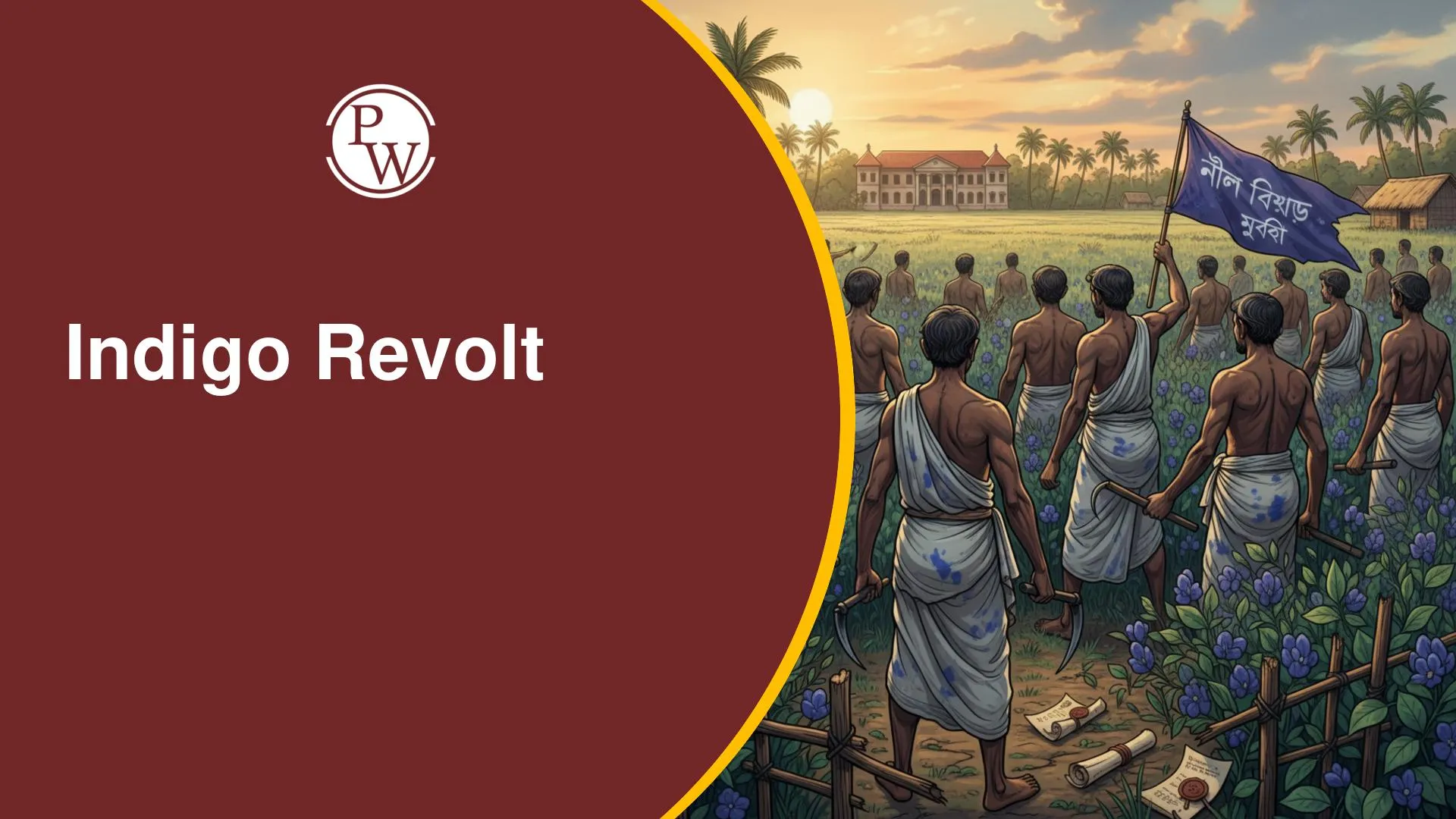
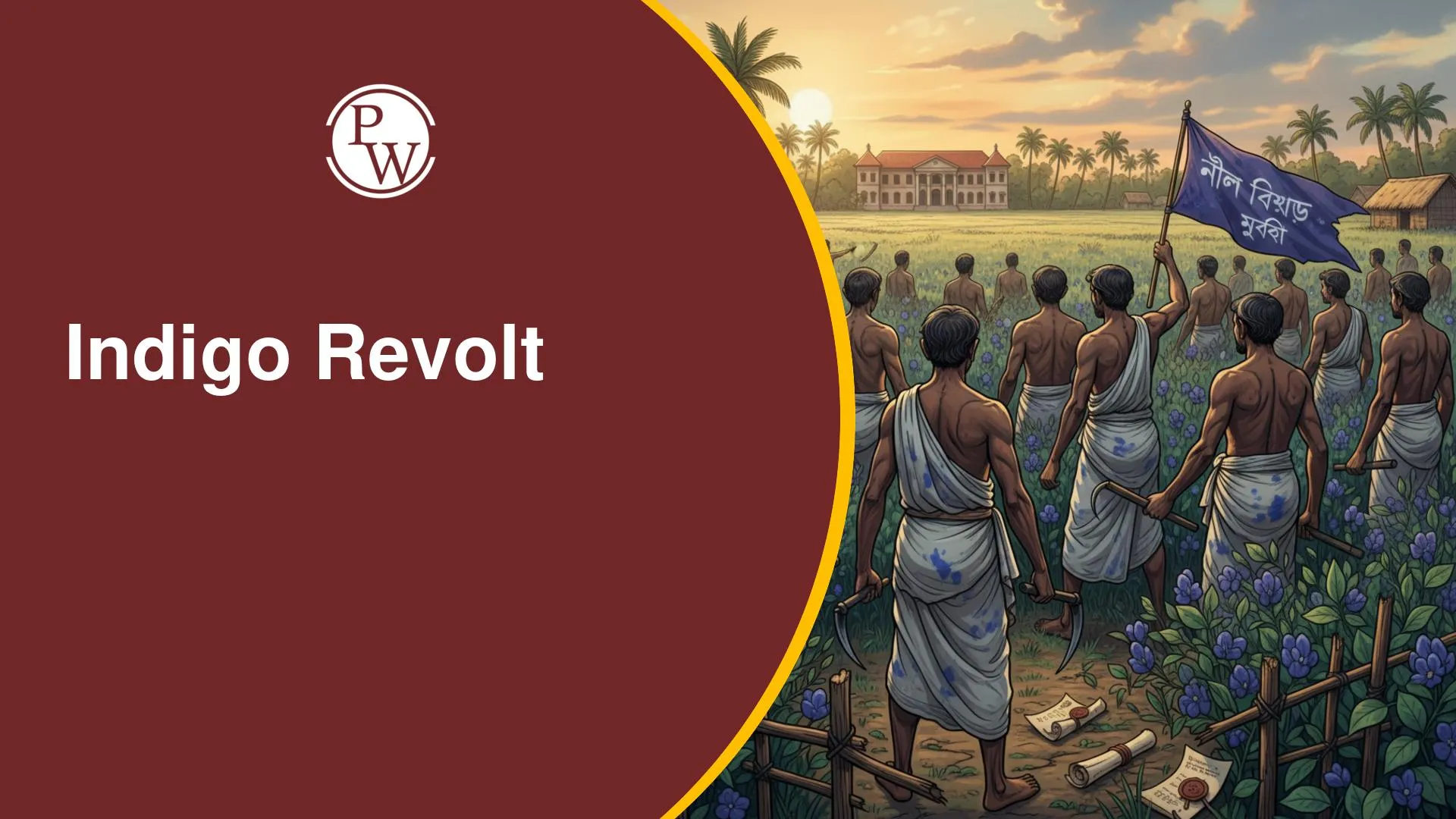
Indigo Revolt, also known as the Blue Mutiny India, remains one of the most significant peasant movements in India. It was a massive Indigo farmers' movement that erupted in Bengal in 1859-60, marking a fierce resistance against the oppressive Indigo plantation system in Bengal.
Unlike many other early agrarian movements in India, the Indigo Revolt 1859-60 saw a unique alliance between peasants, local leaders, and the intelligentsia, ultimately forcing the British colonial government to address the grievances of the rural poor.
Indigo Revolt 1859-60
The Indigo rebellion in Bengal was not a spontaneous riot but a well-organized strike against the exploitation of indigo cultivators. To understand the depth of this movement, one must look at the socio-economic conditions of 19th-century India.
|
Indigo Revolt Overview |
|
|
Aspect |
Details |
|
Period |
1859 - 1860 |
|
Region |
Bengal (Nadia, Jessore, Pabna, etc.) |
|
Major Leaders |
Bishnucharan Biswas, Digambar Biswas |
|
Primary Cause |
Exploitation of indigo cultivators by European planters |
|
Key Outcome |
Formation of the Indigo Commission 1860 and decline of indigo farming in Bengal |
Causes of Indigo Revolt
The causes of Indigo Revolt were deeply rooted in the systemic exploitation of indigo cultivators by European planters. The British demand for blue dye in the textile markets of Europe led to a draconian system in India.
-
Forced Cultivation: Peasants were compelled to grow indigo on their most fertile lands instead of food crops like rice. This created a food security crisis for the local population.
-
The Dadon System: European planters provided small cash advances (dadon) at high interest rates. Once a farmer accepted the advance, they were trapped in a cycle of permanent debt that often passed from father to son.
-
Low Remuneration: The price paid for indigo was far below the market rate, making it a loss-making venture for the farmers.
-
Violence and Coercion: The role of European planters in Indigo Revolt was characterized by the use of "Lathiyals" (armed retainers).
These private armies were used to kidnap, flog, and destroy the property of any Indigo Peasants protest sympathizers.
Indigo Revolt Features
The Indigo Revolt features a high level of organization and non-violent resistance that was ahead of its time. It was a precursor to the mass movements of the 20th century.
-
Social Boycott: Cultivators organized a massive social boycott of the planters and their local agents (Gomasthas).
-
Refusal to Pay Rent: The peasants refused to pay rent to Zamindars who supported the planters.
-
Legal Battles: Armed with knowledge from the urban intelligentsia, many peasants took their grievances to colonial courts, showing a sophisticated understanding of the legal system.
-
Cross-Class Solidarity: The movement saw support from local Zamindars and the educated middle class of Calcutta, who wrote extensively about the plight of the farmers.
Role of Dinabandhu Mitra and Nil Darpan
The role of Dinabandhu Mitra Nil Darpan cannot be overstated in the history of the Indigo rebellion Bengal.
-
Nil Darpan (The Mirror of Indigo): Published in 1860, this play vividly depicted the atrocities committed by planters and the suffering of the peasants.
-
Impact on Public Opinion: It humanized the indigo peasants protest for the urban elite. The English translation (attributed to Michael Madhusudan Dutt) brought international attention to the exploitation of indigo cultivators.
Indigo Revolt Leaders
While the movement was widespread, specific Indigo revolt leaders emerged from the grassroots to provide strategic direction.
-
Bishnucharan Biswas and Digambar Biswas: Former employees of a planter in Nadia, they were the first to lead the strike. They organized the peasants to stop sowing indigo and resisted the Lathiyals.
-
Kader Molla and Rafique Mondal: They mobilized thousands of peasants across different districts, ensuring that the indigo farmers movement remained united despite colonial pressure.
Indigo Commission 1860 and Outcome
Facing widespread unrest that threatened the stability of the region, the colonial government established the Indigo Commission 1860 to investigate the indigo plantation system in Bengal.
-
Findings: The commission declared the system fundamentally oppressive. It famously stated that "not a chest of Indigo reached England without being stained with human blood."
-
Indigo Revolt Outcome: New regulations were passed stating that no farmer could be forced to grow indigo against their will. Contracts had to be voluntary.
-
Shift to Bihar: Following the revolt, indigo cultivation virtually disappeared from Bengal. However, the planters moved their operations to Bihar, which eventually led to the Champaran Satyagraha in 1917.
Indigo Revolt Significance and Impact
The Indigo revolt significance lies in its lasting impact on the Indian national movement, colonial agrarian policies, and Indigo Revolt dynamics.
-
Unity Against Colonialism: It proved that organized mass resistance involving both Hindus and Muslims could force the British government to retreat.
-
Inspiration for Future Struggles: It served as a template for future peasant movements in India, demonstrating the power of non-cooperation and legal resistance.
-
Economic Shift: The victory allowed Bengal's farmers to return to food crop cultivation, which was essential for their survival and economic independence.
Indigo Revolt FAQs
What was the primary cause of the Indigo Revolt?
Who were the main Indigo Revolt leaders?
What was the role of Dinabandhu Mitra's 'Nil Darpan'?
How did the Indigo Revolt impact colonial policy?





 Live & recorded classes available at easeDashboard for progress trackingMillions of practice questions at your fingertips