International Nelson Mandela Day 2025
International Nelson Mandela Day is commemorated on July 18 to honour Nelson Mandela’s legacy through service. Check International Nelson Mandela Day, 2025 theme, history, quotes, and its importance for UPSC exams.

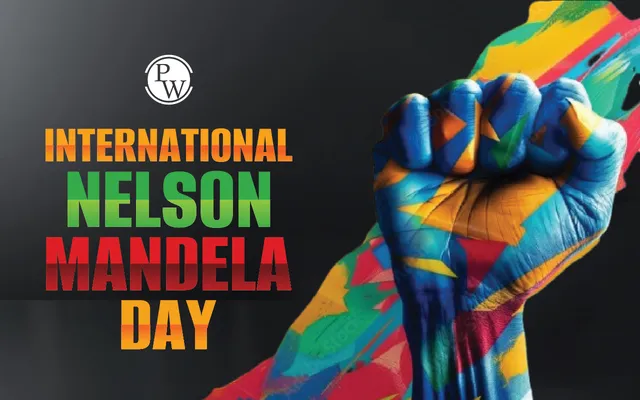
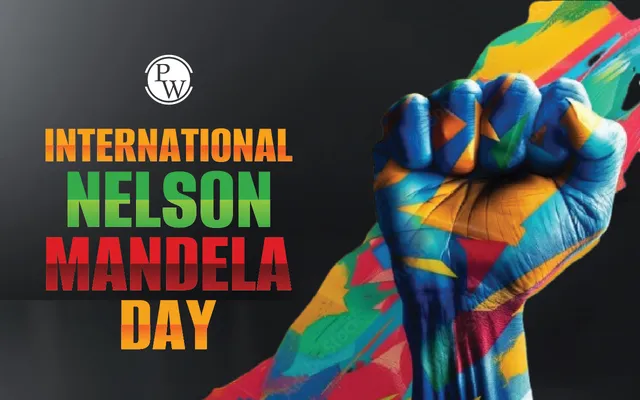
International Nelson Mandela Day, celebrated on 18th July every year, marks Mandela’s lifelong dedication to fighting apartheid, championing human rights, and building reconciliation. His life offers a valuable insight into ethical governance, conflict resolution, and international diplomacy, aligning with the UPSC’s focus on contemporary relevance and moral values.
International Nelson Mandela Day holds an important space in the UPSC examination context because it covers leadership, civic responsibility, social justice, and global cooperation. This coverage of the major concepts and important aspects makes it important for UPSC aspirants to analyse his approach to governance, rights-based activism, and his role in international relations, making it critical to include in preparation.
International Nelson Mandela Day 2025
International Nelson Mandela Day 2025 will be commemorated on 18th July, like every year in honour of Nelson Mandela’s birth anniversary. The Nelson Mandela Foundation has announced the themes for the year 2025 as “It’s still in our hands to combat poverty and inequality”, a rallying cry that emphasizes a collective responsibility towards social justice.
The theme of this year deeply resonated with the UPSC framework, reinforcing the development of issues like poverty alleviation, equitable growth, human rights, topics which are often asked in GS I, II, and Essay sections. Therefore, candidates are advised to go through how Mandela’s principles can guide policy-making and grassroots actions in India and globally, illustrating real-world applications of UPSC concepts.
Nelson Mandela International Day 2025 Theme
The 2025 theme reflects Mandela’s belief that transformation starts with both personal and collective efforts. “It remains our responsibility to tackle poverty and inequality,” urges individuals, groups, and authorities to take concrete actions to foster inclusive communities.
This focus on fighting poverty and inequality directly correlates with UPSC’s Sustainable Development Goals, administrative ethics, and discussions on economic justice. Planting trees and mentoring disadvantaged students, 67 minutes of service reflect active citizenship. For UPSC candidates, analyzing this topic enables the examination of state welfare programs, community-led efforts, and the effectiveness of policies, an impactful combination of theoretical insight and real-world significance.
What Day is Nelson Mandela Day?
Nelson Mandela Day falls on 18th July each year to celebrate the birthday of Nelson Mandela. The United Nations General Assembly formally endorsed this observance in November 2009. The first celebration and recognition of this day took place on 18 July 2010.
Unlike other public holiday celebrations, Mandela Day is a global call to action day rather day off. The central message of this day is that everyone can, and should, spend at least 67 minutes in service to others, symbolising Mandela’s 67 years of public service.
Why Do We Celebrate Nelson Mandela Day?
Nelson Mandela Day is commemorated to pay tribute to a figure who embodied the principles of justice, forgiveness, and unity. Mandela dedicated 67 years of his life to serving the public, fighting against apartheid, spending 27 years in prison, and leading the way for democracy in South Africa. Seen worldwide, the day encourages people to engage positively with their communities.
The 67-minute challenge emphasizes that minor, steady efforts can create substantial effects, an idea that aligns with UPSC concepts of local governance and engaged democracy. By analyzing its celebration, aspirants can investigate the connection between personal accountability and communal well-being, illustrating how civil society enhances governmental systems in fostering inclusive development
International Nelson Mandela Day Quotes
Nelson Mandela’s wisdom continues to guide leaders and citizens worldwide. International Nelson Mandela Day Quotes are highly relevant for UPSC essays and ethics questions, reinforcing ideas of citizen leadership, moral duty, and social progress.
-
“What counts in life is not the mere fact that we have lived. It is what difference we have made…” – a profound reminder of purpose over mere existence.
-
“It always seems impossible, until it is done.” – This inspires resilience in the face of adversity.
-
“Education is the most powerful weapon which you can use to change the world.” – highlighting the transformative power of education.
International Nelson Mandela Day Speech
A formal International Nelson Mandela Day Speech must cover starting with purpose, referencing historical context, and calling for action. Such a structure aligns closely with UPSC expectations in Mains and interviews. Hence, demonstrating a strong understanding of Mandela’s values.
“Esteemed dignitaries and dear citizens, on this International Nelson Mandela Day, we gather not merely to commemorate a remarkable individual, but to reaffirm our collective promise to civic duty, social justice, and human dignity. Nelson Mandela taught us that true leadership stems from humility, resilience under oppression, and reconciliation with former adversaries…”
Nelson Mandela Achievement
Listed below are some of the major Nelson Mandela Achievements that highlight the unwavering dedication to transformative leadership. Read below the provided achievements that are important from the point of view of UPSC on governance, social justice, and ethical statecraft.
-
Leadership in Anti-Apartheid Movement: As an ANC leader, he steered campaigns like the Defiance Campaign and civil disobedience against apartheid laws.
-
Imprisonment on Robben Island: His 27-year incarceration became a global symbol of resistance and moral courage.
-
First Democratic President (1994–1999): His presidency oversaw the Truth and Reconciliation Commission, a pioneering model of restorative justice.
-
Co-Recipient of Nobel Peace Prize (1993): Shared with F.W. de Klerk for efforts to dismantle apartheid peacefully.
-
Global Icon for Peace and Education: Advocated universal education, conflict resolution, and equality until his passing in 2013.
Nelson Mandela Award and Honor
Throughout history Nelson Mandela Awards and honors reflect his universal influence. All of the accolades reinforce Mandela’s integration of national struggle and global citizenship.
-
Nobel Peace Prize (1993), jointly awarded with de Klerk for peacefully ending apartheid.
-
Bharat Ratna (India's highest civilian honour, 1990), underscoring India's solidarity in his fight.
-
Presidential Medal of Freedom (USA) and Order of Canada, representing international respect for his humanitarian efforts.
-
Numerous honorary degrees and the Nelson Mandela Prize, instituted by the UN in 2014 to recognise public service globally
Nelson Mandela Day History
Nelson Mandela Day's journey started in 2009 when the Nelson Mandela Foundation, via the 46664 campaign, suggested a worldwide day of service on Mandela’s birthday. With extensive backing, the UN General Assembly passed Resolution 64/13 in November 2009, designating 18 July as Nelson Mandela International Day. The inaugural UN celebration occurred on 18 July 2010. Throughout the years, participation has encompassed tree planting, soup kitchens, educational initiatives, and worldwide volunteer campaigns. Significantly, Mandela Day 2025 features the Mandela Day 5/10/21 km Walk & Run in Johannesburg, representing unity and active community involvement. This development showcases how a community-driven effort achieved worldwide significance, providing a case for UPSC examination regarding policy implementation and civic engagement.
Get ready for the upcoming UPSC recruitment with the UPSC online coaching at Physics Wallah!
International Nelson Mandela Day FAQs
What is the theme of Nelson Mandela International Day 2025?
Why 67 minutes for Mandela Day?
What did Nelson Mandela fight for?
What was Nelson Mandelas goal?
What is International Nelson Mandela Day?


UPSC Coaching
 Live & recorded classes available at easeDashboard for progress trackingMillions of practice questions at your fingertips