Ghats in Uttar Pradesh, Some Famous Ghats in Uttar Pradesh

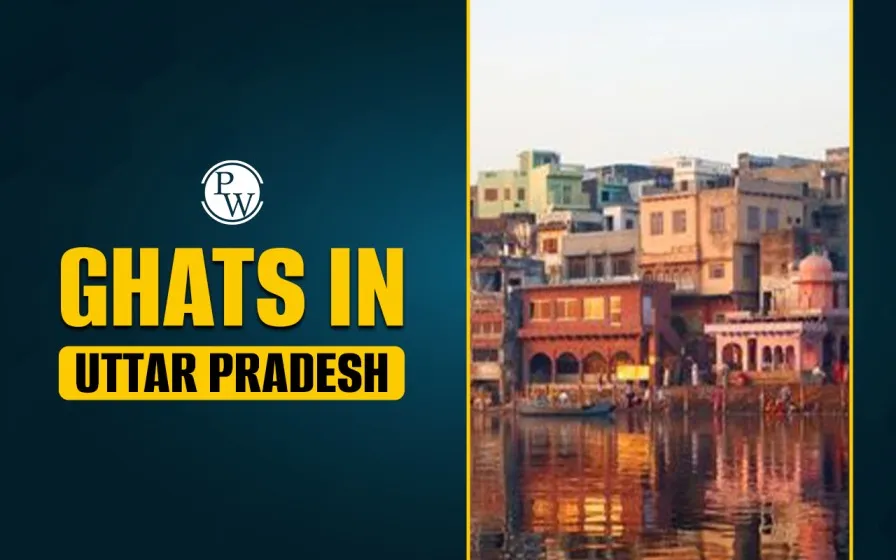
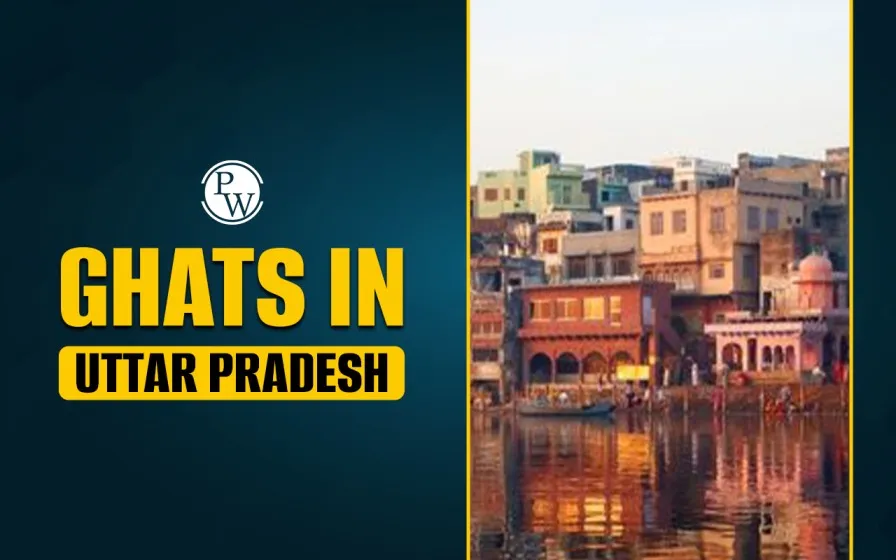
Ghats in Uttar Pradesh: Hindu devotees consider Uttar Pradesh to be a significant location. Every day, hundreds of pilgrims flock to the state to perform various poojas and rituals, mostly because of the temples and ghats located on the banks of the Ganga River. Additionally, it should be mentioned that no pooja or ceremony can be performed anywhere else.
Among the sacred locations where the ceremonies can be carried out are Varanasi, Mathura, Allahabad, and Vrindavan. Throughout Uttar Pradesh, distinct ceremonies and rituals are observed for each event. Individuals perform a variety of rituals, ranging from the ceremonial bath to Havana, Pooja, and Yagna.
Also Read: Tribes in Uttar Pradesh
Some Famous Ghats in Uttar Pradesh
Many famous ghats may be found in Uttar Pradesh, particularly along the banks of the sacred Ganga River. Thousands of pilgrims and tourists visit these ghats annually because of their profound religious and cultural significance. These are a few of Uttar Pradesh's well-known ghats.
-
Manikarnika Ghat Varanasi
This ghat is connected to two tales, one of which states that Lord Vishnu used his chakra to dig a pit, which was then filled with the sweat that formed during his penances. Another tradition states that Lord Shiva saw Lord Vishnu's earring, known as the Manikarnika, fall into the hole. Another tale claims that in order to force Lord Shiva to accompany the devotees, Goddess Parvati concealed her earring and forced him to search for it on the banks of the Ganges, where it had become misplaced.
As a result, it is believed that Lord Shiva asked if any of the bodies being burnt here had seen the earrings. According to yet another version, the proprietor of Manikarnika Ghat brought King Harischandra, who was forced to work here because the majority of the bodies were carried here for cremation. Laxmibai, the queen of Jhansi, is credited with giving this ghat its name.
-
Dashashwamedh Ghat Varanasi
It is situated close to the temple of Vishwanath. Additionally, it is Varanasi's most magnificent ghat. Two Hindu mythology are linked to this ghat. Lord Brahma made this ghat in one of them as a tribute to Lord Shiva, who visited him, while in the other, he conducted a yajna on it. Priests here perform Agni Pooja every evening, which is dedicated to Lord Shiva, the Sun (Surya), the Fire (Agni), the Ganges River, and, of course, the entire globe.
Also Read: Horticulture in Uttar Pradesh
-
Assi Ghat Varanasi
One of the most significant ghats in Varanasi is Assi Ghat, which is situated where the Ganga and Assi rivers converge. After defeating the demons Shumbha and Nissumbha, Lord Shiva is said to have rested here, and Goddess Durga is said to have worshipped Shiva here as well. Assi Ghat is a well-liked destination for both pilgrims and tourists. That Ghat provides a calm setting for yoga, meditation, and spiritual discussions. One of the main draws here is the Subah-e-Banaras program, which consists of yoga, classical music, and morning aarti.
-
Kesi Ghat Vrindavan
The Kesi Ghat, located on the Yamuna River's banks, is a well-liked tourist destination in Vrindavan. Legend has it that Lord Krishna took a bath at this ghat after slaying the demon Kesi. In order to obtain the blessings, devotees now bathe in this water. The Yamuna River is worshipped here with an aarti every evening.
-
Vishram Ghat Mathura
Out of the 25 ghats in Mathura, it is the principal one and is located on the banks of the Yamuna River. At Vishram Ghat, the traditional parikrama begins and concludes. After killing Kansa, Lord Krishna is reported to have rested here. Ganesh Ghat, Saraswathi Sangam Ghat, Dashashwamedh Ghat with Neelakantheshwar Temple, Chakratirtha Ghat, Somatirth or Swami Ghat, Krishnaganga Ghat, Dharapattan Ghat, Ghantagaran Ghat, Navirtha or Varahkshetra Ghat, Vaikuntha Ghat, and Asikunda Ghat are some of the other ghats in Mathura.
-
Ram Ghat Chitrakoot
Chitrakoot's Ram Ghat is located alongside the Mandakini River. This is thought to be where Lord Rama, Sita, and Lakshmana spent a large portion of their exile. The epic Ramayana mentions the ghat, which is extremely significant from a religious standpoint. The peaceful surroundings and spiritual pursuits of the ghat are well-known. At neighbouring temples like Bharat Milap Mandir and Hanuman Dhara, devotees frequently offer prayers and take a sacred bath in the Mandakini River.
-
Sangam Ghat Allahabad
The most well-known and revered ghat in Allahabad (Prayagraj) is Sangam Ghat. It is situated where the fabled Saraswati, Yamuna, and Ganga rivers converge. The venue is one of four places where the world's largest religious gathering, the Kumbh Mela, takes place. A dip in the Sangam is thought to be very auspicious and to atone for sins. Boat rides that provide a broad perspective of the confluence also begin at the ghat. Another important attraction is the neighbouring Allahabad Fort.
-
Tulsi Ghat Varanasi
The renowned poet-saint Tulsidas is credited with residing at Tulsi Ghat at the time he was penning the epic Ramcharitmanas. The ghat is also well-known for being connected to a number of important religious and cultural events. Particularly during the Ramleela and other festivals, Tulsi Ghat serves as a centre for cultural activities. The ghat's rich cultural fabric is further enhanced by its use as a venue for traditional Banarasi wrestling, or kushti.
Also Read: Smallest District in Uttar Pradesh
Ghats in Uttar Pradesh FAQs
What are some famous ghats in Uttar Pradesh?
Why are ghats in Uttar Pradesh important?
Can tourists visit ghats in Uttar Pradesh?
What rituals are performed at ghats in Uttar Pradesh?



 Live & recorded classes available at easeDashboard for progress trackingLakhs of practice questions