







Common Mistakes in Filling OMR Answer Sheet for UPSC Prelims 2026
 Deeksha Dixit24 May, 2026
Common Mistakes in Filling OMR: The Union Public Service Commission is well known for conducting some of the most prestigious and competitive examinations in India, such as the UPSC CSE, UPSC IFoS, CMS, and EPFO. The majority of these exams have a written exam stage with objective-type questions.
Candidates often tend to make certain mistakes in the proper filling of the Optical Mark Recognition (OMR) sheet, which is used to record the candidates' responses to these questions. UPSC has issued dedicated guidelines regarding the common mistakes in filling OMR and SAL, which are discussed here.What are Common Mistakes in Filling OMR?
Filling out the OMR sheet correctly is one of the crucial aspects of the UPSC exam, as failing to do so can lead to disastrous consequences, including the loss of marks or even rejection of the sheet. Common mistakes in filling OMR are certain errors that are frequently repeated by a majority of candidates. These mistakes can waste years of hard work and preparation, leading to the loss of precious attempts. This is why UPSC has explained these errors in a dedicated PDF, ‘Common Mistakes Done While Filling OMR Sheet/Scannable Attendance List'. The Common Mistakes in Filling OMR Sheet PDF is published on the official website, guiding how to avoid them.PW Mind Maps Modern Indian History Hindi offers timeline-based revision, visual learning, and important concepts in Hindi medium.
Common OMR Sheet Mistakes
The common mistakes made by candidates are categorized into two categories: mistakes in the OMR sheet and mistakes in SAL. Common mistakes in filling OMR are as follows:Encoding the Wrong Booklet Series
Candidates must carefully encode the correct booklet series on the OMR sheet, as this information is essential for the evaluation process. Since, question number 1 in booklet ‘A’ can be question number 32 in booklet ‘B’, encoding the wrong booklet series can lead to the candidate's answers being evaluated incorrectly.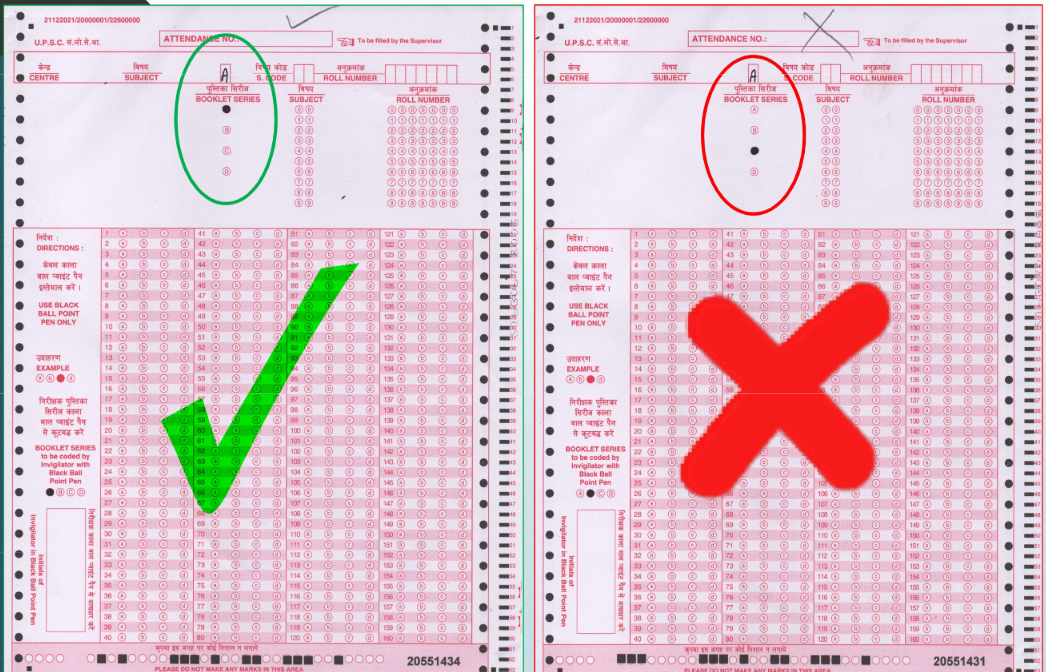
Failure to Encode the Booklet Series
Some candidates may forget to encode the booklet series which must be avoided at all costs. There are very good chances that when encoding is not done by the candidate, the UPSC may reject the OMR sheet.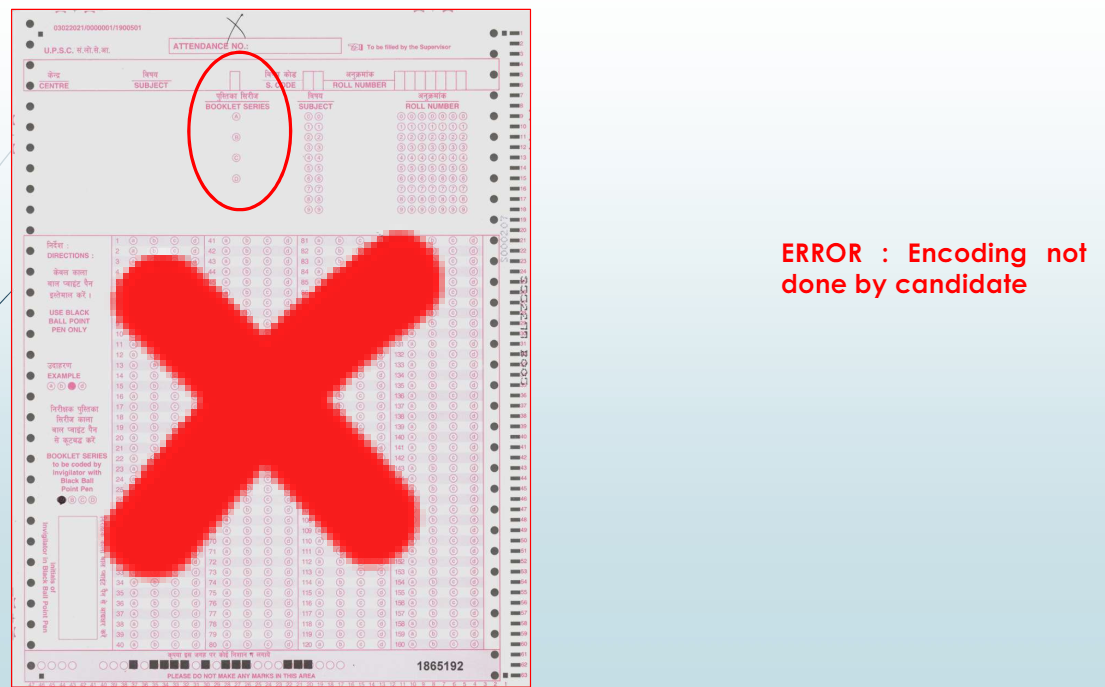
Incorrect Encoding of the Subject Code and Roll Number:
Candidates must ensure that they accurately encode their subject code and roll number on the OMR sheet. Any errors in this information can lead to the candidate's responses being not considered by the machine or being allotted to the wrong candidate.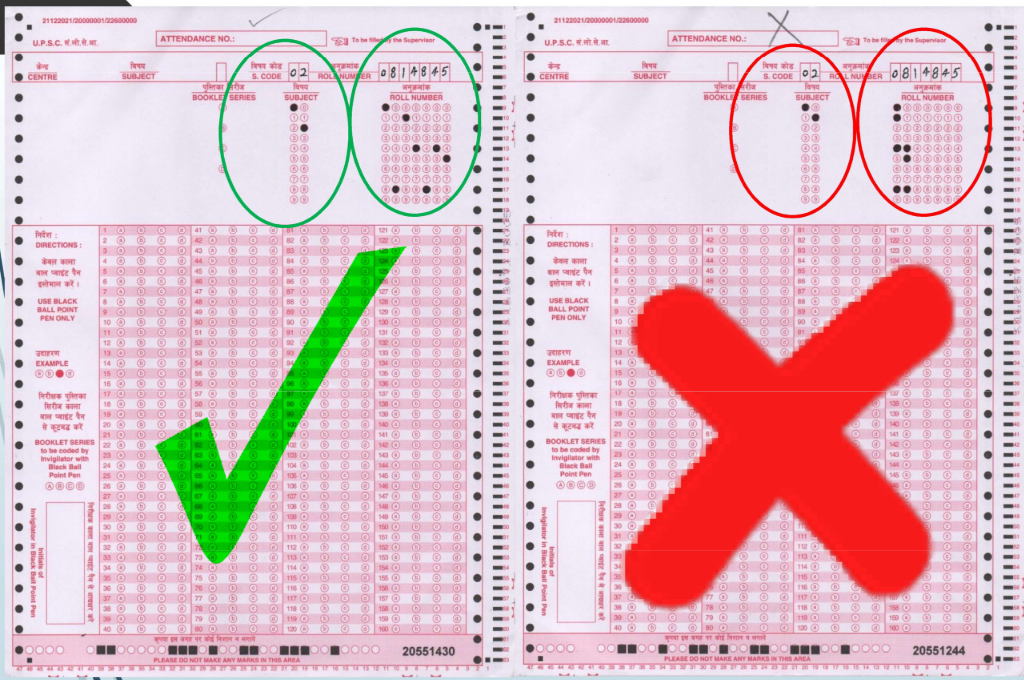
Markings or Writings in Prohibited Areas
The OMR sheet has specific areas designated for candidate responses, and any markings or writings outside of these areas can be interpreted as invalid responses. This may lead to the rejection of the OMR sheet during evaluation.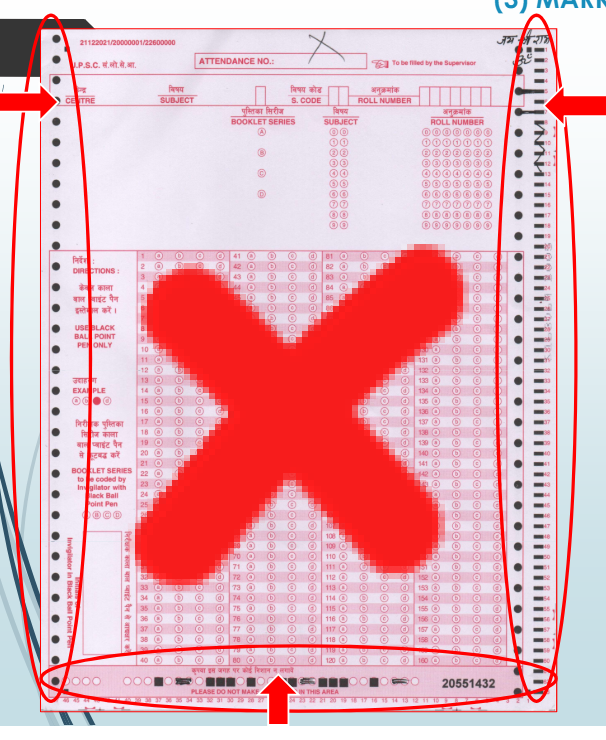
Incomplete Bubbling or Encoding of Responses
Candidates must fully bubble or encode their answers on the OMR sheet. Partial or incomplete bubbling can lead to the responses being misinterpreted or not being recorded correctly. This again is a major concern as the score will not be counted for that response.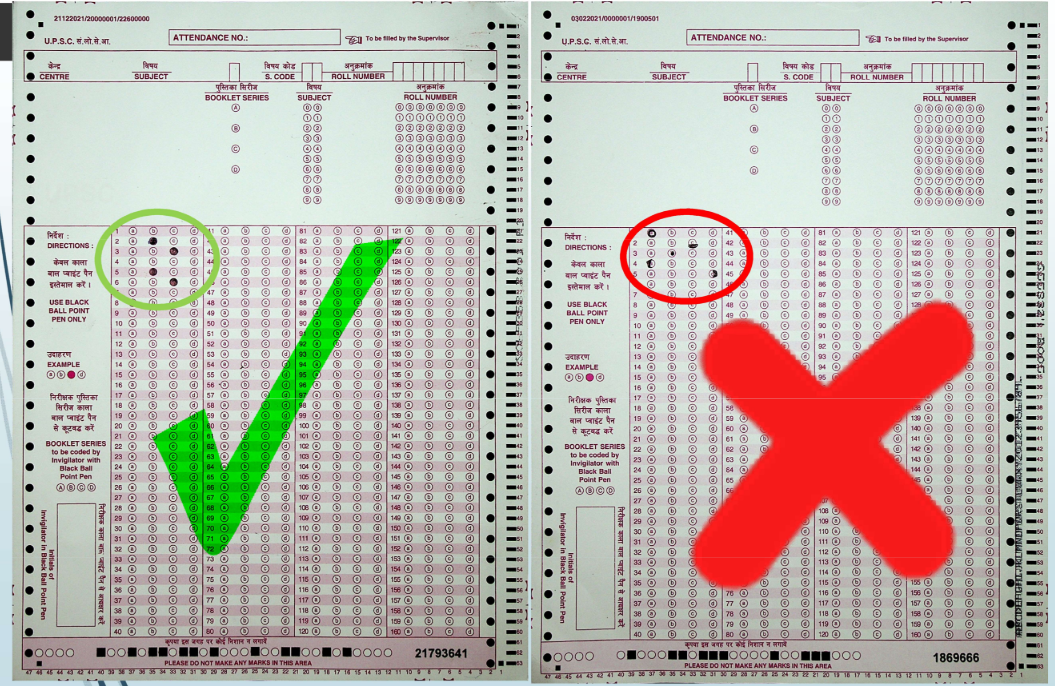
Common Scannable Attendance List (SAL) Mistakes
In addition to the OMR sheet, candidates must also fill out the Scannable Attendance List (SAL) during the UPSC exam. The SAL is used to record the candidate's presence and other important information. Common mistakes made by candidates while filling out the SAL include: Marking presence in the wrong place: Candidates must be careful to mark their presence in the designated area on the SAL. Marking presence in the wrong place can lead to the candidate's attendance being recorded incorrectly.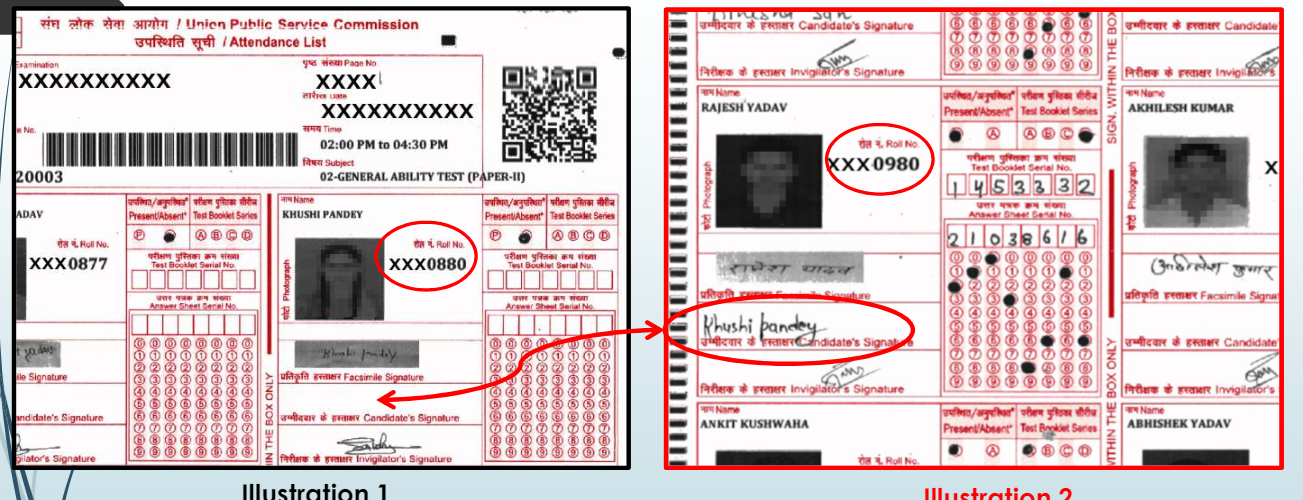 Filling details in multiple places: Candidates should only fill out the information in the designated areas on the SAL. Filling details in multiple places can cause confusion and lead to errors in the recording of the candidate's information.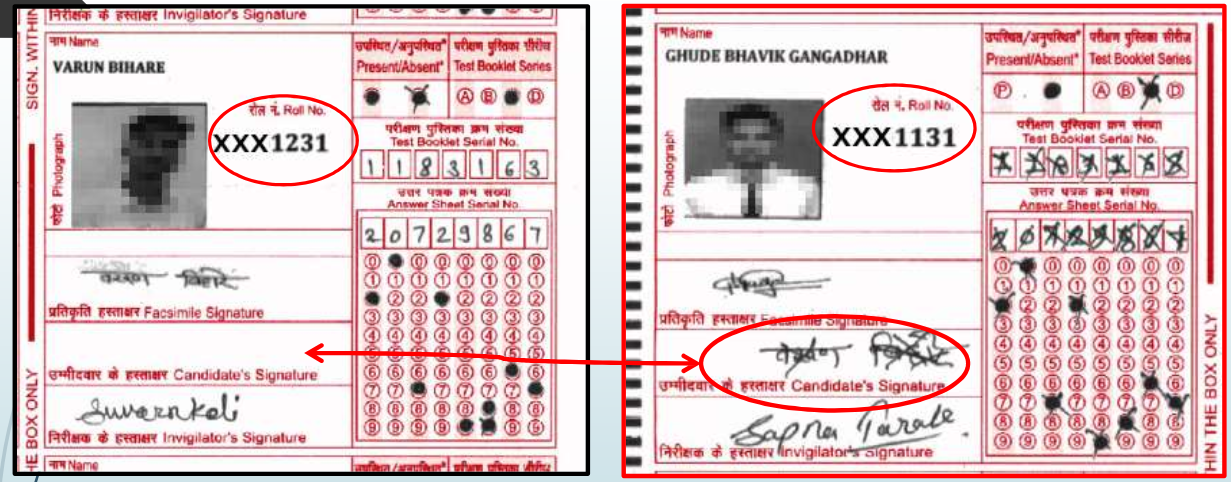
How to Correct Mistakes in OMR Sheet
Correcting mistakes in the OMR sheet can be a challenging task, as the sheet is designed to be read by machine. However, there are a few steps candidates can take to minimize their errors:- Carefully review the OMR sheet before submitting it to ensure that all the information is filled out correctly.
- If a candidate notices a mistake on their OMR sheet, they should immediately inform the invigilator.
- Carefully read and follow the instructions provided by the UPSC on how to fill out the OMR sheet correctly.
- In exceptional circumstances, candidates may use a whitener for subject code or roll-number type mistakes.
| Previous Year UPSC Prelims Cut Off | |||||
| Year | General | EWS | OBC | SC | ST |
| 2023 | 75.41 | 68.02 | 74.75 | 59.25 | 47.82 |
| 2022 | 88.22 | 82.83 | 87.54 | 74.08 | 69.35 |
| 2021 | 87.54 | 80.14 | 84.85 | 75.41 | 70.71 |
| 2020 | 92.51 | 77.55 | 89.12 | 74.84 | 68.71 |
| 2019 | 98 | 90 | 95.34 | 82 | 77.34 |
| 2018 | 98 | - | 96.66 | 84 | 83.34 |
PW UPSC Mind Maps Economy includes visual concept summaries, charts, and quick revision material for Economy preparation.
UPSC Prelims 2026 Preparation Tips
The UPSC preliminary stage is crucial, as candidates will not be allowed to attempt the mains exam without qualifying for this stage. This stage has evolved as an eliminator of non-serious candidates in recent years, as evidenced by the cutoff. Candidates nowadays struggle to qualify at this stage, even on the CSAT paper. Here are some tips for UPSC prelims exam preparation:
- Make a daily schedule to study for the prelim exam.
- Have a good UPSC Booklist that covers the syllabus for CSE prelims.
- Solve UPSC Prelims Previous question papers to analyze exam and high-yield themes.
- Make short notes of recurring themes in the preliminary exam and focus on covering them.
- Study consistently and solve daily MCQs.
- Given sufficient time for CSAT preparation.
- Solve UPSC prelims exam test series until exam day and improve scores.
Need guidance for Prelims? Explore PW UPSC Courses now!
Common Mistakes in Filling OMR FAQs
In which case OMR sheet is rejected by UPSC?
What is the correct way to fill an OMR sheet?
How to correct a wrong answer in UPSC OMR?
What will happen if UPSC OMR is filled wrong?
What happens if I mark two options in the OMR sheet?












 Live & recorded classes available at easeDashboard for progress trackingMillions of practice questions at your fingertips

