






Superlative Degree - Definition, Uses, Examples
 Nikita Aggarwal15 Apr, 2026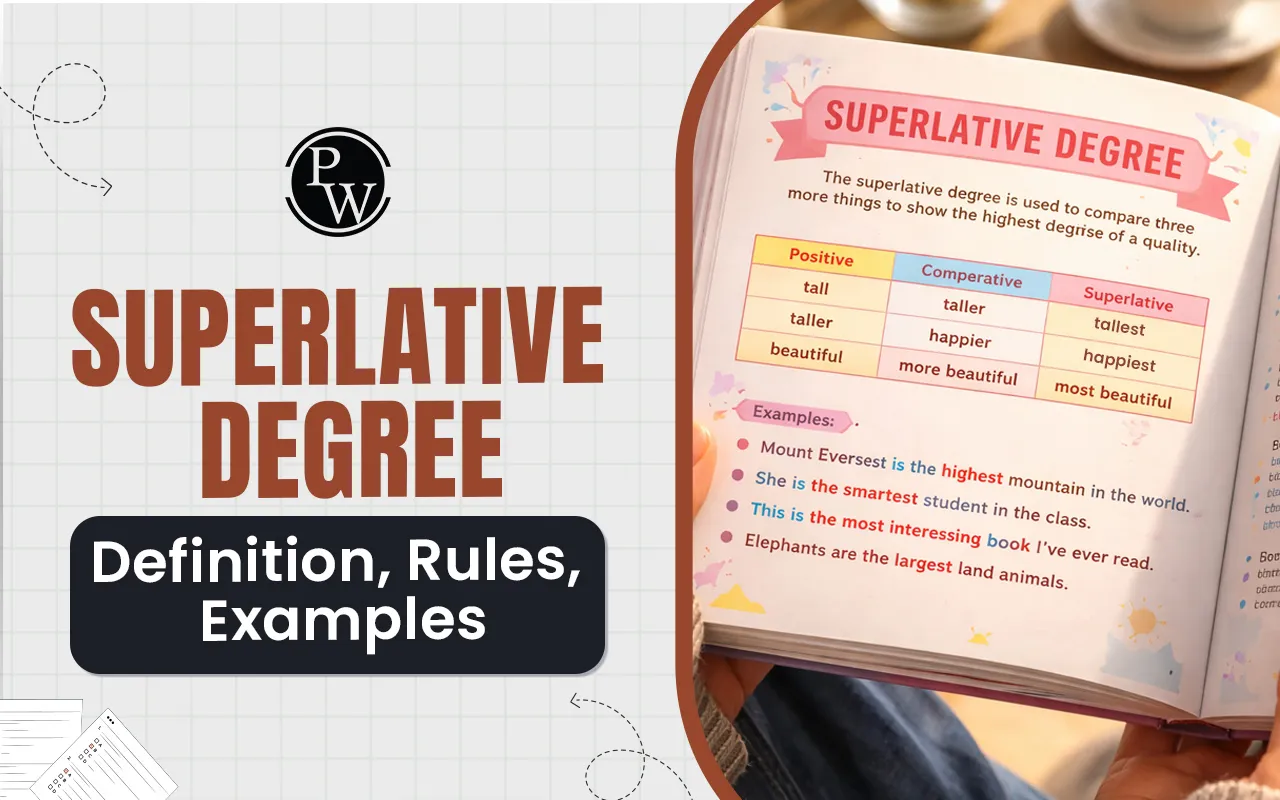
Superlative Degree Definition
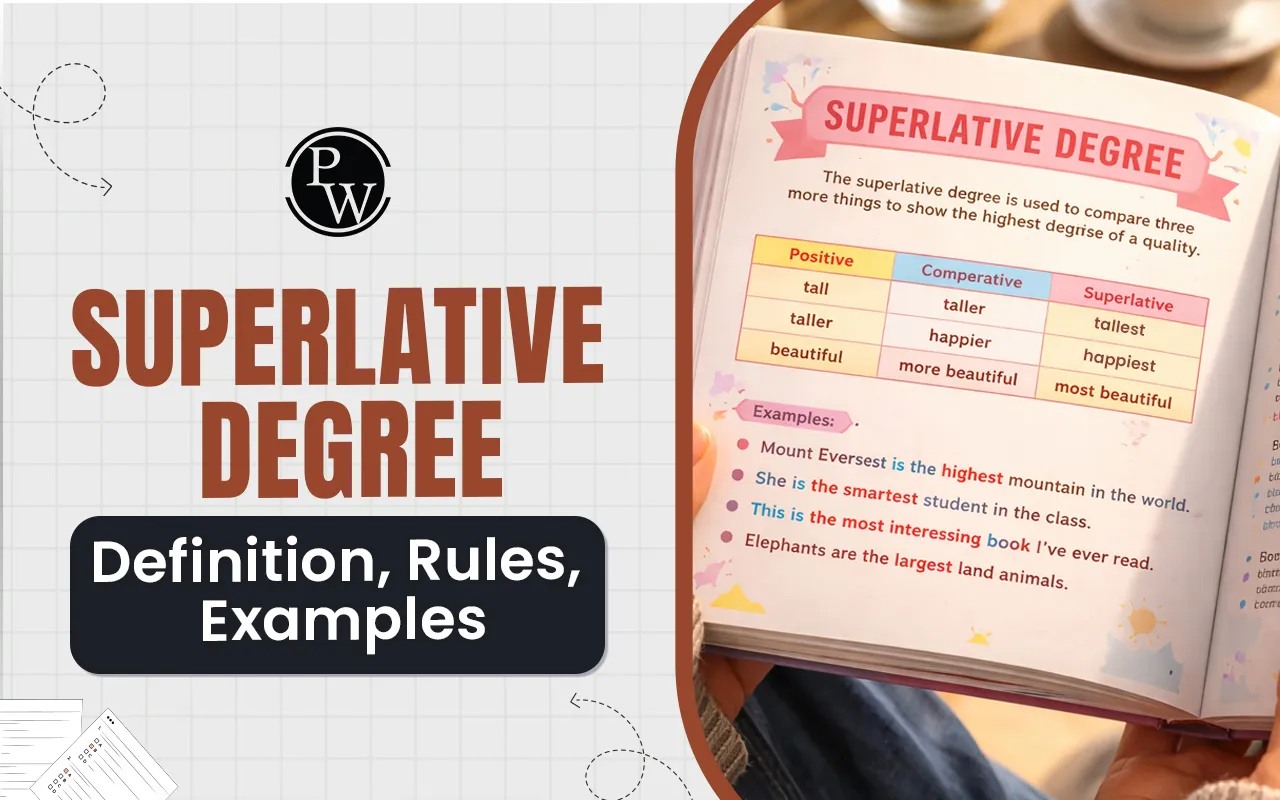
It is the form of an adjective or adverb that indicates the greatest or least degree of a quality. While the positive degree describes one thing (e.g., tall) and the comparative degree compares two things (e.g., taller), the superlative is reserved for groups of three or more.
When you use this degree, you are essentially saying that nothing else in that specific category exceeds the subject in that particular trait. It represents the upper or lower limit of a scale.
It can be understood as a grammatical category used to compare three or more nouns. It denotes that a noun possesses a quality to a greater or lesser extent than any other member of its class. In a sentence, it is almost always preceded by the definite article ‘the’ because it refers to a specific, unique item that holds the "top" spot.
Superlative Degree Uses
Understanding how and when to apply this form is vital for clear communication. Here are the primary uses:
-
Comparing a Group: You use it when comparing one person, place, or thing against at least two others. For instance, "Ollie is the smartest boy in the class."
-
Expressing Extremes: It helps in identifying the maximum or minimum limit of a quality. Example: "This model is the least expensive watch in the shop."
-
Defining Excellence: It is frequently used in reviews, sports, and records to define a "best-in-class" status.
-
Setting Boundaries: It helps narrow down a choice from a large selection, such as "the most relevant source" among dozens of books.
How to Form Superlative Degree in English ?
Creating a superlative depends largely on the number of syllables in the original adjective and its ending.
1. Short Adjectives (One Syllable)
For most short words, you simply add -est to the end.
-
Small → Smallest
-
Hard → Hardest
2. Adjectives Ending in ‘E’
If the word already ends in ‘e’, just add -st.
-
Large → Largest
-
Wise → Wisest
3. Words Ending in Consonant-Vowel-Consonant
If a one-syllable word ends with a single vowel followed by a consonant, double the final consonant before adding -est.
-
Big → Biggest
-
Hot → Hottest
4. Adjectives Ending in ‘Y’
For words ending in ‘y’ (even if they have two syllables), change the ‘y’ to -i and add -est.
-
Happy → Happiest
-
Funny → Funniest
5. Long Adjectives (Two or More Syllables)
For longer words, we do not change the ending. Instead, we place the word most or least before the adjective.
-
Beautiful → Most beautiful
-
Expensive → Most expensive
Read More - Vowels -Definition, Rules and Example
Superlative Degree Examples
To see how these rules work in practice, look at the following examples categorised by their structure.
One-Syllable Examples
-
Mount Everest is the highest peak in the world.
-
Jupiter is the biggest planet in our solar system.
-
Last night was the coldest night of the winter.
Multi-Syllable Examples
-
This is the most interesting book I have ever read.
-
She is the most talented musician in the orchestra.
-
That was the least helpful advice I received.
Irregular Superlatives
Some words don't follow the standard rules. These are unique and must be memorised:
-
Good → Best
-
Bad → Worst
-
Far → Farthest or Furthest
-
Little → Least
Positive vs Comparative vs Superlative
To fully understand this concept, it is helpful to see how it fits with the other two degrees of comparison:
|
Degree |
Purpose |
Example |
|
Positive |
Describes one thing |
Tall |
|
Comparative |
Compares two things |
Taller |
|
Superlative |
Compares three or more things |
Tallest |
Quick Insight:
-
Use positive for description
-
Use comparative for comparison between two
-
Use superlative for showing the highest or lowest among many
This quick comparison helps avoid confusion and strengthens your understanding it.
This table illustrates how adjectives transform across the three degrees of comparison.
|
Positive |
Comparative |
Superlative |
|
Fast |
Faster |
Fastest |
|
Bright |
Brighter |
Brightest |
|
Heavy |
Heavier |
Heaviest |
|
Creative |
More creative |
Most creative |
|
Good |
Better |
Best |
|
Bad |
Worse |
Worst |
|
Narrow |
Narrower |
Narrowest |
|
Difficult |
More difficult |
Most difficult |
|
Large |
Larger |
Largest |
Superlative Degree Rules
When you are writing, keep these three essential rules in mind to ensure your grammar remains spot-on:
-
The Definite Article: Always use 'the' before a superlative adjective. Since the superlative describes the "one and only" at the top of the list, it is a specific noun. Correct: "The shortest path." Incorrect: "A shortest path."
-
Prepositions 'In' and 'Of': Use 'in' when referring to locations or groups (in the world, in the team). Use 'of' when referring to a period of time or a specific set of items (of the year, of all the students).
-
Avoid Double Superlatives: Never use 'most' and '-est' together. For example, "most fastest" is grammatically incorrect. Use only "fastest."
Read More - What is Punctuation? – Meaning and Definition
Tips to Learn Superlative Comparison
Learning this concept becomes much easier when you apply simple tricks:
-
Think in Groups: Always check if you are comparing three or more things. If yes, use the superlative.
-
Spot Keywords: Words like "best", “highest,” “most,” and “least” often signal a superlative.
-
Practice with Daily Objects: Try forming sentences like “This is the smallest pen on my desk.”
-
Remember the Rule of ‘The’: Most superlative forms need “the” before them.
-
Avoid Common Errors: Do not mix “most” with “-est” (e.g., “most tallest” is incorrect).
These easy tricks will help you quickly identify and use this concept correctly.
Superlative Form Practice Exercises
Test your understanding of the concept with these simple exercises:
Fill in the Blanks
-
Mount Everest is the ______ (high) mountain in the world.
-
This is the ______ (easy) question in the test.
-
She is the ______ (good) singer in the group.
Choose the Correct Option
-
He is the (fastest / more fastest) runner in the team.
-
This is the (most beautiful/beautifullest) painting.
Sentence Correction
-
She is the most smartest student in the class.
-
This is a tallest building in the city.
Answers:
-
highest
-
easiest
-
best
Correct options: fastest, most beautiful
Corrections: “smartest”, “the tallest building”
Superlative Degree FAQs
What is Superlative Degree in a sentence?
How do I choose between using -est and most?
Can I use this form of degree to compare only two things?
What are some irregular examples?











 Live & recorded classes available at easeDashboard for progress trackingMillions of practice questions at your fingertips

