







Dust Mite Allergy: Symptoms, Complications, and Treatment
Dust mite allergy is an allergic reaction to common household dust mites. Read on to learn the causes, complications, symptoms, and Treatment of Dust mite allergy.
 Deeksha Dixit7 Feb, 2024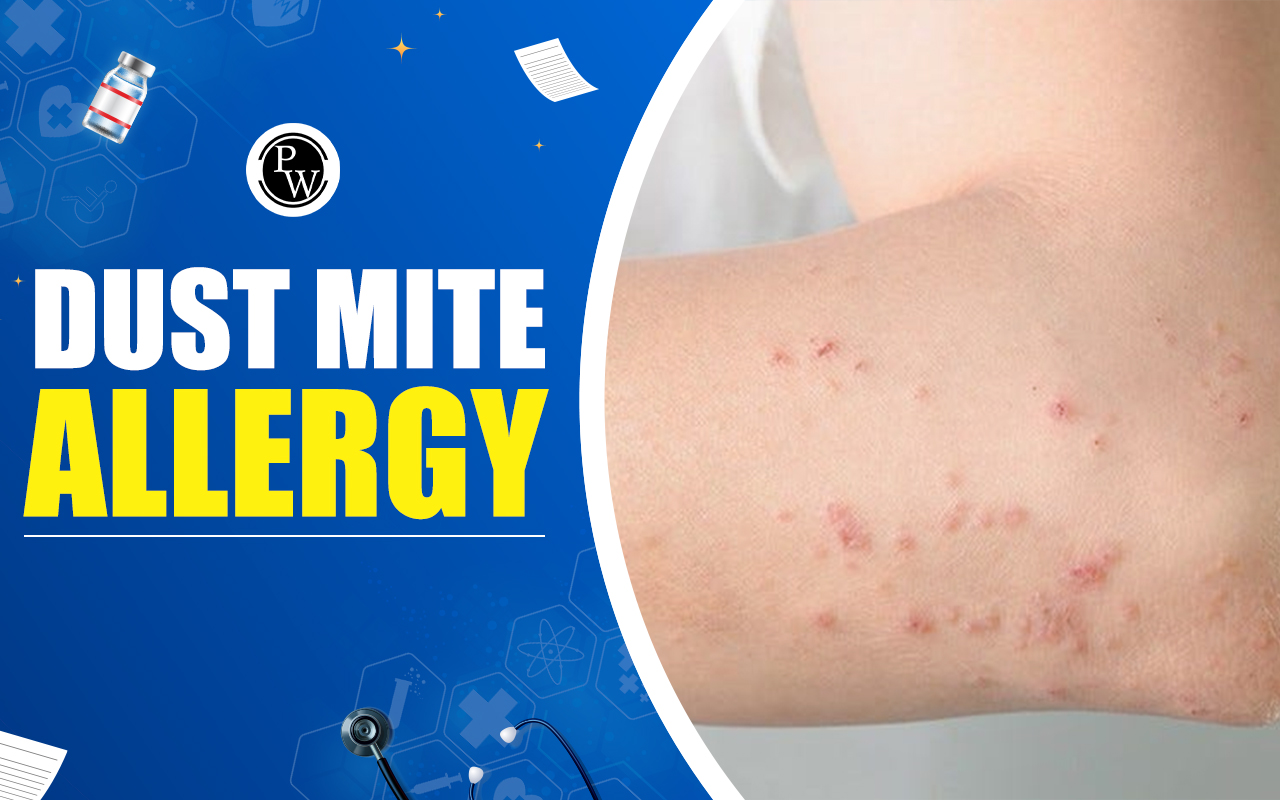
Dust mite allergy is an allergic condition that occurs as a reaction to common bugs or minute insects living in household dust. Another common name for dust mites allergy is house dust allergy. These dust mites are tiny enough to be seen without a microscope.
In Dust mite allergy normal symptoms like a runny nose or hay fever are commonly observed. Some people have Dust mite allergy along with signs of asthmatic conditions like difficulty in breathing and wheezing. While studying medicine, understanding the symptoms and causes of Dust mite allergy is crucial for top exams like NEET PG .Dust Mite Allergy - Introduction
Micro Bugs or Mites are normally found in dust particles of every household. Humans can not notice them without a microscope, unlike ticks. These dust mites feed on our dead skin cells and thrive particularly in warm and humid surroundings. When these bugs cause symptoms like hay runny nose or hay fever it is characterized as Dust mite allergy. Further, at times, these allergies can coupled with asthmatic symptoms in many people. Houses having upholstered furniture, carpeting, mattresses, and curtains invite dust mites.What Causes Dust Mite Allergy?
Dust mites have substances or proteins in their feces and dead bodies which are known as harmless allergens. The immune system characterizes them as ‘invaders’ leading to an immune response of the body to get rid of these foreign objects. The immune system produces antibodies as a reaction to foreign substances like pollen, mites, etc resulting in allergies. Our immune system tends to perceive allergens as harmful when we have allergies and inflames the nasal passages or lungs. Regular and extended contact with allergens can lead to chronic inflammation related to asthma. These bugs causing the allergy feed on organic particles like human dead skin cells and absorb moisture from surrounding humidity.Dust Mite Allergy - Complications
Consistent exposure to mites can lead to some serious complications related to Dust mite allergy. Sinus infections and Asthma are the two most concerning health issues that can be caused by prolonged allergies. Asthma: Asthmatic people having dust mite allergy often find it difficult to manage regular symptoms. Asthma attacks can be caused by serious complications related to allergies requiring immediate medical intervention or emergency care. Sinus Infection: Chronic inflammation caused by dust mite allergy in tissues of nasal passages can block the hollow cavities (sinuses) connected to these passages. It can increase the risk of sinusitis i.e. sinus infections requiring medical treatment.Symptoms of Dust Mite Allergy
People may confuse a dust mite allergy with an upper respiratory viral illness, such as the flu or common cold. This is why identifying symptoms clearly is essential. Here are some common symptoms of dust mite allergy:- Runny nose
- Sneezing
- Itching, red, or wet eyes
- Nasal cavity congestion
- Itchy mouth, throat, or nose
- Cough
- A postnasal drip
- Feeling pressure and pain in the face
- Swelling under eyes/ Blue-colored skin
- Breathing Difficulties
- Chest Pain or tightness
- Audible whistling/wheezing while exhaling
- Shortness of breath, coughing, or wheezing while sleeping
Dust Mite Allergy Risk Factors
The risk factors of dust mite allergy are usually related to heredity, prolonged exposure, and childhood exposure. Here are dust mite allergy’s potential risk factors: Family History : People having heredity allergic conditions in the family are more likely to develop a dust mite allergy. Prolonged Exposure: When people are exposed to high levels of dust mites for a longer duration, they are likely to develop an allergy. Early Age: Children or young adults exposed to severe dust mites are at potential risk of developing dust mite allergy.Diagnosing Dust Mite Allergy
Since few symptoms are common to flu and common cold it is advised to consult doctors for diagnosis of Dust mite allergy. To confirm an airborne allergy, the doctor might employ a small instrument to assess the state of the nasal lining.- A widened nasal passage resulting in a pale or bluish appearance in case of allergy.
- When symptoms worsen disturbing sleep further investigation is required.
- An Allergic skin test (e.g. Skin prick test) is recommended for skin-related allergies. In this, the specialist picks the surface of the skin with small amounts of refined allergen extracts, like those for dust mites. Allergic reactions, such as redness and itching can be noticed as the effect of dust mite allergy.
- When a skin test is not feasible due to medication interference, a blood test may be ordered. In this method, specific antibodies related to common allergens like dust mites are tested.
How to Treat Dust Mite Allergy?
Usually controlling dust mites is recommended but for serious health concerns medication may be prescribed. Following are some medications that are used for dust mite allergy treatment: Allergy Shots or Immunotherapy : Allergy shots instruct the immune system to tolerate dust mite allergens. However, they do not provide a cure as improvement in symptoms may take 6 to 12 months of consistent treatment. This treatment is quite long requiring a commitment of 3 to 5 years. Allergy Drops : Specialists may prescribe dust mite sublingual immunotherapy drops containing small doses of dust mite protein. These drops are placed under the tongue daily to help the body develop tolerance to dust mite proteins and reduce allergy symptoms. In this treatment, a minimum of 6 months times is essential to notice improvement. Oral Antihistamines: Oral Antihistamines block histamine, a substance released by allergy cells that causes symptoms like itching, sneezing, and a runny nose. Antihistamine Nasal Sprays: Antihistamine Nasal sprays are applied directly into the nostrils. These nasal sprays work to block histamine and alleviate allergy symptoms. Decongestants: Oral or nasal decongestants can also be prescribed to offer temporary relief for nasal congestion. Decongestants are recommended to be used for a short duration only not for prologued use.Delve deeper into the MBBS Prof syllabus. Download the PW Med Ed app now to learn medicine topics in detail!
Dust Mite Allergy FAQs
What is Dust Mite Allergy?
Dust mite allergy is an allergic reaction such as a runny nose, hay fever, and, in some cases, asthmatic conditions to tiny insects found in household dust.
What complications can be caused by Dust mite allergy?
Consistent exposure to dust mites may lead to serious complications, including sinus infections and asthma. Further, asthmatic individuals face asthma attacks in severe cases.
Can Dust mite allergy be prevented?
To prevent Dust mite allergy, reducing exposure to dust mites through regular cleaning, using allergen-proof bedding, etc. can help.
How can Dust mite allergy be Treated?
Treatment options for Dust mite allergy include allergy shots, sublingual immunotherapy drops, oral antihistamines, antihistamine nasal sprays, and decongestants.

🔥 Trending Blogs


Check out these Related Articles










Join 15 Million students on the app today!
 Live & recorded classes available at easeDashboard for progress trackingMillions of practice questions at your fingertips


Free Learning Resources
PW Books
Notes (Class 10-12)
PW Study Materials
Notes (Class 6-9)
Ncert Solutions
Govt Exams
Our Other Websites
Class 6th to 12th Online Courses
Govt Job Exams Courses
UPSC Coaching
Defence Exam Coaching
Gate Exam Coaching
Other Exams
Know about Physics Wallah
Physics Wallah is an Indian edtech platform that provides accessible & comprehensive learning experiences to students from Class 6th to postgraduate level. We also provide extensive NCERT solutions, sample paper, NEET, JEE Mains, BITSAT previous year papers & more such resources to students. Physics Wallah also caters to over 3.5 million registered students and over 78 lakh+ Youtube subscribers with 4.8 rating on its app.
We Stand Out because
We provide students with intensive courses with India’s qualified & experienced faculties & mentors. PW strives to make the learning experience comprehensive and accessible for students of all sections of society. We believe in empowering every single student who couldn't dream of a good career in engineering and medical field earlier.
Our Key Focus Areas
Physics Wallah's main focus is to make the learning experience as economical as possible for all students. With our affordable courses like Lakshya, Udaan and Arjuna and many others, we have been able to provide a platform for lakhs of aspirants. From providing Chemistry, Maths, Physics formula to giving e-books of eminent authors like RD Sharma, RS Aggarwal and Lakhmir Singh, PW focuses on every single student's need for preparation.
What Makes Us Different
Physics Wallah strives to develop a comprehensive pedagogical structure for students, where they get a state-of-the-art learning experience with study material and resources. Apart from catering students preparing for JEE Mains and NEET, PW also provides study material for each state board like Uttar Pradesh, Bihar, and others
Copyright © 2026 Physicswallah Limited All rights reserved.