






Adverb of Time: Definition, Examples and Complete List
 Nikita Aggarwal10 Apr, 2026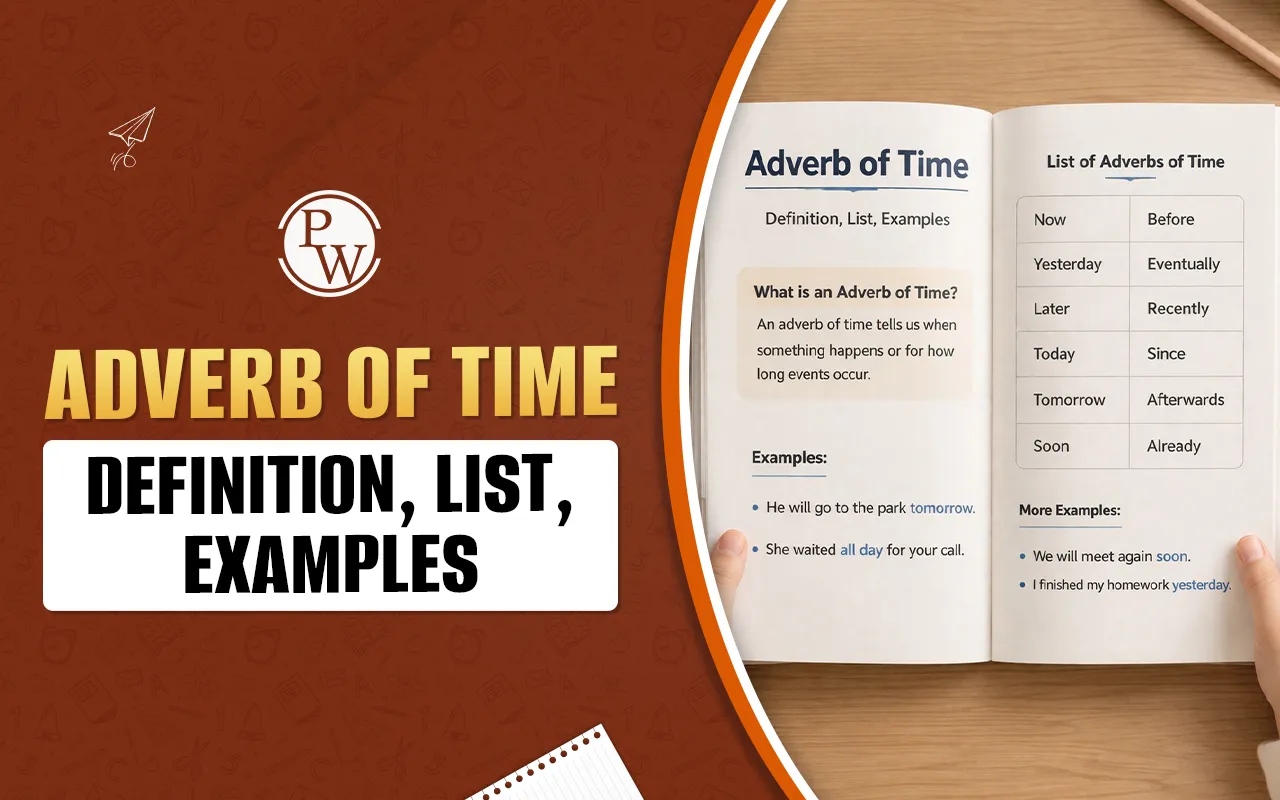
What is Adverb of Time?
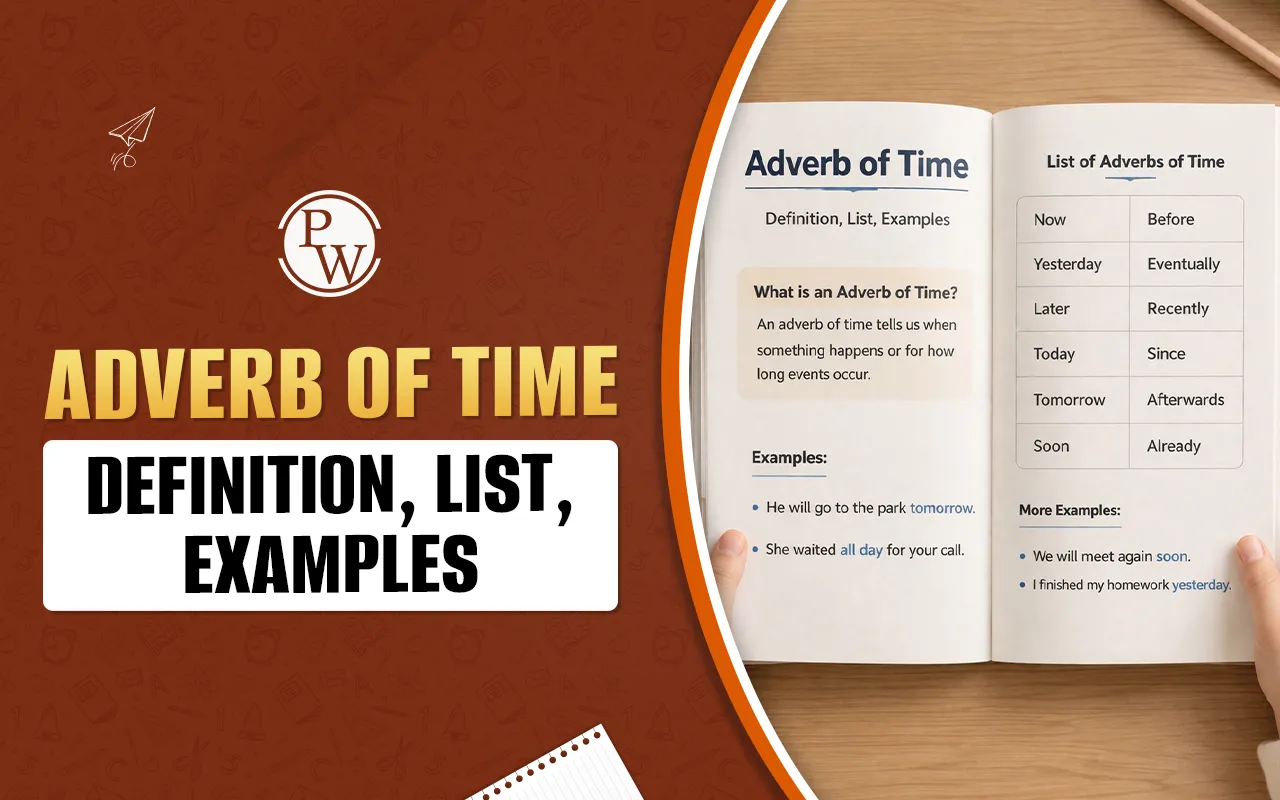
When we look at the adverb of time definition, we find it is a word that describes the timing of a verb. While standard adverbs often tell us how something is done (like walking quickly), this specific type focuses entirely on "when."
To identify one, you simply need to ask the question, 'When did this happen?'
If the answer is "now", "later", or "tomorrow", you have found your adverb. These words are essential in English because they provide a chronological framework. Without them, we wouldn't be able to schedule meetings, recount history, or plan for the future. They help establish the sequence of events so the listener stays on track with the narrative.
Adverb of Time Meaning
The adverb of time meaning goes beyond just a calendar date. It covers three distinct areas of timing:
-
Point of Time: Words that tell us exactly when (e.g., today, then, yesterday).
-
Duration: Words that tell us for how long (e.g., all day, for a year, temporarily).
-
Frequency: Words that tell us how often (e.g., often, never, weekly).
In English grammar, these adverbs are quite flexible, but they usually prefer the end of a sentence. For example, in the sentence "I will finish my homework soon," the word 'soon' provides us a timeframe for the completion of the task.
Adverb of Time List
To help you easily recognise these words, here is a categorised adverb of time list. These are the most common terms you will encounter in textbooks and daily speech.
Words Indicating a Specific Time
-
Today
-
Yesterday
-
Tomorrow
-
Tonight
-
Now
-
Then
-
Later
Words Indicating Duration (How Long)
-
All day
-
Forever
-
Briefly
-
Since
-
Until
Words Indicating Frequency (How Often)
-
Always
-
Often
-
Rarely
-
Never
-
Sometimes
-
Annually
Adverb of Time in English
Using an adverb of time in English requires understanding where to place the word so the sentence sounds natural. While there are no "illegal" spots, following standard patterns makes your writing much smoother.
Position at the End
The most common place for an adverb of time is at the end of the clause.
-
I saw a movie yesterday.
-
She is arriving now.
Position at the Beginning
You can move the adverb to the start of the sentence if you want to place extra emphasis on the time. This is very common in journalism and storytelling.
-
Tomorrow, we will start our journey.
-
Later, the truth was revealed.
Position in the Middle
Frequency adverbs (which are a subtype of time adverbs) often sit before the main verb.
-
He always eats breakfast.
-
They often visit the library.
Read More - Adverb Clauses: Meaning, Types, Rules, Examples and Practice Questions
Adverb of Time Examples
Seeing these words in action is the best way to learn. Here are several adverb of time examples broken down by how they change the meaning of a sentence.
-
Example 1: "I have already finished my lunch." (Shows the action happened sooner than expected).
-
Example 2: "The train left early." (Gives a specific relationship to the expected time.)
-
Example 3: "We stayed at the hotel overnight." (Describes the duration of the stay).
-
Example 4: "I will call you later." (Points to a future time).
-
Example 5: "He has been living here since 2010." (Indicates a starting point).
Adverb of Time Comparison
|
Sentence |
Question Asked |
Type of Adverb |
|
She ran quickly. |
How did she run? |
Manner |
|
She ran there. |
Where did she run? |
Place |
|
She ran yesterday. |
When did she run? |
Adverb of Time |
Read More - Adverb of Frequency: Definition, Rules, Types and Examples
Mistakes to Avoid in Adverb of Time
Even though using an adverb of time in English seems straightforward, there are a few traps to watch out for.
1. Mixing up 'Yet' and 'Already'
'Already' is usually used for things that happen sooner than expected in positive sentences. 'Yet' is used for things we expect to happen, mainly in negative sentences or questions.
-
Correct: I haven't finished yet.
-
Correct: I have already finished.
2. Overusing 'Then'
Students often start every sentence with "Then..." when telling a story. To make your writing more captivating, try using other words from the adverb of time list, like "afterwards", "subsequently", or "soon".
3. Adverb vs Noun
Occasionally a word can be a noun or an adverb depending on how it is used. "Tomorrow is a holiday." "Tomorrow" is a noun (the subject). "I will see you tomorrow" functions as an adverb of time.
Adverb of Time Exercises for Students
To truly master the adverb of time, try rewriting these simple sentences by adding a time element.
-
I went to the shop. (Add 'yesterday')
-
We are going on holiday. (Add 'soon')
-
She cleans her room. (Add 'every day')
By adding these words, you provide the reader with a much clearer picture of the situation. It transforms a flat statement into a piece of information that people can act upon.
Adverb of Time FAQs
What is adverb of time in simple terms?
Could you provide a brief list of adverb of time?
Where does an adverb of time usually go in a sentence?
What are some adverb of time examples for kids?













 Live & recorded classes available at easeDashboard for progress trackingMillions of practice questions at your fingertips

