






Declamation Topics for Students with Examples
 Nikita Aggarwal14 Apr, 2026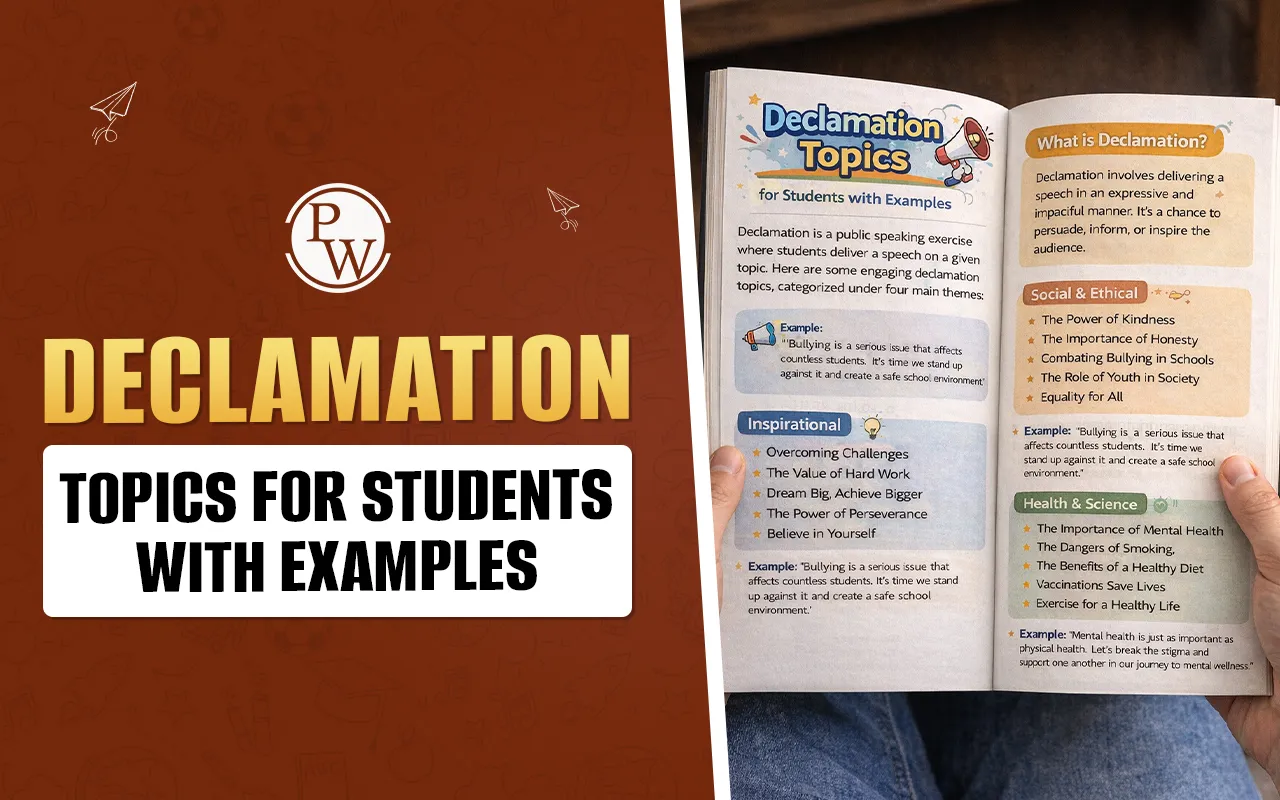
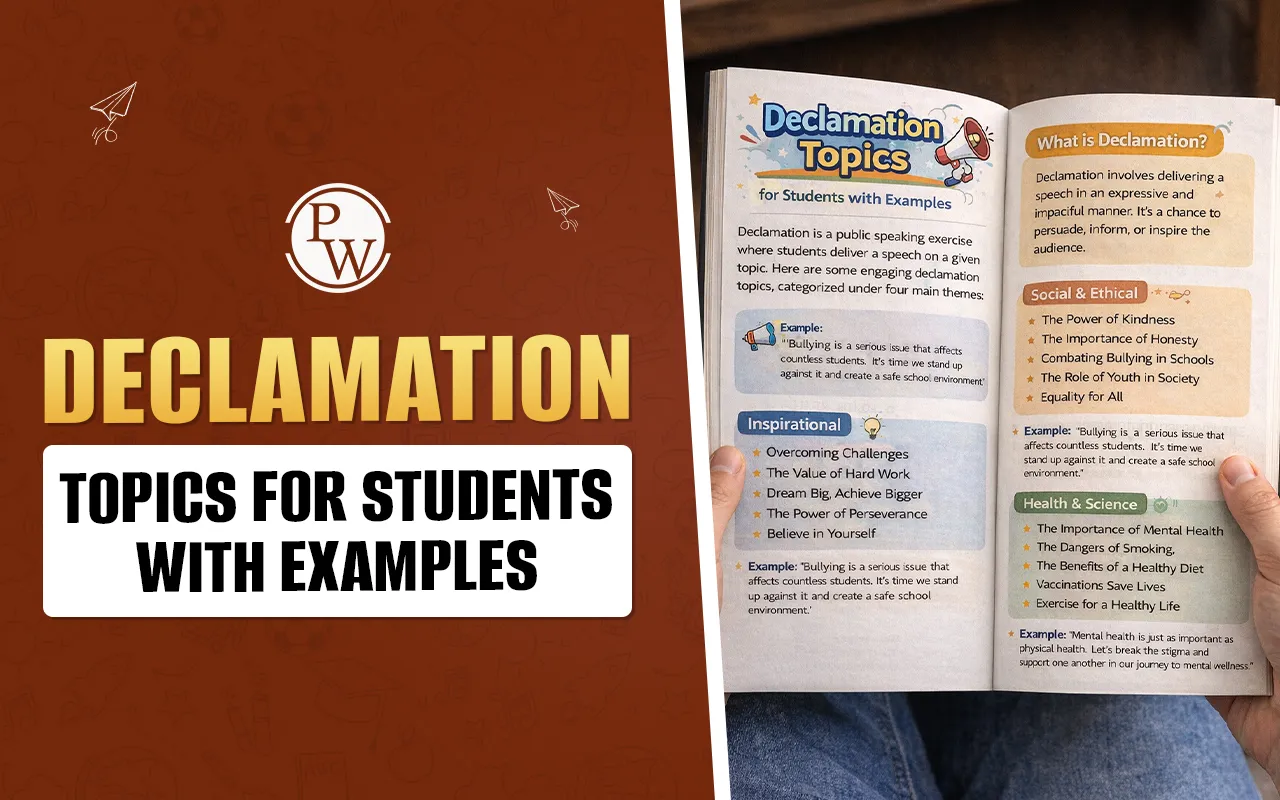
What are Declamation Topics?
Before going over the lists, it's important to know what declamation is like in a competitive or classroom situation. Declamation is a category of public speaking where the speaker performs a speech that has already been delivered by someone else. These are usually famous addresses, commencement speeches, or historical manifestos.
The goal is not to mimic the original speaker’s voice but to interpret their message with your own emotional depth and clarity. The best topics are those that possess a "universal truth", ideas about courage, justice, education, or perseverance that remain relevant regardless of when they were first spoken.
Declamation Speech Structure
Before selecting from topics it is important to understand how a strong speech is structured
-
Opening Hook Start with a powerful line question or statement that grabs attention
-
Introduction Briefly introduce the core idea or theme of the speech
-
Body Develop the message with key points emotions and examples
-
Emotional Peak Highlight the most impactful part of the speech where the message is strongest
-
Conclusion End with a memorable closing line that reinforces the message
A clear structure helps you deliver declamation with clarity confidence and impact
Declamation Topics for Students
To make your selection process easier, we have broken down potential topics into specific categories. Depending on the tone of the event—whether it is a formal competition or a school assembly—you can choose a category that fits the mood.
1. Motivational and Inspirational Topics
These speeches focus on the human spirit and the power of persistence. They are excellent for younger students who want to energise their peers.
-
The importance of failure in achieving success.
-
Why kindness is a superpower in the modern world.
-
Believe in yourself when no one else does.
-
The pursuit of happiness vs the pursuit of excellence.
-
How small habits change your life.
2. Social Issues and Justice
For students who want to make a statement, these topics allow for a powerful, emotive delivery.
-
The impact of climate change on future generations.
-
Why equality is still a work in progress.
-
The role of youth in nation-building.
-
Overcoming the digital divide in education.
-
Protecting the rights of the girl child.
3. Educational and Academic Themes
These are perfect for school environments and often overlap with declamation regarding the future of learning.
-
Is the traditional grading system effective?
-
The benefits of reading books over watching digital content.
-
Why sports are as important as academics.
-
The influence of Artificial Intelligence on the classroom.
-
The importance of mental health awareness for students.
Read More - English Speech Topics for Students
4. Technology and Future
These topics explore how technology is shaping the future and impacting students daily lives.
-
The impact of social media on young minds
-
Is Artificial Intelligence a threat or an opportunity
-
The future of jobs in a digital world
-
How technology is shaping education
-
Cyber safety awareness for students
5 Environment and Sustainability
These topics encourage students to speak about environmental issues and sustainable living.
-
Why sustainable living matters today
-
The importance of saving water
-
Climate change and our responsibility
-
Plastic pollution and its effects
-
The role of youth in protecting the planet
6 Personal Growth and Life Skills
These topics focus on self improvement discipline and essential life skills for students.
-
The power of discipline in achieving goals
-
Why failure is the best teacher
-
The importance of self belief
-
Time management for students
-
Building confidence through small wins
Best Declamation Topics by Grade Level
Choosing topics based on grade level helps students pick speeches that match their understanding confidence and speaking ability:
|
Grade Level |
Recommended Category |
Example Speech Topic |
|
Primary (Classes 1-5) |
Animals & Nature |
The Importance of Saving Trees |
|
Middle School (6-8) |
Values & Morals |
Why Honesty is the Best Policy |
|
High School (9-12) |
Social Change |
The Power of Youth Activism |
|
Competitive Level |
Historical/Political |
Re-delivering Famous Civil Rights Speeches |
Declamation Topics Examples and Famous Speeches
When looking for examples, looking at history provides the best library. You don't always have to find a "topic" name; you can find a "speech" title. Here are some classic examples that students often use:
-
Martin Luther King Jr.’s "I Have a Dream": A staple in English declamation, focusing on racial equality and hope.
-
Malala Yousafzai’s UN Speech: A powerful choice for students advocating for the right to education.
-
Steve Jobs’ Stanford Commencement Address: Excellent for those looking for topics centered on following your passion and the reality of life’s "dots" connecting later.
-
Winston Churchill’s "We Shall Fight on the Beaches": Great for practicing a strong, authoritative tone and rhythmic delivery.
Read More - Essay Writing Topics for School Students in English
How to Choose the Right Declamation Topic?
Selecting from a list of topics for students requires a bit of strategy. Do not just pick the most famous speech; pick the one that speaks to you. If you are passionate about the environment, a speech by Greta Thunberg will feel more natural than a political address from the 1940s.
Consider the audience as well. If you are speaking to younger kids, choose topics that use simpler language and relatable themes, such as the value of friendship or the wonders of space. For a panel of judges, opt for something with complex rhetorical devices and a strong emotional arc.
How to Prepare Your Declamation Topics?
Once you have chosen your topic, the real work begins. Declamation is not just memorisation.
-
Analyse the Context: Who gave the speech? Why did they give it? Knowing the "why" helps you find the right tone.
-
Mark the Pauses: Great speeches have a rhythm. Use bold marks on your script where you should take a breath or pause for effect.
-
Vary Your Pace: If the topic is urgent (like climate change), speak faster to show excitement. If the topic is somber (like a memorial), slow down.
-
Use Body Language: Stand tall, make eye contact, and use hand gestures to emphasise key points without being distracting.
Declamation Practice Exercises
To truly master declamation, regular practice is essential
-
Mirror Practice Practice in front of a mirror to observe expressions and gestures
-
Record Yourself Watch your delivery to identify areas of improvement
-
Timed Practice Ensure your speech fits within the competition time limit
-
Mock Audience Practice Practice in front of friends or family to build confidence
These exercises help you improve clarity confidence and stage presence
How to Overcome Stage Fear in Declamation
Stage fear is common but it can be managed with the right approach
-
Deep Breathing Helps calm nerves before going on stage
-
Start Small Practice in smaller groups before bigger audiences
-
Positive Visualization Imagine yourself delivering confidently
-
Strong Opening Line A confident start reduces nervousness instantly
Over time consistent practice will turn nervousness into confidence
How to Address Declamation Topics Questions?
A lot of the time, students ask, "Can I change the speech?" Yes, most of the time, especially if you're short on time. Most competitions let you "cut" a speech down to fit in a 3- to 5-minute time frame. But you need to make sure that the main point stays the same and that the speech flows naturally.
Another topic that comes up a lot is if you may utilise modern speeches. Absolutely. While historical speeches are classic, modern topics from TED talks or recent award acceptance speeches are becoming increasingly popular because they use language that is more familiar to today’s youth.
Declamation Topics for Students FAQs
What are the best topics for beginners?
How do I find declamation topics in English for competitions?
Are there specific declamation examples for high schoolers?
What are some common declamation questions regarding rules?










 Live & recorded classes available at easeDashboard for progress trackingMillions of practice questions at your fingertips

