






Filler Words in English: Meaning, Types, and Examples
 Nikita Aggarwal8 Apr, 2026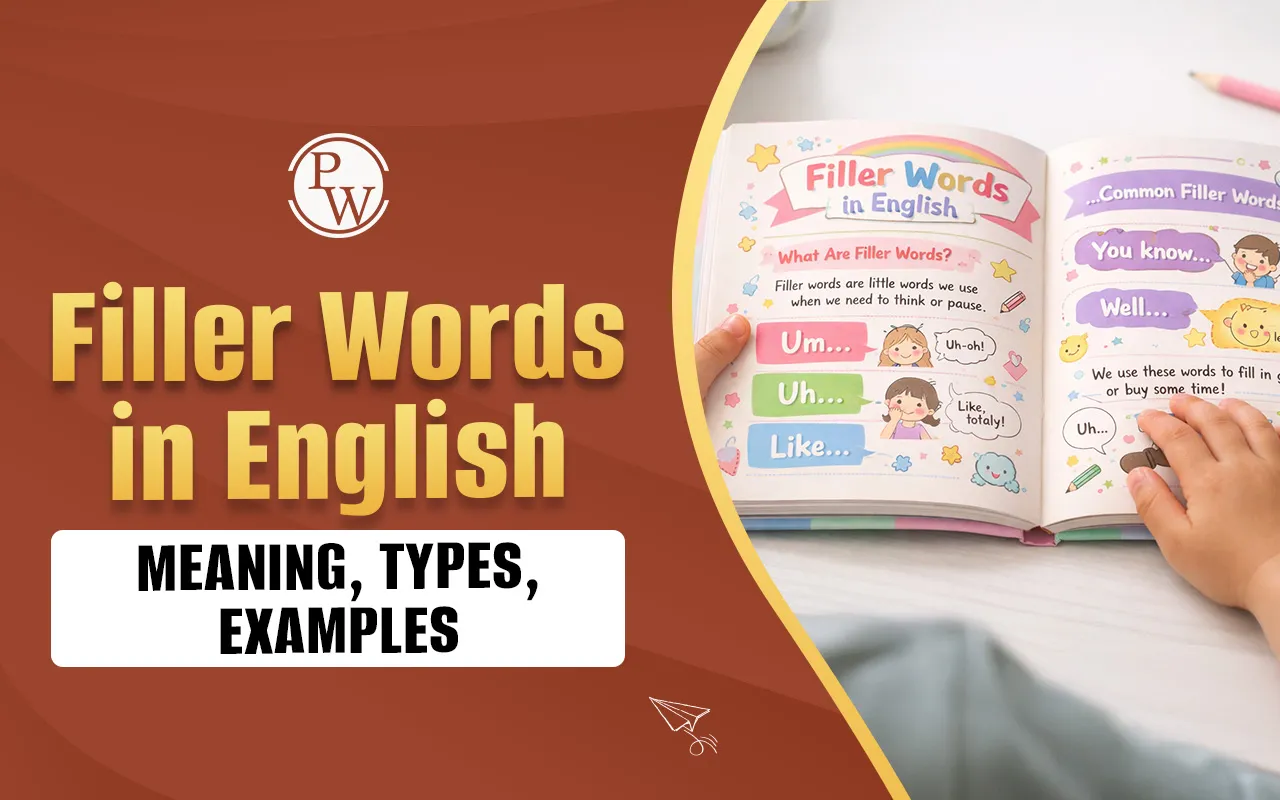
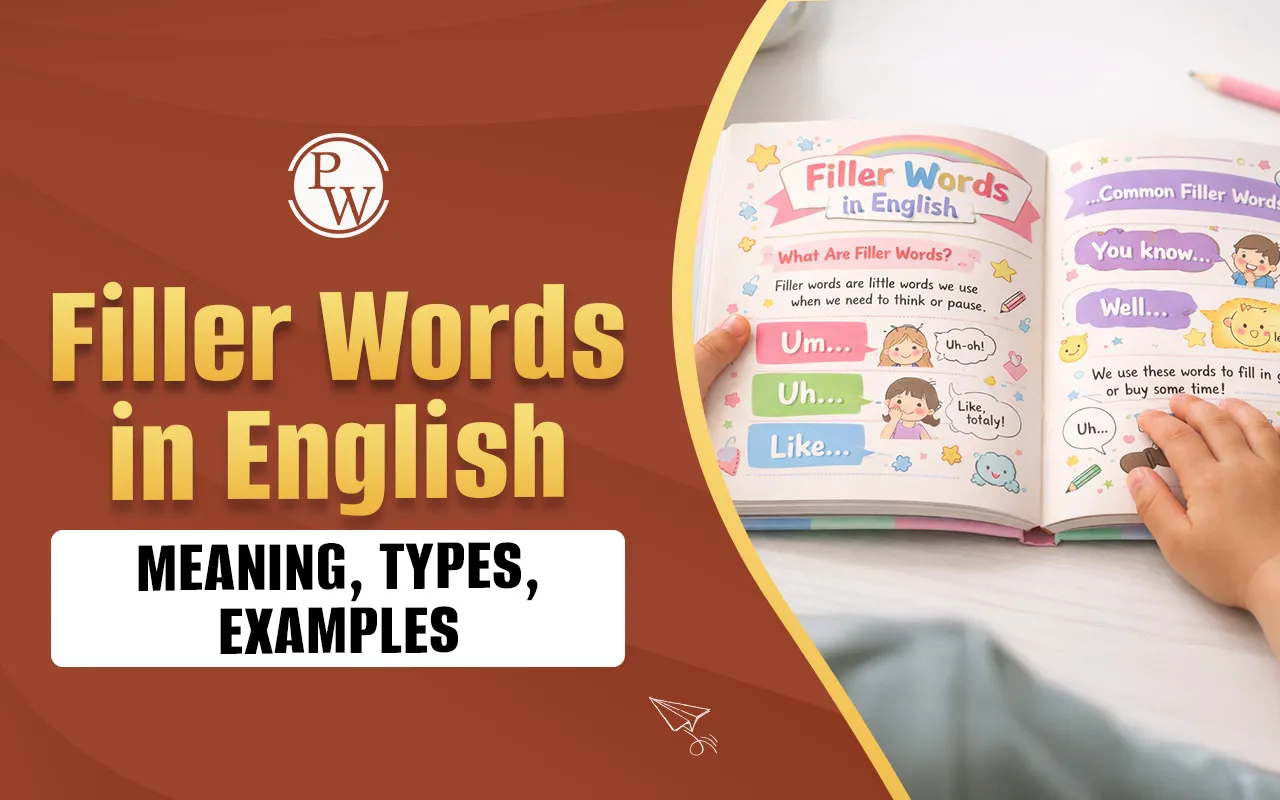
Filler Words Definition
In the simplest terms, it refers to words, phrases, or sounds that mark a pause in spoken language. Unlike nouns or verbs, these terms do not add specific information to the sentence. If you were to remove them, the core meaning of the sentence would remain exactly the same.
In linguistics, these are often called "discourse markers". They act as a signal to the listener that the speaker is not finished talking yet, even if there is a brief silence. Instead of an awkward quiet moment, a small "um" tells the person you are talking to, "Wait a second, I am still thinking."
Role of Filler Words in Daily Conversation
To truly grasp the' impact, we have to look at how humans process information. Speaking is a complex task. Your brain has to choose the right vocabulary, apply grammar rules, and control your physical voice all at once.
Sometimes, your brain needs a millisecond to catch up. That is where a filler comes in. They act as a "holding pattern" for your voice.
-
Pacing: They give the listener time to process what you just said.
-
Softening: They can make a statement sound less harsh or demanding.
-
Connection: Using "like" or "actually" can make a conversation feel more informal and friendly.
Common Filler Words Types
Not all fillers are created equal. Depending on the context, we use different sounds or phrases to achieve different goals. Here is a breakdown of the main types you will encounter in English.
1. Hesitation Sounds
These are the most basic types. They aren't even words, just vocalised sounds.
-
Um / Uh: Used when searching for a specific fact or name.
-
Erm: The British English equivalent of "um," often used during moments of deep thought.
2. Transition Fillers
These are used when you are moving from one idea to another or trying to summarise a point.
-
So: Often used to start a sentence or lead to a conclusion.
-
Basically: Used to simplify a complex idea, though often overused.
-
Anyway: A way to get back to the main point after a distraction.
3. Social Awareness Fillers
These markers check if the listener is still following the conversation.
-
You know?: A quick check to see if the listener understands the context.
-
I mean: Used to clarify or rephrase a point that might have been confusing.
-
Right: Often used at the end of a sentence to seek agreement.
4. Precision Fillers
Ironically, these words often make a sentence less precise, but they are used to add emphasis.
-
Literally: Used to show that something is true, though nowadays it is often used for exaggeration.
-
Actually / In fact: Used to point out a correction or a surprising detail.
Read More - Word Formation, Different Types With Examples
Filler Words Examples
To see how these work in the real world, let’s look at some examples. Notice how the sentence stays the same even if the bold words are taken out.
-
Example 1: "I was, like, going to the shop, and, um, I forgot my wallet."
-
Example 2: "Basically, the movie was great, but the ending was, you know, a bit boring."
-
Example 3: "Well, I think we should, well, probably start the meeting now."
-
Example 4: "So, that is why the experiment failed, right?"
List of Common Filler Word
Here are some of the most commonly used words:
|
Filler Word |
Typical Usage |
Best Used For |
|
Um / Uh |
Hesitation |
Buying a few seconds to think of a word. |
|
Like |
Informal Emphasis |
Describing something or quoting someone. |
|
You know |
Seeking Agreement |
Ensuring the listener is on the same page. |
|
Basically |
Summarising |
Condensing a long story into one point. |
|
I mean |
Clarification |
Correcting a mistake you just made. |
|
Actually |
Contrast |
Adding a surprising or opposing fact. |
Read More - Word Formation, Different Types With Example
Advantages vs Disadvantages of Filler Words
Understanding both sides helps you use filler phrases more effectively.
Advantages
-
Help you buy time to think
-
Make speech sound natural and conversational
-
Help maintain flow without awkward silence
-
Can soften statements and sound polite
Disadvantages
-
Overuse can make you sound unconfident or unprepared
-
Can distract listeners from your main message
-
May reduce clarity in professional settings
-
Makes speech sound repetitive or cluttered
Formal vs Informal Use Of Filler Words
These words are not used the same way in all situations.
Informal Settings (Allowed)
-
Conversations with friends
-
Casual discussions
-
Storytelling
Example:
“Like, I was just thinking…”
Formal Settings (Use Carefully)
-
Job interviews
-
Presentations
-
Public speaking
Better alternative:
Pause instead of saying “um”
The key is to reduce fillers in formal situations while allowing natural speech in casual ones.
Spoken vs Written Use Of Filler Words
Filler phrases behave very differently in speech and writing.
Spoken English
-
Completely natural
-
Help manage pauses
-
Make speech sound human
Written English
-
Usually avoided
-
Can make writing look unprofessional
-
Only used in dialogue or creative writing
Example:
-
Spoken: “So, I think we should start.”
-
Written: “We should start.”
How to Reduce Excessive Use Of Filler Words?
If you find yourself relying too heavily on these words, here are some practical tips to improve your fluency:
-
Record Yourself: Talk about your favourite hobby for two minutes and record it. Listen back and count how many times you used a filler.
-
Embrace the Pause: Silence is powerful. Instead of saying "um," just take a breath. It makes you look more confident and thoughtful.
-
Slow Down: Most people use fillers because they are speaking faster than their brain can think. Slowing your pace gives your mind time to find the right words.
-
Expand Your Vocabulary: Sometimes we use fillers because we lack the specific word for a situation. Reading more helps bridge this gap.
Give Your Child a Global Advantage with CuriousJr’s Cambridge-Certified English Program
Is your child finding it difficult to speak or understand English with confidence at school or in everyday situations? CuriousJr helps children aged 6 to 14 develop strong English skills through live online English learning classes led by experienced teachers.
Our program is based on internationally recognized Cambridge standards and is thoughtfully designed for Indian learners. It offers four structured levels—Pre A1, A1, A2, and B1—allowing children to gradually build their grammar, vocabulary, reading, writing, listening, and speaking skills.
With small batch sizes, every child receives personalised attention and the support they need to learn at their own pace. The focus is on helping children communicate clearly and confidently in both academic and real-life situations.
Book a demo session today and discover how CuriousJr can enhance your child’s English learning journey.
Filler Words in English FAQs
What is filler words main purpose in a conversation?
Are filler phrases considered grammatically incorrect?
Can you give some examples for formal settings?
Do filler phrases mean something different from slang?








 Live & recorded classes available at easeDashboard for progress trackingMillions of practice questions at your fingertips

