Fine Motor Skills: Overview, Importance, Milestones, Impact
 Ananya Gupta23 Oct, 2024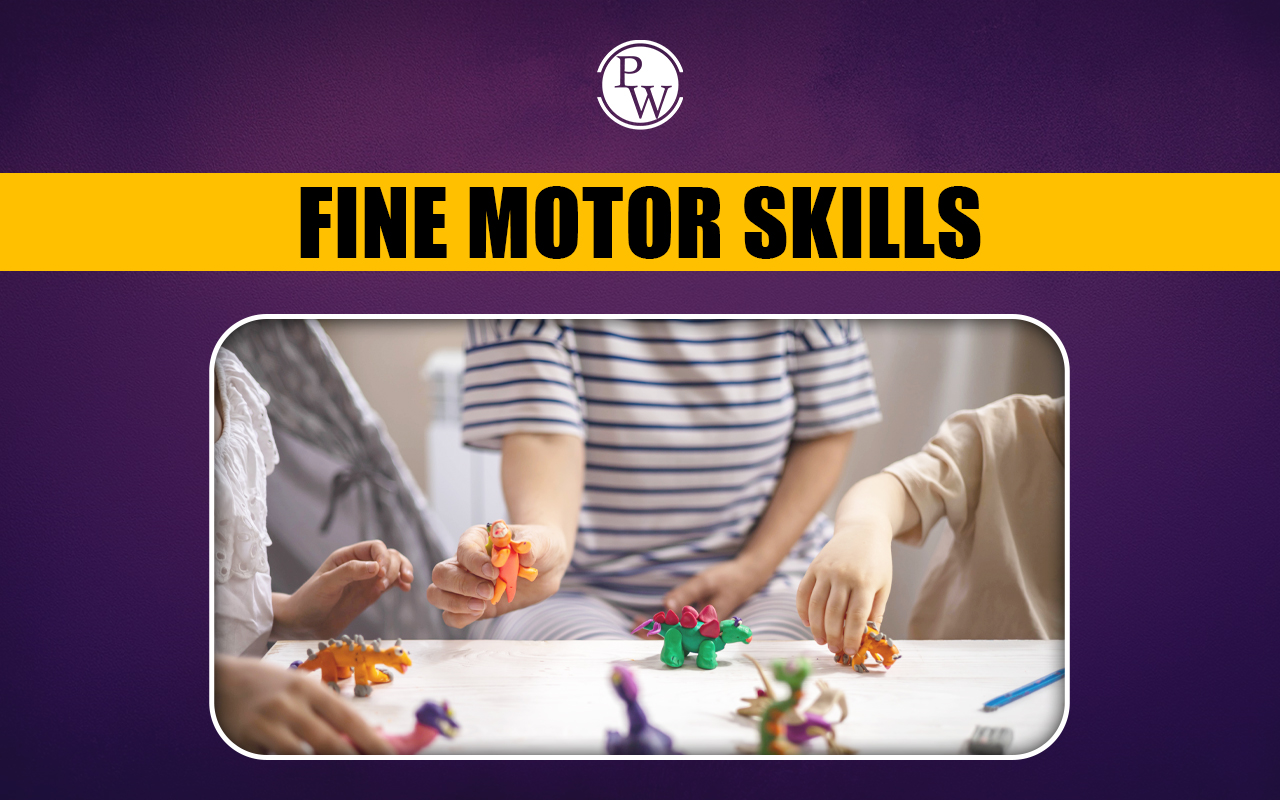
Fine Motor Skills: Fine motor skills refer to the small movements involving the hands, fingers, feet, and toes that are essential for everyday tasks such as writing, buttoning clothes and tying shoes. These skills develop gradually from infancy through adulthood.
Healthcare providers track fine motor development using specific milestones for different age groups. Parents and caretakers should consult with their child's healthcare provider to understand the expected skills at each stage and ensure proper development.What are Fine Motor Skills?
Fine motor skills are the small, precise movements we make with our hands, fingers, feet and toes, involving the coordination of muscles, joints, and nerves. These skills are important for tasks like pinching objects between your thumb and finger or performing detailed movements with your feet, such as in sports like soccer or dancing. Fine motor control requires awareness, planning, coordination, strength, sensation and precision. In child development, fine motor skills are a key aspect of physical development. Along with cognitive, language and social-emotional growth, healthcare providers monitor fine motor milestones closely. Delays in developing these skills can indicate underlying neurological or physical conditions. Early detection allows for timely interventions, helping children get the support they need to develop these crucial skills.Examples of fine motor skills include:
- Holding a pencil to write or draw.
- Cutting paper using scissors.
- Folding clothes neatly.
- Typing on a keyboard.
- Fastening buttons on a shirt.
- Zipping up a jacket.
- Tying shoelaces.
- Turning a doorknob.
- Eating with utensils like forks or spoons.
- Using a video game controller.
- Playing musical instruments, such as the piano or guitar.
Why are Fine Motor Skills Important?
Fine motor skills are important for various aspects of daily life. They enable us to perform countless everyday tasks that require precise movements, such as brushing our teeth, cooking, eating and dressing ourselves.
These skills promote independence and self-care, allowing individuals to manage personal hygiene, prepare meals and dress without assistance.
Fine motor skills play a significant role in hobbies and activities that many people enjoy, such as playing musical instruments, crafting and playing video games. For children, developing fine motor skills is important for completing schoolwork, including tasks like drawing, writing and using scissors. In the workplace, fine motor skills are equally important, as they are needed for various tasks, including operating machinery, typing on a computer, and performing delicate procedures, such as surgery. Overall, fine motor skills are foundational for independence, learning and many professional activities.What are Fine Motor Skill Milestones?
Fine motor skill milestones refer to the developmental benchmarks that children reach as they grow and refine their small muscle movements and hand-eye coordination. Here is a general outline of these milestones by age:Infants (0-12 months)
- 0-3 months: Grasp reflex; can briefly hold objects placed in their hands.
- 4-6 months: Reaches for and grasps toys; begins to transfer objects between hands.
- 7-9 months: Uses a pincer grasp (thumb and forefinger) to pick up small items; can bang two objects together.
- 10-12 months: Can release an object intentionally; may start to use a spoon or finger-feed.
Toddlers (1-3 years)
- 1-2 years: Can stack blocks; begins to scribble with crayons; turns pages of a book (multiple pages at once).
- 2-3 years: Can draw simple shapes and uses utensils more effectively.
Preschoolers (3-5 years)
- 3-4 years: Can cut with scissors; can copy a circle; strings beads or pasta; builds towers with blocks (6-8 blocks high).
- 4-5 years: Can write some letters or their name; draws a person with recognizable features; uses tools like a fork and knife with more control.
Early Elementary (5-7 years)
- 5-6 years: Can write numbers and letters; can tie shoelaces; can draw a person with a head, body, arms, and legs.
- 6-7 years: Can use scissors to cut along a line; can complete puzzles; performs tasks like buttoning, zipping, and snapping with ease.
How do you Develop Fine Motor Skills?
Here are some effective ways to help develop fine motor skills in children:- Play with Blocks and Puzzles : Stacking blocks or fitting puzzle pieces together encourages hand-eye coordination and dexterity.
- Art and Crafts : Activities like coloring, drawing, cutting with scissors and gluing help strengthen hand muscles and improve control.
- Using Utensils : Encourage children to use forks, spoons and knives during meals. This practice helps them learn control and coordination.
- Beading : Stringing beads onto a string or shoelace helps develop the pincer grasp and fine manipulation skills.
- Playing with Playdough : Kneading, rolling and shaping playdough helps strengthen the small muscles in the hands and fingers.
- Climbing and Swinging : Activities that involve climbing, swinging or balancing can improve overall coordination and strength.
- Dressing Up : Allowing children to practice zipping, buttoning and tying shoelaces promotes independence while developing fine motor skills.
- Gardening : Simple gardening tasks, like planting seeds or pulling weeds, involve hand movements that improve coordination.
- Musical Instruments : Playing instruments like a piano, xylophone, or drums enhances finger strength and coordination.
- Playing Video Games : Certain video games can help improve hand-eye coordination and reaction times, but moderation is key.
What Conditions can affect fine motor skills?
Here is a overview of conditions that can affect fine motor skills, along with explanations for each category:1. Neurological Conditions:
- Autism Spectrum Disorder: May lead to challenges in coordinating movements, impacting tasks like writing and using utensils.
- Cerebral Palsy: Affects muscle coordination and control, making fine motor tasks difficult.
- Dysgraphia: A specific learning disability that hinders writing abilities due to poor motor control.
- Developmental Coordination Disorder: Affects physical coordination, making everyday tasks challenging.
2. Physical Conditions:
- Juvenile Rheumatoid Arthritis: Causes joint inflammation, which can limit movement and dexterity.
- Muscular Dystrophy: A group of diseases that weaken muscles, impacting the ability to perform fine motor tasks.
- Spina Bifida: Can affect the spinal cord and nerves, leading to issues with movement and coordination.
3. Sensory Processing Disorders:
- Sensory Processing Disorder: Impacts how the brain processes sensory information, affecting fine motor skills through difficulties with tactile sensations.
4. Injuries and Trauma:
- Traumatic Brain Injury: Can impair cognitive and motor functions, affecting coordination and control.
- Brachial Plexus Injury: Affects nerve function in the arm, leading to limited hand and finger movement.
5. Age-Related Conditions:
- Dementia: May lead to decreased cognitive function, affecting the ability to perform fine motor tasks.
- Parkinson’s Disease: A neurodegenerative disorder that impacts movement, leading to tremors and rigidity in the hands.
- Rheumatoid Arthritis: Can cause joint pain and stiffness, significantly affecting hand dexterity.
6. Genetic Conditions:
- Down Syndrome: Often associated with hypotonia (reduced muscle tone), which can impact motor skills development.
- Hydrocephalus: Accumulation of fluid in the brain can lead to developmental delays, including fine motor skills.
Fine Motor Skills FAQs
What are fine motor skills?
Why are fine motor skills important?
At what age do fine motor skills develop?
How can I help my child develop fine motor skills?






 Live & recorded classes available at easeDashboard for progress trackingMillions of practice questions at your fingertips