






How to Identify Tenses in English with Examples
 Nikita Aggarwal24 Mar, 2026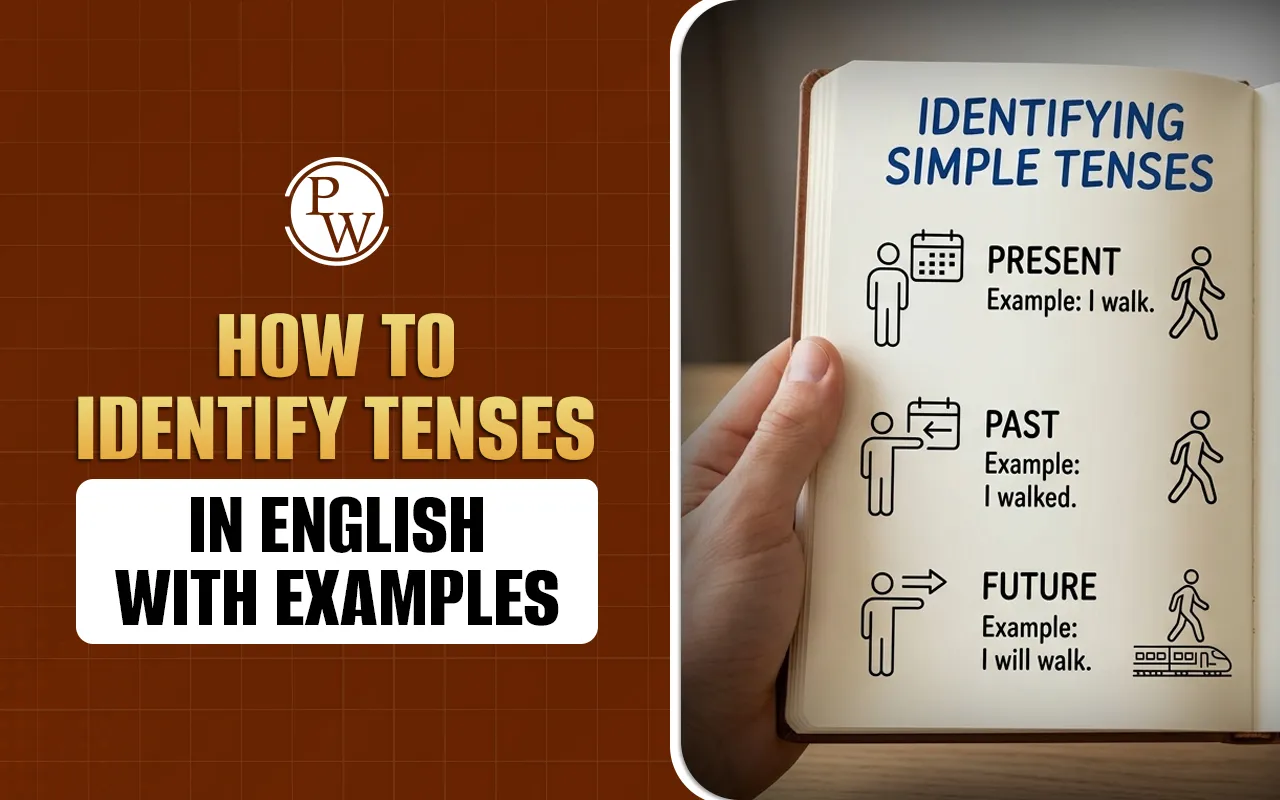
What are Tenses?
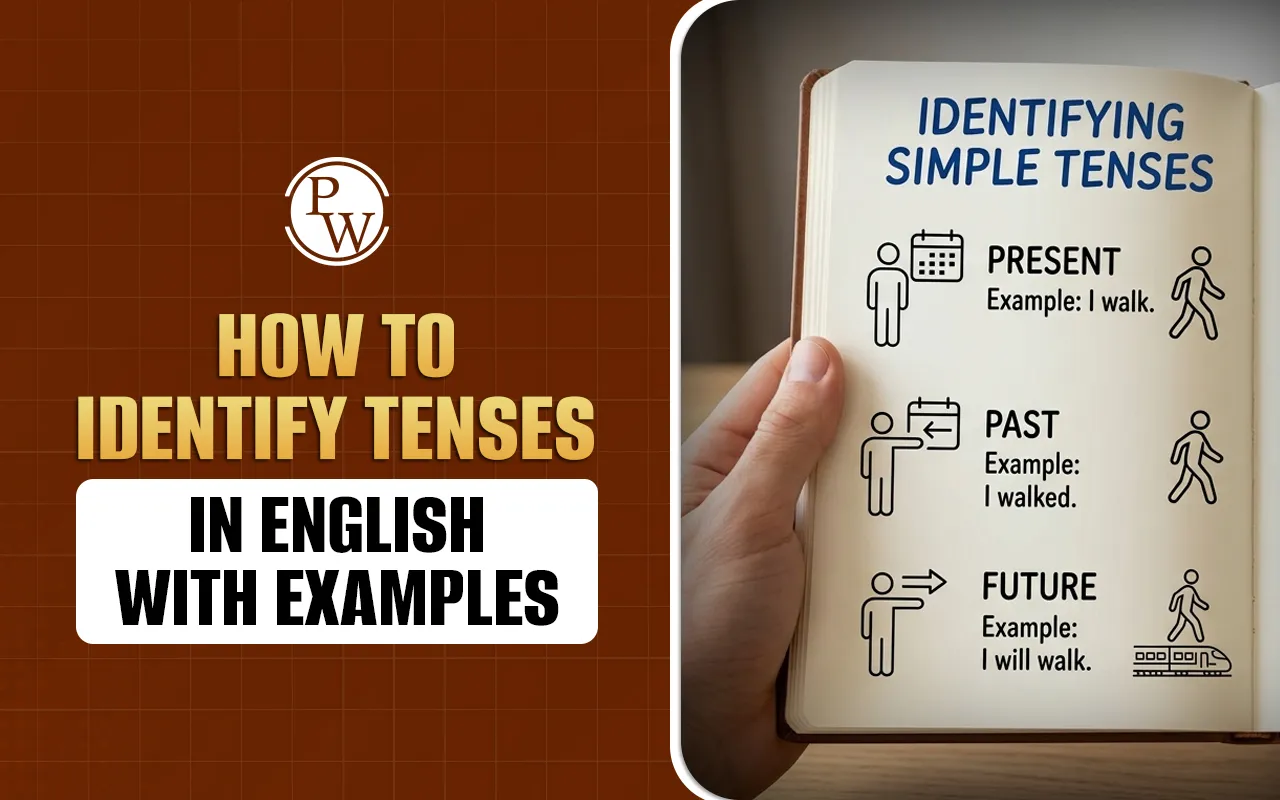
Tenses show when an action or state happens. Every sentence uses a verb that gives a time clue.
-
English has three time frames: past, present, and future.
-
Each one has four forms: simple, continuous, perfect, and perfect continuous.
-
Together, these make the 12 tenses in English grammar.
How to Identify Tenses in English?
To figure out what tense a statement is in, follow this logical flow:
-
Find the Main Verb: Look for the word that describes the activity or state.
-
Look for auxiliary verbs: Look for the words "is," "am," "are," "was," "were," "has," "have," or "will."
-
Look at the verb ending: Check to see if the word finishes in "-s," "-ed," or "-ing."
-
Find Time Markers: Words like "yesterday," "now," or "tomorrow" give important hints.
How to Identify Present Tense with Examples
The present tense is used for facts, habits, and actions happening right now.
-
Simple Present: Look for the base form of the verb. For third-person singular (he, she, it), the verb usually ends in "-s" or "-es."
-
Example: She walks to school.
-
Present Continuous: This combines "is/am/are" with a verb ending in "-ing."
-
Example: They are playing football.
-
Present Perfect: Look for "has" or "have" followed by the past participle (usually ending in "-ed" or an irregular form).
-
Example: I have finished my homework.
-
Present Perfect Continuous: This uses "has/have been" + verb + "-ing."
-
Example: It has been raining since morning.
How to Identify Past Tense with Examples
Things that have already happened are told using past tenses.
-
Simple Past: This usually involves a verb ending in "-ed" or a unique irregular form (like "went" or "ate"). No auxiliary verb is used in positive statements.
-
Example: He called me yesterday.
-
Past Continuous: Look for "was" or "were" + verb + "-ing."
-
Example: We were watching a movie.
-
Past Perfect: This is identified by the word "had" followed by a past participle.
-
Example: The train had left before I arrived.
-
Past Perfect Continuous: Look for "had been" + verb + "-ing."
-
Example: She had been studying for hours.
Read More - Tense Chart | Definition, Types & Rules of English Tenses
How to Identify Future Tense with Examples
Future tenses are perhaps the easiest to identify tenses in English because they almost always rely on the word "will."
-
Simple Future: "Will" + base verb.
-
Example: I will see you later.
-
Future Continuous: "Will be" + verb + "-ing."
-
Example: They will be travelling tomorrow.
-
Future Perfect: "Will have" + past participle.
-
Example: By next year, I will have graduated.
-
Future Perfect Continuous: "Will have been" + verb + "-ing."
-
Example: By 5 PM, he will have been working for eight hours.
Quick Reference Table for 12 Types of Tense Identification
This table serves as a cheat sheet to help you identify the tense at a glance.
|
Tense Category |
Simple Form |
Continuous (-ing) |
Perfect (Has/Have/Had) |
Perfect Continuous |
Example |
|
Present |
Verb / Verb + s |
am/is/are + verb-ing |
has/have + past participle |
has/have been + verb-ing |
She writes every day. / She is writing now. / She has written the letter. / She has been writing for an hour. |
|
Past |
Verb + ed (or irregular) |
was/were + verb-ing |
had + past participle |
had been + verb-ing |
She wrote yesterday. / She was writing then. / She had written before lunch. / She had been writing for an hour before dinner. |
|
Future |
will + verb |
will be + verb-ing |
will have + past participle |
will have been + verb-ing |
She will write tomorrow. / She will be writing at 5 PM. / She will have written the letter by then. / She will have been writing for an hour by 6 PM. |
Read More - Main Verb: Types, How to Identify, Common Mistakes, and Examples
Identify Tenses Examples
Let’s look at some specific identify the tense examples to sharpen your skills.
-
"They have lived here for ten years." * Analysis: We see "have" + "lived" (past participle). This is the Present Perfect Tense.
-
"The birds were flying south."
-
Analysis: We see "were" (past auxiliary) + "flying" (-ing form). This is the Past Continuous Tense.
-
"I shall go to the market."
-
Analysis: "Shall" is a variation of "will" used for the future. This is the Simple Future Tense.
-
"She drinks tea every morning."
-
Analysis: The verb "drinks" has an "-s" and indicates a habit. This is the Simple Present Tense.
Identify Tenses Worksheet
Try to identify tenses in the following sentences. This mini identify the tenses worksheet will help you see if you have grasped the concepts.
-
The chef is preparing a delicious meal.
-
I had never seen such a beautiful sunset before.
-
We will have completed the project by Monday.
-
The children played in the park all afternoon.
-
He has been writing his novel for two years.
Answers for the Worksheet:
-
Present Continuous (is + preparing)
-
Past Perfect (had + seen)
-
Future Perfect (will have + completed)
-
Simple Past (played)
-
Present Perfect Continuous (has been + writing)
Common Mistakes in Identifying Tenses
One major hurdle for students is irregular verbs. Not every past tense verb ends in "-ed." For instance, the past tense of "buy" is "bought," and the past tense of "cut" is "cut." To find the tense correctly in these cases, you must memorise common irregular verb lists.
Another challenge is the difference between the Simple Past and Present Perfect.
-
Simple Past: "I ate lunch" (Focuses on a finished time in the past).
-
Present Perfect: "I have eaten lunch" (Focuses on the present result or experience).
When you identify tenses, always check if the sentence links the past to the present. If it does, you are likely looking at a perfect tense.
Help Your Child Build Strong English Skills with PW CuriousJr
PW CuriousJr delivers thoughtfully crafted online English classes that make learning easy and effective for young learners. With small batch sizes, every child receives personal attention, ensuring better clarity and support. Fun and interactive activities keep students engaged while helping them develop confidence in reading, writing, speaking, and listening skills.
The curriculum is aligned with globally accepted English standards, helping children use the language confidently in everyday life. Each course is well-structured, simple to follow, and designed to create a smooth and enjoyable learning experience.
In addition to live classes, students also get access to recorded video lessons for revision and additional practice. These recordings allow them to revisit concepts anytime and learn at their own pace. Together, live sessions and recorded lessons provide a complete and balanced English learning journey.
How to Identify Tenses in English FAQs
How can I quickly identify a tense in a long sentence?
What is the easiest way to identify the tense when it's irregular?
Are there specific words that help me identify the tense?
Can a sentence have more than one tense?






 Live & recorded classes available at easeDashboard for progress trackingMillions of practice questions at your fingertips

