






Paralanguage in Communication: Definition, Types and Examples
 Nikita Aggarwal30 Mar, 2026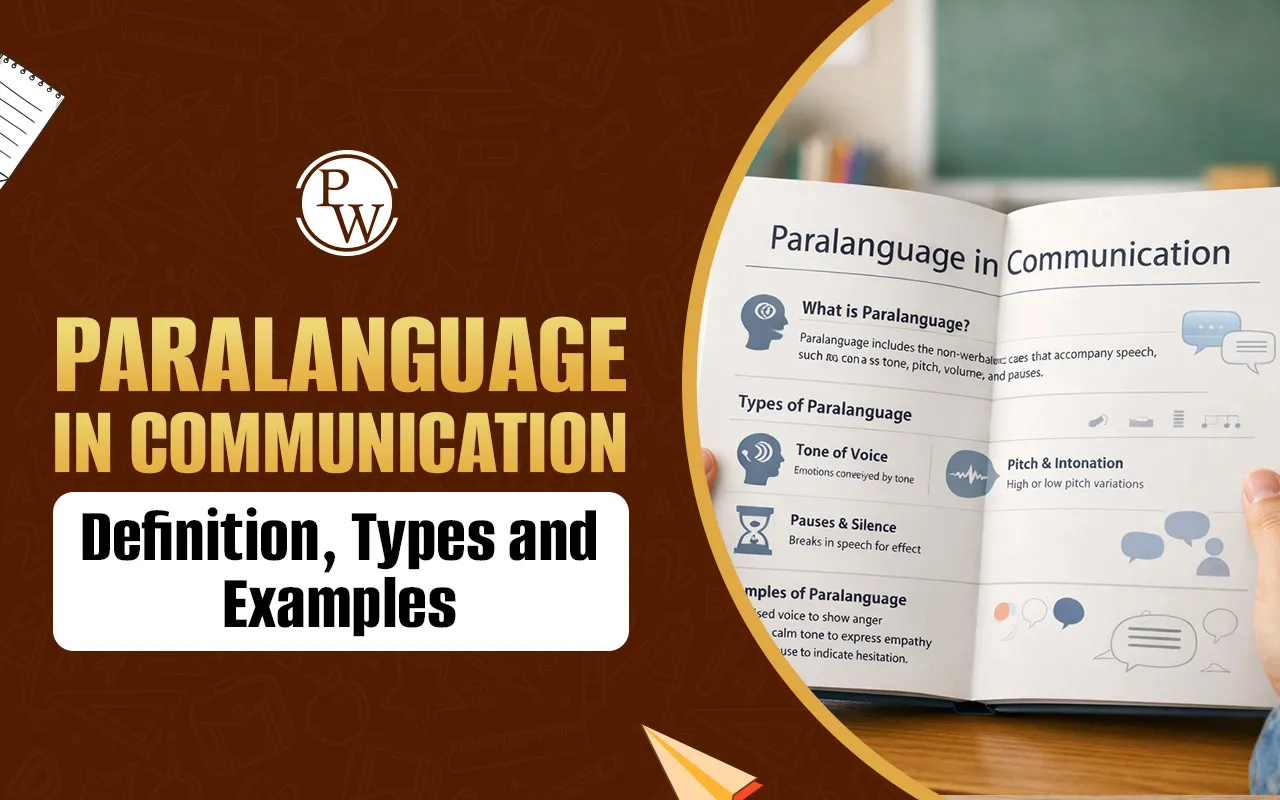
What is Paralanguage?
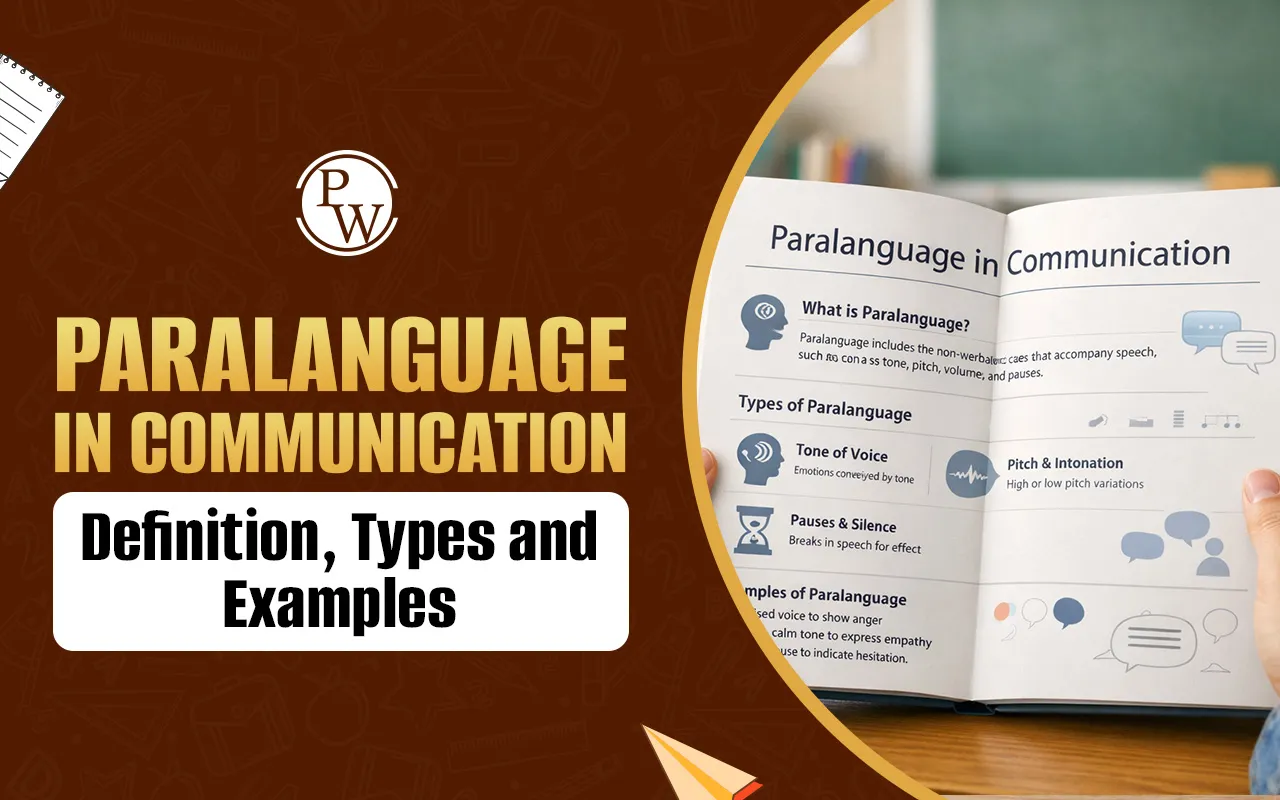
It is a component of meta-communication that modifies meaning, provides nuance, or conveys emotion. While "language" refers to the words and grammar we use, the latter refers to the vocal characteristics that surround those words.
Think of it as the "music" of your voice. It includes everything from the volume of your breath to the rhythm of your sentences. It is essentially non-verbal communication restricted to the acoustic side of speech. Even a simple "hmm" or a well-placed pause carries significant weight.
Types of Paralanguage in English
Understanding the different types allows you to control the signals you send. Here are the primary vocal features that define how we speak:
Pitch and Inflection
Pitch refers to how high or low a voice sounds. Inflection is the shift in pitch during a sentence. For instance, raising your pitch at the end of a sentence usually indicates a question. High pitch often signals excitement or nervousness, while a lower pitch is associated with authority and calm.
Tone of Voice
Tone reflects your attitude toward the subject or the person you are talking to. A "warm" tone suggests friendliness, while a "flat" or monotonous tone might suggest indifference or robotic delivery.
Rate of Speech (Tempo)
The speed at which you talk changes the message. Speaking quickly can suggest urgency, excitement, or anxiety. Conversely, speaking slowly might be used to emphasize important points or could be interpreted as a lack of confidence if overdone.
Vocalizations and Fillers
These are sounds that are not formal words but carry immense meaning:
-
Fillers: Sounds like "um," "uh," or "ah" often indicate that the speaker is thinking or hesitating.
-
Non-Word Sounds: Laughter, sighing, groaning, or gasping. For example, a heavy sigh after a sentence can turn a positive statement into one of frustration.
Volume and Intensity
Being too loud can be perceived as aggressive or overbearing, while being too quiet might make you seem timid or unsure. Adjusting volume is a key part used to grab attention or share something confidential.
Paralanguage Examples
To see how this works in practice, let’s look at some common examples that students face daily.
The Power of Word Emphasis
Consider the sentence: "I didn't say she stole my money."
-
Emphasis on 'I': Implies someone else said it.
-
Emphasis on 'Stole': Implies she borrowed it or found it.
-
Emphasis on 'My': Implies she stole someone else’s money.
Conversational Shifts
-
The Sarcastic "Really?": A low-pitched, dragged-out "Really?" indicates disbelief or mockery.
-
The Excited "Really?": A high-pitched, fast "Really?" indicates genuine surprise or happiness.
-
The "I'm Fine": Said sharply, it signals irritation; said softly with a sigh, it signals sadness; said cheerfully, it means actual contentment.
Student Scenarios
-
Viva/Oral Exams: Answering a question with a rising inflection at the end makes a correct answer sound like a guess, reducing the student's perceived confidence.
-
Group Projects: A soft "hmm" paired with a nod encourages a teammate to keep speaking, acting as a "back-channel" signal of engagement.
-
Presentations: A long, purposeful pause after a major point creates suspense and gives the audience time to process information.
Read More - Idioms and Phrases in English- Definition and Examples
Verbal vs. Non-Verbal Paralanguage in Communication
It is helpful to see where these vocal cues sit in the broader world of communication. It acts as a bridge between your words and your body language.
|
Feature |
Verbal Communication |
Paralanguage (Vocalic) |
Non-Verbal (Body) |
|
Focus |
Words/Grammar |
Vocal delivery |
Physical cues |
|
Examples |
Vocabulary, Syntax |
Pitch, Tone, Pace |
Gestures, Posture |
|
Role |
Literal Information |
Emotional Context |
Visual Context |
While verbal communication uses words, non-verbal uses the voice's physical qualities. It doesn't rely on the dictionary definition of words, but "vocal" because it involves the mouth and throat.
Common Mistakes Students Make in Paralanguage
Even the best students can struggle with it. Being aware of these common pitfalls can help you avoid sending the wrong signals:
-
The "Nervous Rush": When students get anxious during a viva or presentation, they often speak too fast. This makes it hard for the listener to follow and signals a lack of confidence.
-
The Monotone Trap: Using a flat, unchanging tone makes your speech sound lifeless. This usually leads to the audience losing interest very quickly.
-
Filler Dependency: Overusing words like "um," "like," or "you know" acts as a distraction. It breaks the flow of your message and can make you seem unprepared.
-
Unintentional Aggression: Sometimes, speaking too loudly or using a sharp tone can make a student sound rude or defensive, even when they are just trying to be heard.
-
Inappropriate Laughter: Laughing during a serious discussion or after making a mistake—often due to awkwardness—can be misinterpreted as a lack of seriousness or respect.
-
The "Whisper" Effect: Speaking too softly during a classroom interaction suggests insecurity, making it difficult for teachers to assess your true knowledge.
Read More - Spelling Rules: Important Spelling Rules in English
How Students Can Improve Paralanguage for Better Communication?
Improving your vocal delivery is a skill that can be developed with practice. Here are practical ways to refine it:
-
Record and Review: Use your phone to record yourself giving a short speech. Listen back specifically for your "vocal variety." Do you sound bored? Are you speaking too fast?
-
The "One Sentence" Challenge: Take a simple sentence like "I am going to the shop" and try to say it expressing five different emotions: anger, joy, sadness, sarcasm, and fear. This builds "tone awareness."
-
Strategic Pausing: Practice replacing "um" and "uh" with a moment of silence. This makes you sound more thoughtful and confident.
-
Control the Breath: Deep breathing helps stabilize your volume and pitch, preventing your voice from becoming high-pitched or "squeaky" when you are nervous during a viva or presentation.
-
Articulation Exercises: Ensure you are not "mumbling" or swallowing your words. Clear pronunciation increases your credibility and helps you manage it effectively.
Help Your Child Strengthen English Skills with PW CuriousJr
PW CuriousJr provides thoughtfully designed online English classes that make learning easy and effective for young students. With small batch sizes, every child gets personal attention, leading to better understanding and continuous guidance. Engaging activities keep learners interested while building confidence in reading, writing, speaking, and listening skills.
The curriculum is aligned with globally recognized English standards, helping children use the language confidently in everyday life. Each course is simple to follow, well-structured, and created to offer a smooth and enjoyable learning experience.
In addition to live classes, students also get access to recorded video lessons for revision and extra practice. These recordings help them revisit concepts anytime and learn at their own pace, making learning more flexible and effective.
Paralanguage in Communication FAQs
Define paralanguage in simple terms?
What are some common examples?
What are the different types?
How does it help students?









 Live & recorded classes available at easeDashboard for progress trackingMillions of practice questions at your fingertips

