World Mosquito Day 2024, Date, Theme, History
World Mosquito Day 2024 is crucial from UPSC perspective. It highlights mosquito-borne disease awareness, emphasizing prevention, education, and global health strategies. Find more Details about World Mosquito Day 2024 in this article.
 Praveen Kushwah20 Aug, 2024
Share
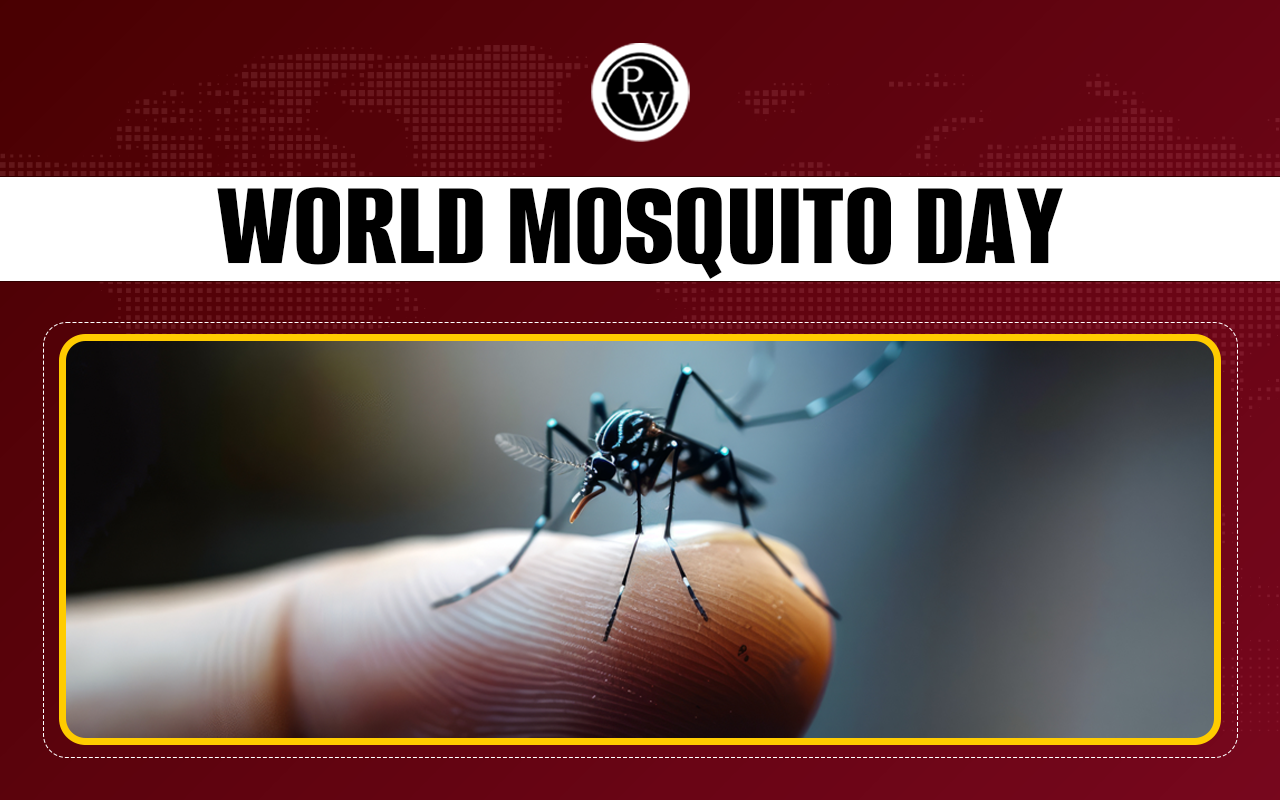
World Mosquito Day 2024: World Mosquito Day is observed on August 20th each year. It is not just a day to celebrate a scientific milestone but also an important event for those preparing for competitive exams like UPSC and other government exams. This day marks a significant moment in medical history with far-reaching effects on public health. The history, science, and social impact of World Mosquito Day can boost the knowledge of students, especially in areas related to public health, global health efforts, and disease control in governance.
For UPSC aspirants , World Mosquito Day is essential because it highlights the connection between science, public policy, and global health—an area that is becoming increasingly important in today's world. The fight against mosquito-borne diseases involves international cooperation, national policy decisions, and public health strategies, all of which are key topics in the UPSC syllabus , particularly in General Studies Papers II and III.World Mosquito Day 2024 Overview
World Mosquito Day 2024 raises awareness about mosquito-borne diseases, honouring the discovery of their transmission. The other important details about this important Day are mentioned below.| World Mosquito Day 2024 Overview | |
| Attribute | Details |
| Date | August 20 |
| Year | First observed in 1897, celebrated annually since then |
| Theme (2024) | Accelerating the fight against malaria for a more equitable world |
| Person Associated | Sir Ronald Ross |
| Nobel Prize | Awarded to Sir Ronald Ross in 1902 for discovering the malaria parasite in mosquitoes. |
| Significance | Commemorates the discovery that mosquitoes transmit malaria, raising awareness about prevention. |
| Global Health Impact | Focuses on reducing the global burden of mosquito-borne diseases like malaria, dengue, and Zika. |
| Events and Activities | Educational campaigns, blood donation drives, and research funding initiatives worldwide. |
| Organizations Involved | WHO, CDC, and various health organizations working on mosquito control and disease prevention. |
| Historical Background | First observed on August 20, 1897, when Sir Ronald Ross discovered the link between mosquitoes and malaria transmission. |
| Related Diseases | Malaria, Dengue, Zika, Yellow Fever, Chikungunya. |
World Mosquito Day History
World Mosquito Day traces its origins to August 20, 1897, when Sir Ronald Ross (a British doctor working in the Indian Medical Service) made a groundbreaking discovery. He identified the Anopheles mosquito as the vector responsible for transmitting malaria, a discovery that would later earn him the Nobel Prize in Physiology or Medicine in 1902 . This finding was monumental because, at the time, malaria was an uncontrolled disease with high mortality rates, especially in tropical and subtropical regions. Ross's discovery was not just a scientific breakthrough but a pivotal moment in the history of public health. It shifted the focus from treating the symptoms of malaria to understanding and controlling its transmission. This knowledge laid the groundwork for subsequent research and the development of strategies aimed at reducing the majority of mosquito-borne diseases.Who was Sir Ronald Ross?
Sir Ronald Ross was a British doctor who is best known for discovering that mosquitoes are responsible for spreading malaria. But his contributions went far beyond this discovery. He spent much of his life studying how malaria spreads and worked tirelessly to find ways to control and eventually eliminate the disease. His efforts led to the creation of institutions dedicated to the study of tropical diseases and the training of new scientists and public health workers. Even today, his legacy lives on in the ongoing global fight against malaria and other diseases spread by mosquitoes.When was World Mosquito Day Observed First?
World Mosquito Day was established in 1897 by Sir Ronald Ross to raise awareness about the link between mosquitoes and malaria. Over the years, the day has evolved to include broader efforts aimed at combating all mosquito-borne diseases. It serves as a reminder of the importance of research, public health initiatives, and international cooperation in the fight against these diseases.World Mosquito Day Significance
- World Mosquito Day helps to raise awareness about the dangers of mosquito-borne diseases.
- It highlights the need to control mosquito populations to reduce the spread of diseases like malaria and dengue.
- The day emphasizes the importance of global cooperation in fighting these diseases, which affect millions of people worldwide.
- It also draws attention to the role of public health policies in preventing and managing mosquito-borne illnesses.
- The day reminds us of the ongoing efforts and research needed to combat these diseases effectively.
- World Mosquito Day encourages communities to take preventive measures and protect themselves from mosquito bites.
- It serves as a reminder of the progress made in reducing the impact of these diseases, but also of the work still needed to eradicate them completely.
World Mosquito Day 2024 Theme
The theme for World Mosquito Day 2024 is "Accelerating the fight against malaria for a more equitable world" . The World Mosquito Day Theme 2024 stresses the urgent need to improve efforts to fight malaria, especially in communities that lack resources. It points out how important it is for everyone to have fair access to prevention, treatment, and information about malaria, to reduce the impact of the disease worldwide. Malaria is a mosquito-borne disease that poses a significant health threat, particularly in tropical and subtropical regions. It is caused by parasites that enter the human body through the bites of infected female mosquitoes. World Mosquito Day 2024 advocates for equitable access to preventive measures and treatment of Malaria, ensuring that vulnerable populations receive the support they need to reduce the burden of this disease and improve overall health outcomes.List of Mosquito Borne Diseases
Malaria - A parasitic disease causing fever, chills, and severe complications, often fatal if untreated. Dengue Fever - A viral infection leading to high fever, severe joint pain, and potential bleeding disorders. Zika Virus - A viral disease that is mild in most cases but can cause birth defects if contracted during pregnancy. Chikungunya - A viral infection characterized by sudden fever and severe joint pain, often prolonged. Yellow Fever - A viral disease causing jaundice, fever, and haemorrhage, potentially fatal if untreated. West Nile Virus - A viral infection that can lead to neurological diseases, with symptoms ranging from mild to severe. Lymphatic Filariasis (Elephantiasis) - A parasitic infection leading to severe swelling and disfigurement of limbs. Japanese Encephalitis - A viral brain infection causing inflammation, with possible severe neurological damage. Rift Valley Fever - A viral infection primarily affecting livestock but can cause fever and hemorrhagic syndrome in humans. Saint Louis Encephalitis - A viral disease causing inflammation of the brain, mostly mild but can be severe in older adults.Precaution from Mosquito Borne Diseases
- Use Mosquito Repellents - Apply insect repellents containing DEET, picaridin, or oil of lemon eucalyptus on exposed skin and clothing to prevent mosquito bites.
- Wear Protective Clothing - Dress in long-sleeved shirts, long pants, and socks to minimize skin exposure, especially during peak mosquito activity times.
- Sleep Under Mosquito Nets - Use insecticide-treated bed nets while sleeping, particularly in areas with high mosquito populations.
- Install Screens on Windows and Doors - Ensure windows and doors are fitted with screens to keep mosquitoes out of your living spaces.
- Eliminate Standing Water - Regularly remove or treat standing water around your home, such as in flower pots, buckets, and gutters, to reduce mosquito breeding sites.
- Use Mosquito Traps and Coils - Consider using mosquito traps, coils, or vaporizing mats indoors and outdoors to reduce the number of mosquitoes.
- Avoid Outdoor Activities at Peak Times - Try to stay indoors during dawn and dusk when mosquitoes are most active to reduce the risk of bites.
- Vaccination and Prophylaxis - In regions where certain mosquito-borne diseases are common, consider vaccinations (e.g., yellow fever) or take prophylactic medications (e.g., for malaria).
- Community Participation - Engage in community efforts to clean up and eliminate potential mosquito breeding sites in your area.
- Seek Prompt Medical Attention - If you experience symptoms of a mosquito-borne disease, such as fever, chills, or joint pain, seek medical attention immediately for proper diagnosis and treatment.
National Center for Vector Borne Diseases Control
The National Center for Vector Borne Diseases Control (NCVBDC) is a key institution in India focused on preventing and controlling diseases spread by insects like mosquitoes, such as malaria, dengue, and chikungunya. Working under the Ministry of Health and Family Welfare, NCVBDC leads efforts to manage these diseases through careful monitoring, research, and public health programs. It develops strategies, carries out control measures, and works closely with state governments and international partners. The center is also important in educating communities on how to protect themselves from these diseases, helping to keep people across the country healthy.National Vector Borne Disease Control Programme list
The National Vector Borne Disease Control Programme (NVBDCP) in India focuses on preventing and controlling various vector-borne diseases. Below is a list of key diseases addressed by the program:- Malaria Control Programme : Focuses on reducing malaria transmission through early detection, treatment, and vector control measures like insecticide-treated bed nets and indoor residual spraying.
- Dengue and Chikungunya Control Programme : Aims to control the spread of dengue and chikungunya by managing mosquito breeding sites, promoting community awareness, and ensuring early diagnosis and treatment.
- Japanese Encephalitis (JE) Control Programme : Targets the prevention of JE through vaccination campaigns, vector control, and public education, especially in endemic areas.
- Lymphatic Filariasis Elimination Programme : Works towards eliminating lymphatic filariasis (elephantiasis) by mass drug administration, promoting hygiene, and reducing mosquito breeding.
- Kala-Azar (Visceral Leishmaniasis) Control Programme : Focuses on controlling Kala-Azar by spraying insecticides, early case detection, treatment, and improving living conditions in affected areas.
| Related Articles | |
| National Handloom Day | World Lion Day |
| World Biofuel Day | International Youth Day |
| World Elephant Day | Har Ghar Tiranga 2024 Campaign |
World Mosquito Day 2024 FAQs
What is the primary purpose of World Mosquito Day?
The primary purpose of World Mosquito Day is to raise awareness about the connection between mosquitoes and diseases like malaria and to promote efforts to prevent and control mosquito-borne diseases.
Who discovered Mosquito Day?
World Mosquito Day was established by Sir Ronald Ross after he discovered that mosquitoes transmit malaria.
What is the conclusion of World Mosquito Day?
The conclusion of World Mosquito Day emphasizes the importance of ongoing global efforts to control and eventually eradicate mosquito-borne diseases through research, public health initiatives, and community participation.
What is the nickname for a mosquito?
A common nickname for a mosquito is "skeeter."
What is the full name of a mosquito?
The term "mosquito" is commonly used, but there is no specific "full name" as it refers to various species of the insect family Culicidae.
What is the theme of World Mosquito Day 2024?
The theme of World Mosquito Day 2024 is 'Accelerating the fight against malaria for a more equitable world'.
🔥 Trending Blogs


Talk to a counsellorHave doubts? Our support team will be happy to assist you!


Join 15 Million students on the app today!
 Live & recorded classes available at easeDashboard for progress trackingMillions of practice questions at your fingertips


Free Learning Resources
PW Books
Notes (Class 10-12)
PW Study Materials
Notes (Class 6-9)
Ncert Solutions
Govt Exams
Our Other Websites
Class 6th to 12th Online Courses
Govt Job Exams Courses
UPSC Coaching
Defence Exam Coaching
Gate Exam Coaching
Other Exams
Know about Physics Wallah
Physics Wallah is an Indian edtech platform that provides accessible & comprehensive learning experiences to students from Class 6th to postgraduate level. We also provide extensive NCERT solutions, sample paper, NEET, JEE Mains, BITSAT previous year papers & more such resources to students. Physics Wallah also caters to over 3.5 million registered students and over 78 lakh+ Youtube subscribers with 4.8 rating on its app.
We Stand Out because
We provide students with intensive courses with India’s qualified & experienced faculties & mentors. PW strives to make the learning experience comprehensive and accessible for students of all sections of society. We believe in empowering every single student who couldn't dream of a good career in engineering and medical field earlier.
Our Key Focus Areas
Physics Wallah's main focus is to make the learning experience as economical as possible for all students. With our affordable courses like Lakshya, Udaan and Arjuna and many others, we have been able to provide a platform for lakhs of aspirants. From providing Chemistry, Maths, Physics formula to giving e-books of eminent authors like RD Sharma, RS Aggarwal and Lakhmir Singh, PW focuses on every single student's need for preparation.
What Makes Us Different
Physics Wallah strives to develop a comprehensive pedagogical structure for students, where they get a state-of-the-art learning experience with study material and resources. Apart from catering students preparing for JEE Mains and NEET, PW also provides study material for each state board like Uttar Pradesh, Bihar, and others
Copyright © 2026 Physicswallah Limited All rights reserved.