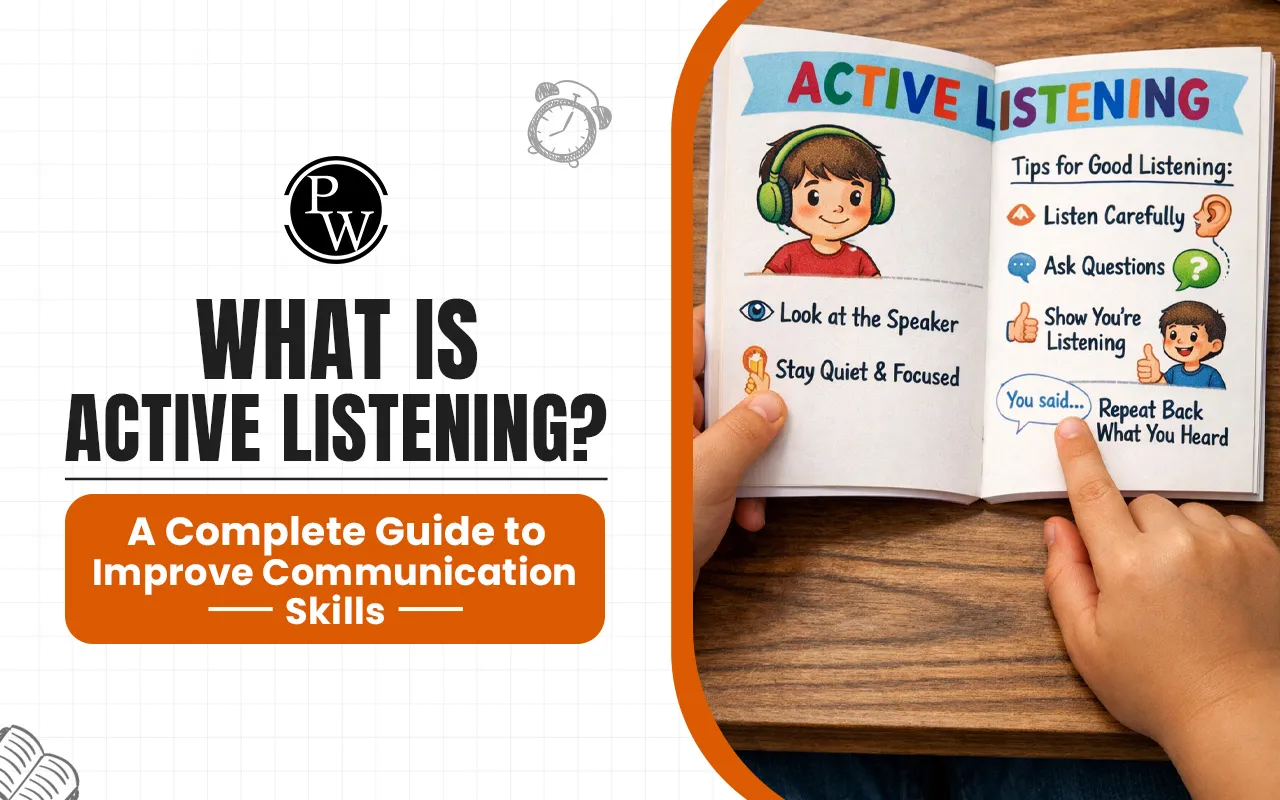
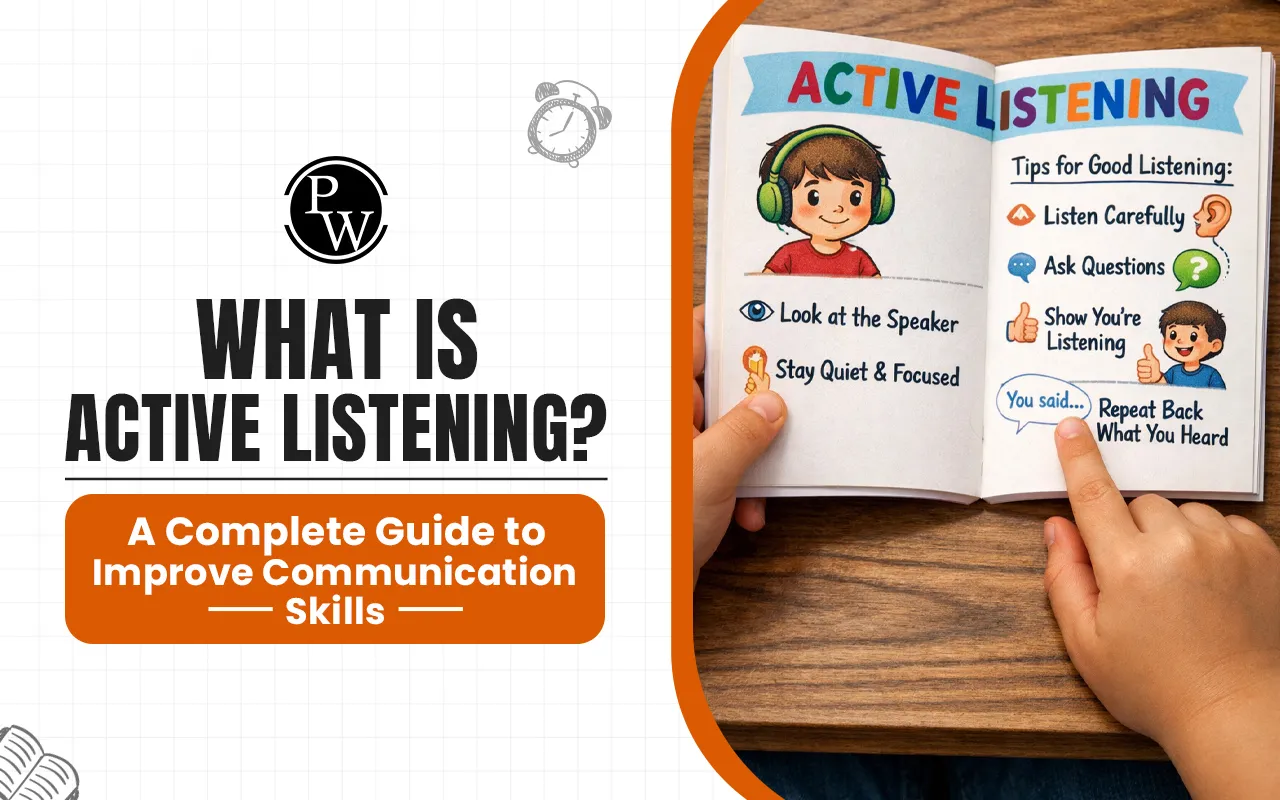
What is Active Listening?
To understand how to communicate better, we first need to look at what this term actually means. It is not a passive act; it is an "active" physical and mental process.
Active Listening Meaning and Definition
It is a way of listening and responding to another person that improves mutual understanding. Unlike passive listening, where you might just hear background noise or a teacher's lecture without absorbing it, this method requires you to be fully engaged.
When you practice this, you are not just waiting for your turn to speak. Instead, you are processing the speaker’s words, observing their body language, and providing feedback to show you have understood them correctly.
Importance of Active Listening in Communication
In any conversation, the goal is to share information. Without these skills, messages often get scrambled. Using these skills helps to:
-
Build Trust: People feel respected when they know you are truly hearing them.
-
Reduce Misunderstandings: You catch the small details that others might miss.
-
Solve Problems: It is easier to find a solution when you fully understand the conflict.
Difference Between Listening and Active Listening
Many people think these two things are the same, but there is a big gap between them. To make it easier to understand, let’s look at how they differ in practice:
|
Feature
|
Passive Listening (Hearing)
|
Active Listening
|
|
Effort
|
Natural and effortless.
|
Requires mental energy and focus.
|
|
Goal
|
Just receiving sound.
|
Understanding the speaker's message.
|
|
Body Language
|
Slumped posture or looking away.
|
Upright posture and eye contact.
|
|
Feedback
|
Little to no response.
|
Asking questions and nodding.
|
|
Result
|
Information is often forgotten.
|
Information is remembered and understood.
|
Active Listening Skills for Better Communication
Developing listening skills is like training a muscle. The more you use them, the stronger they become.
Key Skills Everyone Should Develop
To be an effective listener, you need to master a few specific habits. One of the most important is patience. You must allow the speaker to finish their thoughts without rushing them. Another is empathy, which means trying to see the situation from the speaker's point of view.
Verbal and Non-Verbal Skills
Communication isn't just about the words we say. In fact, a huge part of listening skills for students involves things we do with our bodies.
-
Eye Contact: Keeping steady (but comfortable) eye contact shows you are paying attention.
-
Nodding: A simple tilt of the head tells the speaker to keep going.
-
Posture: Leaning slightly forward shows interest.
-
Paraphrasing: Saying things like, "So, what you’re saying is..." helps confirm you got the right message.
-
Affirmations: Small phrases like "I see" or "Go on" encourage the speaker.
How Active Listening Improves Communication
When you use these skills, the conversation becomes a two-way street. The speaker feels more comfortable sharing deep thoughts, and the listener gains clear, accurate information. This creates a positive cycle where both people feel valued and understood.
Read More - Importance of Listening Skills for Students
Benefits of Active Listening in Communication
The benefits stretch far beyond just "being nice." It changes the way you navigate your social and academic life.
How Active Listening Builds Strong Relationships
Most arguments happen because someone
feels unheard. By using these techniques, you show the other person that their opinion matters. This lowers defensiveness and helps build a foundation of honesty and respect in friendships and family relationships.
Benefits for Students
For those in school, it is a game-changer. It helps you:
-
Retain Information: You remember more of what the teacher says the first time.
-
Ask Better Questions: Because you were listening, your questions are more specific and helpful.
-
Better Group Work: You can collaborate more effectively with classmates because you understand everyone’s role.
Why Effective Listening Skills are Important in Daily Life
Outside of school, this skill helps you navigate daily tasks. Whether you are following directions for a new game, talking to a doctor, or helping a sibling, being an active listener ensures that you get the job done right the first time.
Active Listening Techniques to Improve Communication Skills
Here are three fundamental techniques you can start using today.
Paying Full Attention to the Speaker
This sounds simple, but it is actually quite hard. To do this properly, you must put away your phone, stop looking at the TV, and clear your mind of what you want to say next. Focus entirely on the speaker’s voice and expression.
Asking Questions and Giving Feedback
A good listener doesn't just sit there like a statue. You should ask "open-ended questions"—questions that require more than a "yes" or "no" answer. For example, instead of asking "Did you have fun?", try "What was the best part of your day?"
Avoiding Interruptions While Listening
Interrupting is the fastest way to stop a good conversation. Even if you have a great idea, wait until the speaker has completely finished before you chime in. This shows that you value their thoughts as much as your own.
Read More - English Learning for Beginners: Step-by-Step Guide
How to Practice Active Listening in Daily Life
You don't have to wait for a classroom setting to improve. You can practice active listening everywhere.
active Listening in Classroom and Workplace
In both places, people are often stressed or busy. Being the person who truly listens makes you a "leader." In the classroom, it makes you a top student. In a future job, it makes you an employee that everyone wants to work with.
Common Barriers to Effective Listening Skills
Sometimes, things get in the way. These include:
-
Distractions: Loud noises or bright screens.
-
Internal Noise: Thinking about your own problems while someone else is talking.
-
Prejudice: Deciding you don't like what someone is saying before they even finish.
Tips to Overcome Poor Listening Habits
To beat these barriers, try to stay curious. If you find your mind wandering, gently bring it back to the speaker's words. Practice mindfulness to help stay in the present moment.
Active Listening Examples in Communication
Seeing it in action makes it easier to copy.
Examples of Effective Listening Skills
Imagine a friend is sad because they lost a game.
-
Passive response: "That’s too bad. Want to go get snacks?"
-
Active response: "I can see you're really disappointed about the game. You worked hard on that last play, didn't you?"
The second response shows you heard their words and felt their emotion.
Situations Where Effective Listening Skills is Important
-
During a Conflict: When you are upset with a sibling, listening to their side first can stop a fight before it starts.
-
Learning a New Skill: Whether it's coding or football, listening to the coach's specific details prevents mistakes.
Boost Your Child’s Confidence in English with CuriousJr
Does your child feel shy while speaking English or find it difficult to form correct sentences? This can affect classroom participation and gradually lower their confidence. CuriousJr’s English Online Classes help children learn English in a simple, interactive, and enjoyable way.
Our program focuses on building strong grammar basics, improving pronunciation, expanding vocabulary, and developing basic writing skills. With live interactive sessions, children get regular speaking practice under the guidance of trained mentors. Fun activities like storytelling, games, and creative writing make learning English engaging and effective for young learners.