






Analytical Paragraph - Meaning, Format, Examples
 Nikita Aggarwal24 Mar, 2026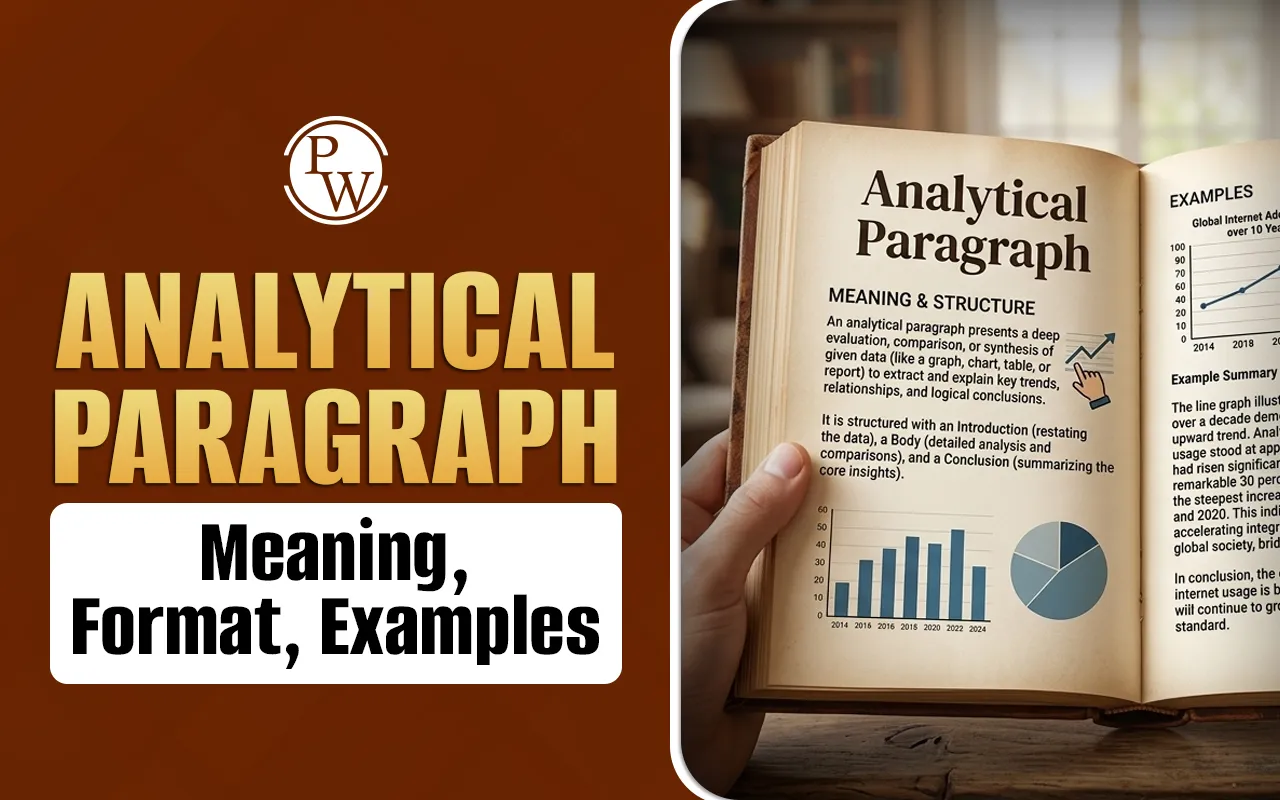
What is Analytical Paragraph?
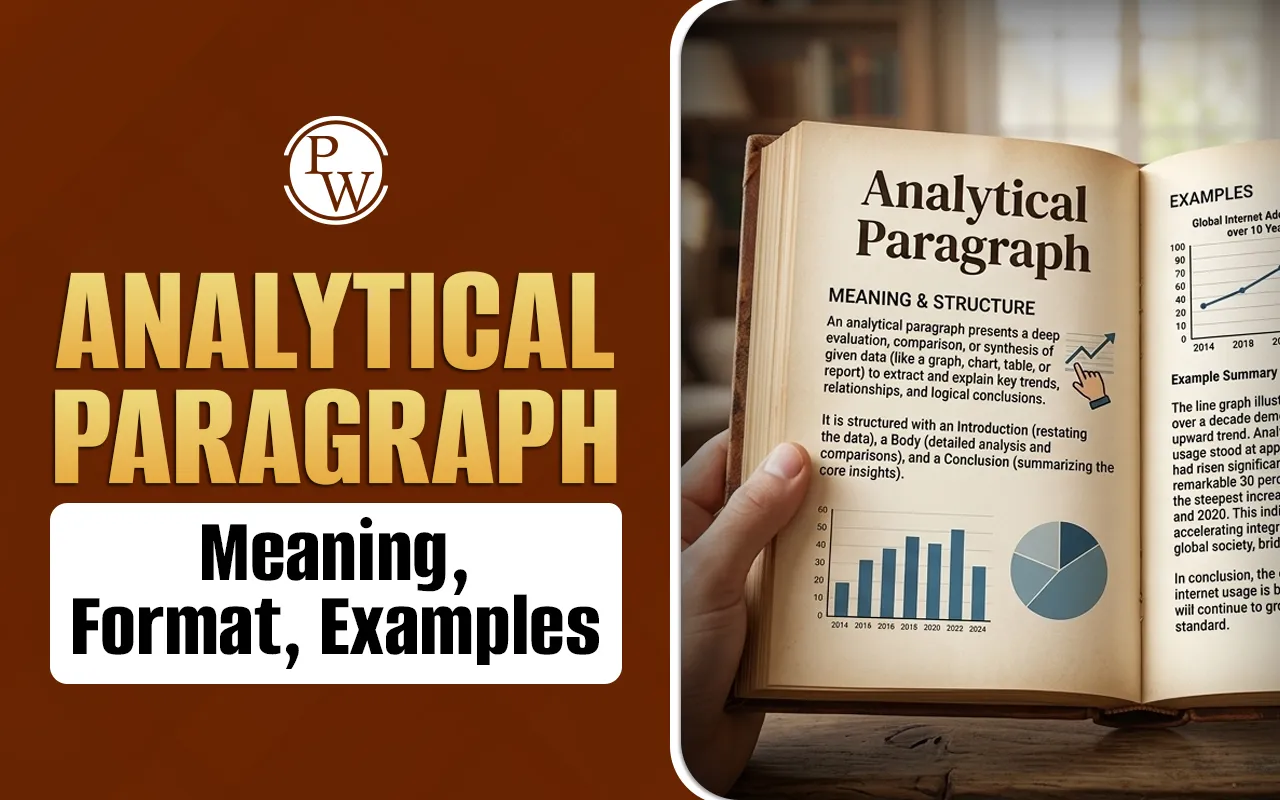
An analytical paragraph is a short paragraph that explains information in a clear and logical way. It looks at facts, numbers, or data from charts, tables, or graphs and tells the reader what they mean. Unlike creative writing, it is based only on facts. You describe what the data shows without adding your own opinions or guesses.
Purpose of an Analytical Paragraph
The main objective of this writing task is to evaluate a student's data interpretation and communication skills. Here is why the analytical paragraph is a vital part of your English curriculum:
-
Testing Interpretation Skills: It measures a student’s ability to identify key trends, compare different data points, and summarise complex findings effectively.
-
Focusing on the Big Picture: Instead of listing every single number, a strong paragraph highlights significant patterns, such as the highest and lowest values or major shifts in data.
-
Clear Communication: This teaches students to present their findings in a way that anyone who cannot access the visual data will understand.
-
Building Analytical Thinking: By moving beyond simple description, the analytical paragraph meaning is rooted in logical deduction and factual reporting.
-
Developing Formal Tone: It provides students with exercises which teach them to use objective language and formal connectors such as "in contrast" and "significantly".
Analytical Paragraph Format
A well-structured format for the analysis paragraph ensures that the text is well-organized and easily readable. An expository answer should follow a three-step pattern:
-
Introduction: Describe the data. Use phrases like "The chart illustrates..." or "The table shows..." Do not repeat the exact words of the question.
-
Body (Analysis): Identify trends, patterns, or differences in the data. Use exact figures, percentages, ratios, and words like "in contrast," "similarly," "significant," etc.
-
Conclusion: Summarise the overall trend or insight in one sentence. Do not include personal opinions; only use facts drawn from the data.
How to Write a Analytical Paragraph ?
Writing an analytical paragraph becomes easier when you follow these steps:
-
Analyse the Prompt: Carefully read the question and the provided visual to understand the topic and the units of measurement (e.g., percentages, years, or currency).
-
Identify Main Trends: Look for the "peaks" (highest points) and "troughs" (lowest points). Notice any areas where the data remains steady or changes sharply.
-
Draft the Introduction: Use one sentence to introduce the visual. Avoid copying the prompt exactly; try using synonyms.
-
Organise the Body: Start with the most significant data. Compare different categories using words like "whereas" or "in contrast."
-
Use Precise Vocabulary: Instead of saying "went up," use words like "surged" or "increased slightly." This adds depth to the analytical paragraph meaning.
-
Maintain Neutrality: Ensure you do not add reasons or opinions that are not shown in the chart. Stick strictly to the evidence.
-
Finalise the Conclusion: Wrap up with a single sentence that highlights the overall trend or the most important takeaway from the data.
Read More - Adjectives - Definition, Types, Forms, Usage, Examples
Analytical Paragraph Examples
Looking at various analytical paragraph examples is the best way to see these rules in action. Here are four ways to describe different types of data.
Example 1: Electricity Consumption (Bar Graph)
"The bar graph shows average electricity usage for four city sectors. The Industrial sector uses 45% of electricity which makes it the most power-hungry sector. The Residential sector comes next with 30% of electricity consumption. The Commercial and Transport sectors show significantly lower consumption which stands at 15% and 10% respectively. The data shows that heavy industries consume most of the electrical power used in the urban area.”
Example 2: Social Media Usage
"The bar graph shows the daily time teenagers spend on social media platforms. Platform A leads with three hours per user, followed by Platform B at two hours. Platform C has only 30 minutes. This suggests teens prefer visual-based platforms over text-based ones."
Example 3: School Activity Preferences (Pie Chart)
“The above pie chart shows the preferences of students regarding various co-curricular activities. It is clearly evident that Sports is the most popular choice among all the activities, as it covers 30% of the total number of students. Music and Dance are the next choices, as they are preferred by 25% of the total number of students. Debate and Speech is the least preferred activity among all, as it is chosen by merely 10% of the total number of students. Thus, it is clear that the students are highly inclined towards physical as well as musical activities.”
Example 4: Library Visitors (Line Graph)
“The above line graph shows the number of visitors who entered the city library during a period of six months of time. The number of library visitors started at 500 in January and increased continuously until it reached 1,200 in March, as it was the time of exams. The number of library visitors decreased the most during May, bringing the number down to 400. The number of library visitors remained the same until June.”
These examples follow the intro-body-conclusion structure and show how to interpret trends clearly.
Read More - Conjunctions: Definition, List, Types and Examples
Tips for Writing an Analytical Paragraph
To ensure your writing is precise and high-scoring, keep these expert tips in mind before you start drafting your response:
-
Objective Approach: Always use a neutral and formal tone. Avoid using personal pronouns like "I," "me," or "we."
-
Data Selection: Do not try to include every single digit from the graph. Focus only on the most significant values—the peaks, the lows, and the major changes.
-
Logical Flow: Use functional linking words to connect your sentences. Words like "furthermore," "whereas," "alternatively," and "stagnated" make the analysis sound professional.
-
Accuracy is Key: Double-check the figures you mention. A single wrong percentage can change the analytical paragraph meaning and lead to a loss of marks.
-
Tense Consistency: Ensure you use the correct tense. If the data belongs to a past year, stick to the past tense throughout your writing.
Help Your Child Build Strong English Skills with PW CuriousJr
PW CuriousJr provides well-structured online English classes designed to make learning easy and effective for young learners. With small batch sizes, every child receives personalized attention, ensuring better understanding and support. Engaging activities keep students interested while helping them build confidence in reading, writing, speaking, and listening skills.
The curriculum is based on globally recognized English standards, enabling children to use the language confidently in everyday life. Each course is simple, focused, and easy to follow, creating a smooth and enjoyable learning experience.
In addition to live classes, students get access to recorded video lessons for revision and extra practice. These recordings allow them to revisit concepts anytime and learn at their own pace. Together, live sessions and recorded lessons provide a complete and balanced English learning experience.
Analytical Paragraph FAQs
What is the main purpose of an analytical paragraph?
How long should an analytical paragraph be?
Can I add my opinion?
What types of data are used for analytical paragraphs?














 Live & recorded classes available at easeDashboard for progress trackingMillions of practice questions at your fingertips

