






IELTS Life Cycle of Frog Diagram, Sample Answer & Tips
 Khushboo Goyal28 Oct, 2024
IELTS Life Cycle of Frog Diagram: IELTS (International English Language Testing System) is a widely recognized exam that evaluates English proficiency for non-native speakers. It consists of four main sections: Listening, Reading, Writing, and Speaking. In the IELTS Writing Task 1 section, candidates are often asked to describe visual information, such as graphs, charts, and diagrams.
One specific task is the IELTS Life Cycle of Frog Diagram, where candidates must accurately and clearly describe the stages of a frog’s life cycle. This task is important as it assesses your ability to interpret and explain complex processes using suitable language and structure. Practicing with sample answers is essential for achieving a high band score.
The article below details the IELTS Life Cycle of Frog Diagram, including a sample answer, tips for approaching the task, and additional resources to help improve your descriptive skills and perform well in the exam.
Also Check:
- How to Write an Line Graph for IELTS Writing Task 1
- IELTS Sample Charts for Writing Task 1
- IELTS Sample Letter for Writing Task 1
IELTS Life Cycle of Frog Diagram Overview
The IELTS writing module consists of two parts: Task 1 and Task 2. Task 2 is the same for both IELTS Academic and IELTS General, requiring candidates to write an essay.
Task 1 differs between the two exam types. For IELTS Academic, candidates write a report based on graphs, charts, tables, diagrams, and maps. For IELTS General, the task involves letter writing.
Below is a sample answer and a report plan for Task 1, focusing on the life cycle of frogs. In your IELTS Writing Task 1 essay, you should:
- Describe the stages of the frog's life cycle in order.
- Explain the changes that occur at each stage.
- Use clear and concise language.
- Support your statements with evidence from the diagram or other sources.
A sample answer for Writing Task 1 is beneficial as it helps you understand the task's requirements, learn how to organize your essay, enhance your writing skills, and grasp the expected performance level and band score.
IELTS Life Cycle of Frog Diagram Sample Answer
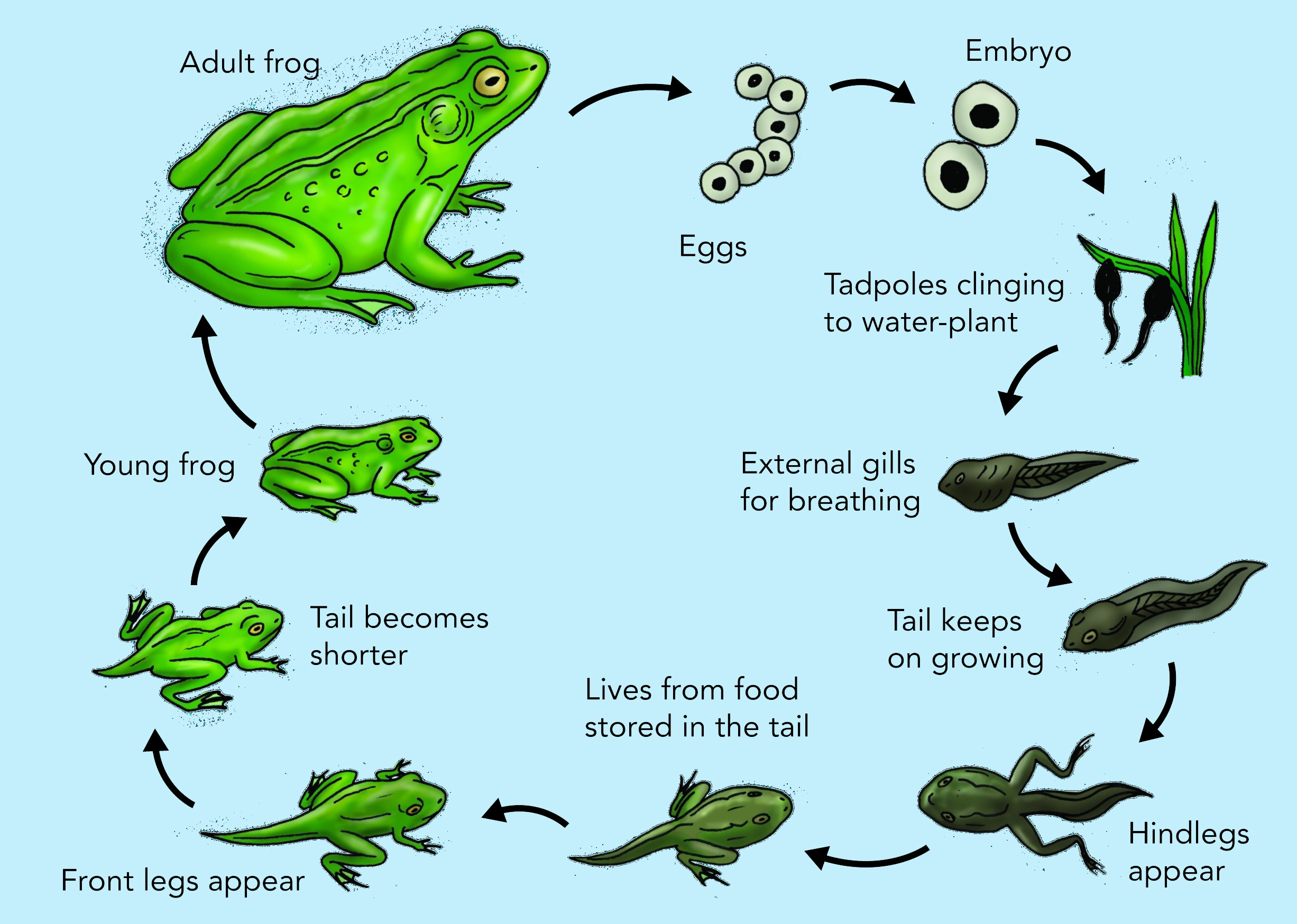
Sample Question : The diagram below illustrates the life cycle of a frog. Summarize the information by identifying and describing the main features, and make comparisons where appropriate.
Sample Answer:
The diagram illustrates the life cycle of a frog, which consists of several stages. The cycle begins when an adult frog lays eggs in a body of water.
First, the adult frog lays clusters of eggs, called spawn, in the water. These eggs hatch into tadpoles, which are aquatic animals with gills and tails. Tadpoles feed on algae and grow in size. As they develop, they undergo significant changes, starting with the growth of hind legs. Next, they develop front legs, and their tails gradually shorten.
In the next stage, the tadpoles, now called froglets, begin to transition from living entirely in water to occasionally coming onto land. Their gills are replaced by lungs, enabling them to breathe air. Finally, the froglets mature into adult frogs, completing the life cycle. Adult frogs then return to the water to lay eggs, starting the cycle again.
The life cycle of a frog showcases an interesting process of metamorphosis, illustrating the transformation from egg to tadpole to adult frog. Each stage is essential for the growth and survival of the species, ensuring the continuation of the life cycle.
Also Check:
- IELTS Writing Task 1 Table Chart
- IELTS Pie Chart Task 1
- How to Describe Pie Charts in IELTS Writing Task 1
Tips to Approach IELTS Life Cycle of Frog Diagram
Approaching the IELTS Life Cycle of Frog Diagram requires a systematic and clear method to describe each stage accurately. The following are detailed tips to help you approach this task effectively:
- Analyze the Diagram: Carefully examine the diagram to understand the stages of the frog’s life cycle, including eggs, tadpoles, froglets, and adult frogs. Note key features and the changes that occur at each stage.
- Plan Your Response: Create an outline to organize your thoughts, covering the introduction, body, and conclusion. Choose precise vocabulary that accurately describes each stage of the life cycle.
- Write a Strong Introduction: Begin with a clear overview of the diagram, stating that it depicts the frog’s life cycle and the stages involved. Paraphrase the prompt to demonstrate your understanding.
- Detailed Description of Each Stage: Describe each stage in the order presented in the diagram, using passive voice to focus on the process. Employ transitional phrases to connect the stages smoothly.
- Conclusion: Summarize the frog’s life cycle by highlighting the main transformations between stages. Reinforce the significance of each stage for the frog's development and survival.
- Language and Grammar: Use a varied vocabulary to avoid repetition and ensure grammatical accuracy in your writing. Incorporate a mix of sentence types to enhance readability.
- Practice and Proofread: Regularly practice with different life cycle diagrams to improve your descriptive skills. After writing, proofread your response to catch any errors and refine clarity.
What is the IELTS Life Cycle of Frog Diagram Task?
How should I structure my response for the frog life cycle?
What common mistakes should I avoid in the frog life cycle diagram task?
How can I effectively analyze and describe a process diagram in IELTS Writing Task 1?













 Live & recorded classes available at easeDashboard for progress trackingMillions of practice questions at your fingertips

