



Class 3 Olympiad: List of Exams, Eligibility, Registration, Syllabus and Preparation


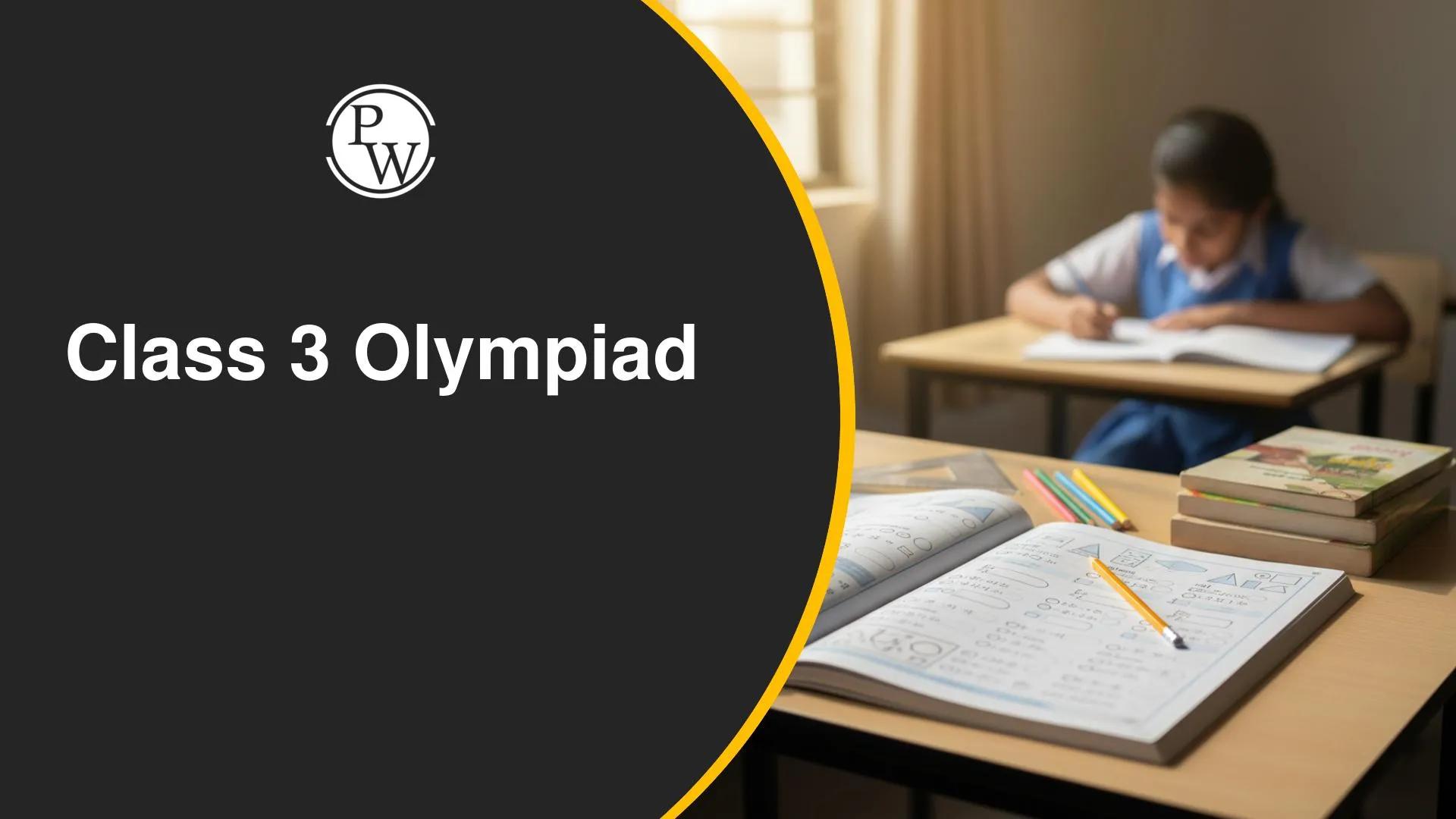
Olympiad examinations give school students an opportunity to test their understanding of different subjects beyond regular classroom learning. Several national and international organisations conduct Olympiads in India for primary school students, including those studying in Class 3.
The Class 3 Olympiad 2026–27 includes subject-based competitions in Mathematics, Science, English, General Knowledge, Computer Science, Social Studies and Reasoning. Students can participate through their schools or individual registration, depending on the examination and organising body.
These examinations encourage students to develop conceptual understanding, logical thinking and problem-solving skills. They also help children apply classroom knowledge to different types of questions.
List of Olympiad Exams for Class 3 in India
Several organisations offer subject-wise examinations for primary school students. The following table provides a list of popular Olympiads available for Class 3 students:
|
Olympiad Name |
Subject |
Organising Body |
|
Mathematics |
SOF |
|
|
Science |
||
|
English |
||
|
General Knowledge |
||
|
Computer |
||
|
Social Studies |
||
|
Mathematics |
SilverZone |
|
|
Science |
||
|
English |
||
|
Computer |
||
|
Social Studies |
||
|
General Knowledge |
||
|
Reasoning |
||
|
Mathematics |
Unified Council |
|
|
English |
||
|
Computer and Reasoning |
||
|
Science |
||
|
Mathematics |
CREST |
|
|
Science |
||
|
English |
||
|
Reasoning |
||
|
Computer |
||
|
International Maths Olympiad (IMO) |
Mathematics |
|
|
International Science Olympiad (ISO) |
Science |
|
|
English International Olympiad (EIO) |
English |
|
|
General Knowledge International Olympiad (GKIO) |
General Knowledge |
|
|
International Computer Olympiad (ICO) |
Computer |
|
|
National Logical Reasoning Olympiad (NLRO) |
Reasoning |
SOF conducts subject-wise Olympiads for Classes 1 to 12. SilverZone, Unified Council, CREST and Indian Talent Olympiad also offer competitions for primary-school students. Examination names and registration availability should be checked against the respective organisers' 2026–27 notifications.
Class 3 Olympiad Exams and Their Official Websites
Parents can visit the official websites of the organising bodies to find registration forms, examination notifications, syllabi, sample papers and results.
|
Organising Body |
Official Website |
|
Science Olympiad Foundation (SOF) |
|
|
SilverZone Foundation |
|
|
Unified Council |
|
|
CREST Olympiads |
|
|
Indian Talent Olympiad |
SOF publishes class-specific syllabi and sample papers. Its 2026–27 Class 3 IMO sample paper includes 35 questions with a duration of one hour. SilverZone provides separate examination patterns and syllabus details for different classes. Unified Council also publishes class-wise schedules and syllabus.
Subject-Wise Olympiad Exams for Class 3
Students can choose examinations according to their subjects of interest. The major subject categories and their broad syllabus areas are explained below.
Mathematics Olympiad for Class 3
Popular examinations include SOF IMO, SilverZone iOM, Unified Council UIMO and CREST CMO.
The syllabus generally covers four-digit numbers, addition, subtraction, multiplication, division, fractions, measurement, geometry, time, money and data handling.
These examinations help students strengthen numerical ability and apply mathematical concepts while solving questions.
Science Olympiad for Class 3
SOF ISO, SilverZone iOS, CREST CSO and Unified Council NSTSE are popular Science examinations.
Topics include plants, animals, birds, food, the human body, matter, transport, Earth and the universe, light, sound and the environment.
Science competitions encourage students to understand scientific concepts and develop observation skills.
English Olympiad for Class 3
SOF IEO, SilverZone iOEL, Unified Council UIEO and CREST CEO are available for English.
The syllabus covers grammar, vocabulary, spelling, sentence formation, punctuation and reading comprehension. These examinations help students strengthen their language and communication skills.
General Knowledge Olympiad for Class 3
SOF IGKO, SilverZone Smart Kid GK Olympiad and Indian Talent Olympiad GKIO are among the available options.
Students are tested on India and the world, current affairs, famous personalities, sports, science and technology, the environment and general awareness.
Computer Olympiad for Class 3
SOF International Computer Science Olympiad (ICSO), SilverZone IIO, Unified Council UCO and CREST CCO cover computer-related topics.
The syllabus includes computer fundamentals, input and output devices, memory, software, the internet, MS Paint, MS Word and basic technology concepts. These examinations introduce students to digital literacy.
Reasoning Olympiad for Class 3
CREST CRO, SilverZone iRAO and reasoning sections of other Olympiads provide opportunities to practise logical questions.
Topics include patterns, analogy, classification, coding-decoding, ranking, figure-based questions, sequences and logical reasoning.
Social Studies Olympiad for Class 3
SOF ISSO and SilverZone ISSO cover basic history, geography, civics, Indian culture, important places and the environment. These examinations help students develop knowledge about society and the world.
Class 3 Olympiad Eligibility Criteria 2026–27
Students currently studying in Class 3 can participate in examinations that offer a separate paper for their class. Students from CBSE, ICSE, State Boards and other recognised boards may be eligible, depending on the organiser's rules.
SOF provides separate class-wise papers and syllabus. SilverZone also offers examinations for primary-school students, while Unified Council publishes separate Class 3 syllabus and schedules.
There is no single eligibility rule for every examination. Parents should check the official notification for age requirements, registration conditions, and other applicable criteria before applying.
How to Register for Class 3 Olympiad Exams 2026–27?
The registration process depends on the organising body. Students can follow these general steps:
-
Select the subject and organising body.
-
Visit the respective official website.
-
Check Class 3 eligibility and registration dates.
-
Confirm whether registration is available through the school or individually.
-
Fill in the student's required details.
-
Pay the applicable examination fee.
-
Save the registration confirmation and check for further updates.
|
Organisation |
Registration Method |
|
SOF |
Through participating schools |
|
SilverZone |
Through participating schools |
|
Unified Council |
Through schools or direct registration for applicable examinations |
|
CREST |
School and individual registration options |
|
Indian Talent Olympiad |
School and online registration options |
Class 3 Olympiad Exam Pattern
Most school-level Olympiads use multiple-choice questions. The paper may include subject-based sections, logical reasoning and higher-order thinking questions. The number of questions, marks and duration vary according to the examination.
|
Examination |
Questions |
Duration |
Total Marks |
|
SOF IMO |
35 |
60 minutes |
40 |
|
SOF ISO |
35 |
60 minutes |
40 |
|
SOF IGKO |
35 |
60 minutes |
40 |
|
SilverZone iOS |
30 |
40 minutes |
100 |
For example, SOF IMO includes Logical Reasoning, Mathematical Reasoning, Everyday Mathematics, and Achievers sections. SilverZone iOS for Classes 3 to 5 includes 30 questions for 100 marks.
Examinations may be conducted online or offline, depending on the organiser. Students should check the respective examination guidelines for the marking scheme and negative marking rules.
Class 3 Olympiad Syllabus
Every organisation follows its own syllabus and examination pattern. The following table covers the broad topics included in different subject-based competitions.
|
Subject |
Important Topics |
|
Mathematics |
Four-digit numbers, operations, fractions, measurement, geometry, time, money and data handling |
|
Science |
Plants, animals, birds, human body, food, matter, transport, Earth and universe |
|
English |
Grammar, vocabulary, spelling, punctuation, sentence formation and comprehension |
|
General Knowledge |
India and the world, famous personalities, sports, current affairs and environment |
|
Computer |
Computer fundamentals, input/output devices, memory, software, internet and MS Office basics |
|
Reasoning |
Patterns, analogy, classification, coding-decoding, ranking and figure-based questions |
|
Social Studies |
History, geography, Indian culture, surroundings and basic civics |
Students should download the latest syllabus from the official website of their selected examination before beginning preparation.
Class 3 Olympiad Sample Papers and Previous Year Question Papers
Sample papers help students understand the question format, examination pattern and marking scheme. They also provide practice with multiple-choice and higher-order thinking questions.
Students can access the following resources through the organisers' official websites:
|
Olympiad |
Practice Resource |
|
SOF IMO |
|
|
SOF IGKO |
|
|
SOF ICSO |
SOF provides its 2026–27 Class 3 IMO, IGKO and ICSO sample papers through its website. Students can also check the respective organisers' websites for available previous year papers and answer keys.
How to Prepare for Olympiad Exams for Class 3?
Students can follow a simple preparation routine to cover the syllabus and practise different question types.
-
Understand the syllabus: Check the official syllabus before starting preparation.
-
Strengthen basic concepts: Use Class 3 textbooks to revise important topics.
-
Practise subject-wise questions: Solve questions related to the selected examination.
-
Solve sample papers: Practise sample papers and mock tests to understand the examination format.
-
Focus on reasoning: Practise application-based and logical reasoning questions.
-
Revise regularly: Maintain a revision schedule for different subjects.
-
Improve weak areas: Analyse mistakes and practise topics that need more attention.
-
Develop reading habits: Read regularly and improve general awareness.
Benefits of Participating in Olympiad Exams for Class 3
Participating in Olympiads gives students an opportunity to assess their subject knowledge and apply classroom learning. Some important benefits include:
-
Conceptual understanding: Helps students strengthen their understanding of different subjects.
-
Logical thinking: Encourages analytical and logical thinking through reasoning questions.
-
Problem-solving skills: Provides practice with different question formats and applications.
-
Confidence building: Introduces students to academic competitions.
-
Identifying strengths and weaknesses: Helps students understand the topics they know well and those requiring further practice.
-
Application of knowledge: Encourages students to apply classroom concepts while solving questions.
-
Competitive examination exposure: Familiarises students with examination formats beyond regular school assessments.
Olympiad examinations allow young learners to explore different subjects and understand their academic strengths. Parents can select a suitable examination based on the child's interests, the available syllabus and the organiser's registration requirements.


Have questions about your prep?
Our experts can answer all your questions



Class 3 Olympiad FAQs
Which Olympiad exams are available for Class 3 students?
Who is eligible for Class 3 Olympiad exams?
How can students register for Olympiad exams for Class 3?
 Live & recorded classes available at easeDashboard for progress trackingMillions of practice questions at your fingertips