







Essay on Bhai Dooj in English for Students
In the essay on Bhai Dooj, explore the significance of Bhai Dooj culturally, exploring the traditions, rituals, and emotional bond between siblings.
 Yashasvi Tyagi15 Nov, 2023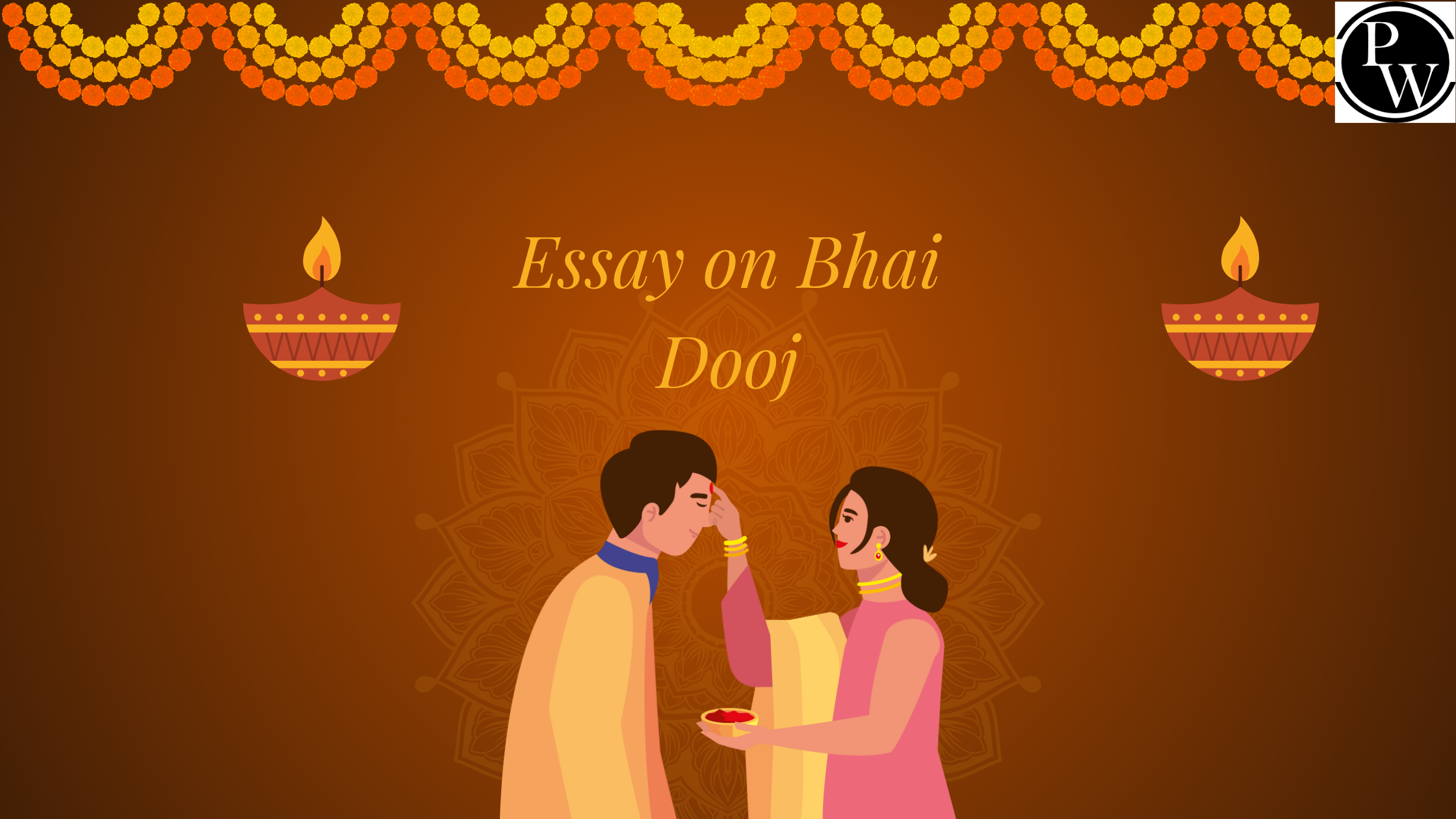
Essay on Bhai Dooj After two days of Diwali, Bhai Dooj is mainly celebrated in northern India, especially in Jammu and Kashmir. The festival falls on the second day of the Vikrami Samvat New Year and resembles Raksha Bandhan most. On Bhai Dooj, brothers give gifts to their sisters, while the sisters treat them with delicious meals. It is known as Yama Dwitiya in the southern part of the country.
An essential and legendary festival in India, Bhaiya Dooj is when sisters pray to God for the longevity and prosperity of their dearest brothers. Sisters perform puja and tika ceremonies and receive gifts from their brothers in return. Bhau Beej is also known as Bhau Beej (in Goa, Maharashtra, and Karnataka), Bhai Tika (in Nepal), Bhathru Dwithiya, Bhau-deej, Bhau-phota (in Bengal), and Ningol Chakuba (in Manipur). Based on the Gregorian calendar, it falls on the 2nd day of Shukla Paksha during Kartika (between October and November). It is one of the most celebrated festivals in India. In the mornings, all the sisters wake up very early and pray to God and Goddesses for the health of their brothers and a better future.Essay on Bhai Dooj in 200 Words
It commemorates the bond of love between brothers and sisters and is celebrated with rituals similar to Raksha Bandhan after two days of Deepawali. The festival of Bhai Dooj is celebrated differently in different parts of the country; however, a familiar ritual involves the veneration of brothers by their sisters. Girls prepare a veneration plate with kumkum, sweet and earthen diya. They perform aarti of their brothers and offer them sumptuous meals in exchange for their protection. In addition to symbolising the love between sisters and brothers, the festival also signifies that brothers should protect their sisters. On this day, sisters prepare their brothers’ favourite dishes and invite them to their house for the meal. Brothers who are far away and cannot get the blessings of their sisters are sent through the Moon God. Sisters pray for the health and longevity of their brothers by performing the aarti of the Moon. Before the meal begins, sisters apply a tika of seven colours to the forehead of their brothers and pray for their longevity. This festival is called Bhai Tika in Nepal.Essay on Bhai Dooj in 300 Words
Bhai Dooj is celebrated after two days of Deepawali in the Hindu calendar month of Karthik, mainly in northern India and Nepal, and is very similar to Raksha Bandhan.Bhai Dooj Rituals and Significance
According to Hindu culture, Bhai Dooj celebrates the special bond between a brother and a sister and mutual responsibilities for each other. The rituals performed are similar to those performed on Raksha Bandhan. Sisters venerate their brother in exchange for his protection and love. To perform aarti on their brothers, girls prepare a veneration plate and apply red tika to their foreheads. In contrast, brothers give their sisters jewellery, money or articles. When a married woman invites her brother for a sumptuous meal, she performs veneration rituals and gifts. When a brother accepts the invite, he goes to his sister's house with gifts and money. After the rituals are completed, the brother gives his sister the gift he has brought and vows to protect her. Despite distance or other reasons, brothers who cannot accept the invitation still receive the well wishes of their sisters from the moon. Moon has been personified in Hindu mythology as Chanda Mama, who carries the sister's message to her brother when he cannot attend. The sisters sincerely pray for their brothers' longevity and good health and symbolically ask the Moon God to convey the same to them through the aarti they perform for the Moon God.Essay on Bhai Dooj in 400 Words
Two days after Diwali, Bhai Dooj is a Hindu festival. Bhaubeej, Bhai Tika, and Bhai Phonta are some of the other names used to refer to Bhaubeej, Bhai Tika and Bhai Phonta, depending on the region and culture. It occurs on the second lunar day of Shukla Paksha in the month of Karthik.Celebration of Bhai Dooj
At Bhai Dooj, sisters perform aarti for their brothers, and the latter hand over gifts to the sisters while vowing to protect and care for them. Unlike Raksha Bandhan, celebrated by unmarried women and married women, the festival mainly concerns married women. Traditionally, married women invite their brothers to their homes and serve them sumptuous meals, including their favourite dishes. They also give their sisters gifts and money. Bhai dooj's Different Names In different parts of the Indian subcontinent, Bhai Dooj is celebrated on different dates, as described below. Bhai Dooj This festival is celebrated by the Awadhis in Uttar Pradesh and the Maithils in Bihar around the festival of Diwali on the second day of the Vikram Samvat New Year. Bhai Phonta In West Bengal, Bhai Phonta is celebrated on the second day of Kali Puja. Bhau Beej In Maharashtra, Gujarat, Goa, and Karnataka, Bhai Dooj is celebrated as Bhau Beej. The festival is also known as "Yamadwitheya" because Yama meets his sister Yamuna on the second day following the new moon, symbolising the meeting of Yama and Yamuna. According to the mythological story of Bhai Dooj, Krishna returned to his sister Subhadra after slaying Narkasura, who similarly welcomed him. Bhai Dooj rituals In honour of Bhai Dooj, the entire sister community performs traditional aarti for their brothers and applies tika to their foreheads. When their brothers cannot come, they pray and venerate the Moon God for their long life instead. Moon God is believed to act as a messenger between siblings and conveys the wishes and regards of the latter to the former. In India, Bhai Dooj celebrates the special bond between brothers and sisters. This bond endures even after marriage and otherworldly engagements. A sister's love for her brother and her brother's responsibility for her sister remain unchanging.History of Bhai Dooj
In Hindu Mythology, it is believed that Yamraj, the God of death, once visited his beloved sister Yami (also known as Yamuna) on a special occasion. She warmly welcomed him with an aarti and tilak ceremony, then presented him with a garland and delicious treats. In return, he gave her a unique gift as a token of his love and affection for her. On this day, Yamraj declared that any brother who receives aarti and tilak from their sister will never fear death. Hence, this day came to be known as Yama Dwitiya. After killing the demon king Narakasur, Hindu Lord Krishna returned to his sister, Subhadra, where he was welcomed with tilak, aarti, sweets, and flowers.Bhai Dooj Celebrations
Sisters ask their brothers to come to their homes to celebrate this festival and serve their beloved dishes. Nowadays, sisters pray to God to protect their brothers from all problems and bad fortune. On the other hand, brothers follow their responsibilities toward loving and caring sisters. Siblings often create a spot for their brothers to sit on the rice floor, where they partake in a ceremony. They honor their brother's hands by anointing them with a mixture of rice and Sindoor. Afterwards, the sister presents her brother with offerings of pumpkin flowers, betel leaves, betel nuts, and coins in his palms. As the sister recites mantras and pours water over his hands, symbols of Kalawa, tilak, and aarti are also applied. A lamp is then lit facing south as it is believed that this brings good luck to those who see kites flying in the sky above, as it ensures blessings for the longevity of the brother's life. A sister without brother (sister without brother), who does not have a brother in some places in India, celebrates the festival by worshipping the Hindu God Moon instead of her brother on this particular occasion. As a custom and tradition, sisters apply mehendi to their hands on this day. In their prayers for the happiness and prosperity of their brothers, sisters who are far from their brothers perform aarti and pray to the moon. A lot of children call the moon Chandamama because brothers send their sisters return gifts and love through email, post, or other means. This is the main reason why they call the moon Chandamama.Bhai Dooj's Significance
In Haryana, Maharashtra, Gujarat, and Goa, people celebrate this festival with great passion and fun. It is a time when brothers and sisters remind one another of their responsibilities. When the entire family gathers to celebrate it, it reconnects the brothers and sisters and renews their love and bonds. In Maharashtra, there is a sweet dish called the basundi poori or the kheerni poori. This festival brings a lot of happiness, affection and warmth between the relationship of brother and sister. The purpose of this festival is to show how much siblings love and care each other. The sisters place five betel nuts and betel leaves on the brother's head. They pray by pouring water on their hands.| Related Links | |
| Ideal Student essay | Noise Pollution Essay |
| Mother Teresa essay | Essay on Newspaper |
Essay on Bhai Dooj FAQs
What is the introduction of Bhai Dooj?
Bhai Dooj, or Bhau-Beej or Bhai Tika, is a Hindu festival celebrated on the fifth day of Diwali. It is a special occasion dedicated to the bond between brothers and sisters.
Why should we celebrate Bhai Dooj?
Bhai Dooj is celebrated to honour the unique relationship between siblings, particularly the love and protective care that brothers offer their sisters. It symbolises the importance of family bonds and is a day for expressing gratitude and affection.
What is the moral of Bhai Dooj?
The moral of Bhai Dooj lies in the significance of familial relationships, specifically the bond between brothers and sisters. It promotes love, respect, and mutual support, emphasising the importance of acknowledging and cherishing the connections within the family.
What is special in Bhai Dooj in English?
Bhai Dooj is unique for its focus on the sibling relationship, marked by sisters applying tikka (vermilion) on their brothers' foreheads and performing aarti to bless them. The exchange of gifts and the reaffirmation of love and protection between siblings make the day unique and joyous.

🔥 Trending Blogs


Talk to a counsellorHave doubts? Our support team will be happy to assist you!


Check out these Related Articles




Join 15 Million students on the app today!
 Live & recorded classes available at easeDashboard for progress trackingMillions of practice questions at your fingertips


Free Learning Resources
PW Books
Notes (Class 10-12)
PW Study Materials
Notes (Class 6-9)
Ncert Solutions
Govt Exams
Our Other Websites
Class 6th to 12th Online Courses
Govt Job Exams Courses
UPSC Coaching
Defence Exam Coaching
Gate Exam Coaching
Other Exams
Know about Physics Wallah
Physics Wallah is an Indian edtech platform that provides accessible & comprehensive learning experiences to students from Class 6th to postgraduate level. We also provide extensive NCERT solutions, sample paper, NEET, JEE Mains, BITSAT previous year papers & more such resources to students. Physics Wallah also caters to over 3.5 million registered students and over 78 lakh+ Youtube subscribers with 4.8 rating on its app.
We Stand Out because
We provide students with intensive courses with India’s qualified & experienced faculties & mentors. PW strives to make the learning experience comprehensive and accessible for students of all sections of society. We believe in empowering every single student who couldn't dream of a good career in engineering and medical field earlier.
Our Key Focus Areas
Physics Wallah's main focus is to make the learning experience as economical as possible for all students. With our affordable courses like Lakshya, Udaan and Arjuna and many others, we have been able to provide a platform for lakhs of aspirants. From providing Chemistry, Maths, Physics formula to giving e-books of eminent authors like RD Sharma, RS Aggarwal and Lakhmir Singh, PW focuses on every single student's need for preparation.
What Makes Us Different
Physics Wallah strives to develop a comprehensive pedagogical structure for students, where they get a state-of-the-art learning experience with study material and resources. Apart from catering students preparing for JEE Mains and NEET, PW also provides study material for each state board like Uttar Pradesh, Bihar, and others
Copyright © 2026 Physicswallah Limited All rights reserved.