
NEET Syllabus 2026: The National Testing Agency (NTA) officially released the final syllabus for NEET (UG) 2026 on 8th January 2026. The syllabus has been finalized by the Undergraduate Medical Education Board (UGMEB) under the National Medical Commission (NMC). Candidates are advised to refer to this finalized syllabus for exam preparation. It helps candidates plan their study schedule, prioritize important chapters, and avoid spending time on out-of-scope topics.
A well-structured preparation aligned with the official syllabus not only improves accuracy and confidence but also increases the chances of securing a top rank. Candidates can download the NEET 2026 final syllabus PDF for free.
The National Testing Agency (NTA) has officially published the final NEET (UG) 2026 syllabus on 8th January 2026. Finalized by the Undergraduate Medical Education Board (UGMEB) under the National Medical Commission (NMC), this syllabus provides a complete guideline for exam preparation. Candidates are advised to follow it carefully to ensure comprehensive coverage of all essential topics.
The National Testing Agency (NTA) has officially released the final syllabus for NEET (UG) 2026 on 8th January 2026. This syllabus has been finalized by the Undergraduate Medical Education Board (UGMEB) under the National Medical Commission (NMC). Candidates are advised to follow this finalized syllabus for their exam preparation.
Students can download the NEET 2026 syllabus PDF for free from the official NTA website or through the direct link provided here.
NEET Syllabus 2026 is based on the latest NCERT Class 11 and 12 curriculum as released by the National Testing Agency (NTA). The syllabus of NEET 2026 includes important topics from Physics, Chemistry, and Biology that are essential for medical aspirants. NTA has revised the syllabus this year to align with the updated NCERT textbooks, removing certain chapters and overlapping topics.
Students preparing for the exam should carefully review the NTA NEET syllabus 2026 to understand which chapters are included and which topics have been deleted. A clear understanding of the updated syllabus will help candidates plan their preparation more effectively and focus on the most relevant concepts for the NEET 2026 exam.
|
NEET 2026 Syllabus Overview |
||
|
Subject |
Total Chapters Included |
Removed Topics (As per NCERT Rationalisation) |
|
Physics |
19 Chapters (Classes 11 & 12 combined) |
Class 11: - Units & Dimensions (reduced emphasis) - Motion in a Plane (some vector portions) - Work, Energy & Power (few examples removed) Class 12: - Communication Systems (deleted) - Semiconductors (partially reduced) - Nuclei (some numerical examples removed) |
|
Chemistry |
30 Chapters (Classes 11 & 12 combined) |
Class 11: - States of Matter (partially reduced) - Hydrogen (deleted) Class 12: - Polymers (partially removed) - Chemistry in Everyday Life (deleted) - Surface Chemistry (minor reduction) |
|
Biology |
38 Chapters (Classes 11 & 12 combined) |
Class 11: - Transport in Plants (minor topics removed) - Mineral Nutrition (reduced) - Digestion & Absorption (some sections removed) Class 12: - Reproduction in Organisms (deleted) - Strategies for Enhancement in Food Production (deleted) - Environmental Issues (reduced) |
The Subject-Wise NEET 2026 Syllabus gives a detailed overview of all the topics included from Physics, Chemistry, and Biology as per the latest NTA guidelines. It helps students understand what to study for each subject based on the updated NCERT Class 11 and 12 books.
| Subject-Wise NEET 2026 Syllabus | ||
|---|---|---|
| Biology | Physics | Chemistry |
| Diversity of Living Organisms Change | Physics And Measurement | Some Basic Concepts of Chemistry |
| Structural Organization in Plants & Animals Change | Kinematics | Structure of Atom |
| Cell Structure and Function No Change | Laws Of Motion | Classification of Elements and Periodicity in Properties |
| Plant Physiology | Work, Energy, and Power | Chemical Bonding and Molecular Structure |
| Human Physiology | Rotational Motion | States of Matter: Gases and Liquids |
| Reproduction | Gravitation | Thermodynamics |
| Genetics & Evolution | Properties of Solids and Liquids | Equilibrium |
| Biology and Human Welfare | Thermodynamics | Redox Reactions |
| Biotechnology and its Applications | Kinetic Theory of Gases | Classification of Elements and Periodicity in Properties |
| Ecology and Environment | Oscillation and Waves | P-Block Elements |
| - | Electrostatics | d- and f-Block Elements |
| - | Current Electricity | Coordination Compounds |
| - | Magnetic Effects of Current and Magnetism | Purification and Characterisation of Organic Compounds |
| - | Electromagnetic Induction and Alternating Currents | Some Basic Principles of Organic Chemistry |
| - | Electromagnetic Waves | Hydrocarbons |
| - | Optics | Organic Compounds Containing Halogens |
| - | Dual Nature of Matter and Radiation | Organic Compounds Containing Oxygen |
| - | Atoms and Nuclei | Organic Compounds Containing Nitrogen |
| - | Electronic Devices | Biomolecules |
| - | Experimental Skills | Principles Related to Practical Chemistry |
The NEET Biology syllabus 2026, as officially released, is based on the Class 11 and Class 12 NCERT Biology textbooks. It includes all essential chapters that explain the structure, functions, and processes of living organisms. Since most NEET questions are directly drawn from these NCERT chapters, thorough study of them is crucial for success.
| NEET Biology Syllabus 2026 | ||
|---|---|---|
| Unit | Chapter / Area | Important Topics for NEET |
| Unit 1 | Diversity in Living World | Five Kingdom Classification, Taxonomy & Binomial Nomenclature, Salient Features of Monera, Protista, Fungi, Viruses & Viroids, Plant Kingdom (Algae to Gymnosperms), Animal Kingdom (Non-chordates & Chordates) |
| Unit 2 | Structural Organisation in Animals & Plants | Morphology of Flowering Plants, Anatomy of Root, Stem & Leaf, Important Plant Families (Malvaceae, Leguminosae, Gramineae), Animal Tissues, Frog Organ Systems (brief) |
| Unit 3 | Cell Structure & Function | Prokaryotic vs Eukaryotic Cell, Cell Organelles, Biomolecules, Enzymes, Cell Cycle, Mitosis & Meiosis |
| Unit 4 | Plant Physiology | Photosynthesis (Light & Dark Reactions, C3 & C4 Pathway), Respiration (Glycolysis, TCA, ETS), Plant Growth Regulators |
| Unit 5 | Human Physiology | Breathing & Respiration, Circulation & Heart, Excretory System, Neural Control, Endocrine System, Locomotion & Disorders |
| Unit 6 | Reproduction | Sexual Reproduction in Flowering Plants, Human Reproductive System, Gametogenesis, Menstrual Cycle, Contraception & ART |
| Unit 7 | Genetics & Evolution | Mendel’s Laws, Chromosomal Disorders, DNA Structure & Replication, Transcription & Translation, Evolution Theories, Hardy-Weinberg Principle |
| Unit 8 | Biology & Human Welfare | Human Diseases & Pathogens, Immunity & Vaccines, Microbes in Human Welfare, Drug & Alcohol Abuse |
| Unit 9 | Biotechnology | Recombinant DNA Technology, GM Crops (Bt), Insulin & Vaccine Production, Gene Therapy, Biosafety Issues |
| Unit 10 | Ecology & Environment | Ecosystem & Energy Flow, Population Interactions, Biodiversity & Conservation, Environmental Issues |
The Biology syllabus for NEET 2026 includes topics from Class 11 and Class 12 NCERT Biology. It focuses on all important chapters related to cell biology, genetics, ecology, human physiology, and plant physiology. Students can download the Biology syllabus PDF from the official NTA website.
NEET Biology 2026 Syllabus PDF
The NEET Physics syllabus 2026, as officially released, is based on the Class 11 and Class 12 NCERT Physics textbooks. It covers all important concepts, laws, and applications of Physics. Most NEET questions are directly from these NCERT chapters, so careful study is essential.
| NEET Physics Syllabus 2026 | ||
|---|---|---|
| Unit No. | Unit Name | Topics Covered |
| Unit 1 | Physics and Measurement | Units, SI system, errors, dimensions, significant figures |
| Unit 2 | Kinematics | Motion, vectors, projectile motion, circular motion |
| Unit 3 | Laws of Motion | Newton’s laws, friction, circular motion |
| Unit 4 | Work, Energy and Power | Work-energy theorem, collisions, power |
| Unit 5 | Rotational Motion | Torque, angular momentum, moment of inertia |
| Unit 6 | Gravitation | Kepler’s laws, satellites, escape velocity |
| Unit 7 | Properties of Solids and Liquids | Elasticity, viscosity, surface tension, fluid mechanics |
| Unit 8 | Thermodynamics | Laws of thermodynamics, processes |
| Unit 9 | Kinetic Theory of Gases | Gas laws, RMS speed, mean free path |
| Unit 10 | Oscillations and Waves | SHM, waves, sound, beats |
| Unit 11 | Electrostatics | Charges, fields, capacitors |
| Unit 12 | Current Electricity | Ohm’s law, circuits, Kirchhoff’s laws |
| Unit 13 | Magnetic Effects & Magnetism | Biot–Savart law, Ampere’s law |
| Unit 14 | Electromagnetic Induction & AC | Induction, transformers, AC circuits |
| Unit 15 | Electromagnetic Waves | Spectrum and applications |
| Unit 16 | Optics | Ray optics, wave optics |
| Unit 17 | Dual Nature of Matter | Photoelectric effect, de Broglie waves |
| Unit 18 | Atoms and Nuclei | Atomic models, nuclear physics |
| Unit 19 | Electronic Devices | Semiconductors, diodes, logic gates |
| Unit 20 | Experimental Skills | Vernier calipers, pendulum, prism, diode experiments |
The National Testing Agency (NTA) has officially released the final syllabus for NEET (UG) 2026 on 8th January 2026. Candidates preparing for NEET are advised to follow this finalized Physics syllabus, which includes all important Class 11 and Class 12 NCERT Physics topics necessary for the exam. It covers concepts from mechanics, thermodynamics, waves, optics, electromagnetism, and modern physics, ensuring a complete preparation roadmap.
Students can download the NEET Physics 2026 syllabus PDF for free from the official NTA website or via the direct link provided for reference.
NEET Physics 2026 Syllabus PDF
The NEET Chemistry syllabus 2026, officially released as the final syllabus, covers all topics from Class 11 and Class 12 NCERT Chemistry textbooks. It includes all concept-based chapters frequently asked in the NEET exam, making thorough study essential for success.
| NEET Chemistry Syllabus 2026 | ||
|---|---|---|
| Branch | Unit & Topics | Important Topics |
| Physical Chemistry | Unit 1: Some Basic Concepts | Mole concept, atomic & molecular masses, chemical equations, stoichiometry, empirical & molecular formula |
| Unit 2: Atomic Structure | Bohr model, hydrogen spectrum, quantum numbers, electronic configuration, de Broglie relation, Heisenberg uncertainty principle | |
| Unit 3: Chemical Bonding & Molecular Structure | Ionic & covalent bonding, VSEPR, hybridization, resonance, molecular orbital theory, bond order, hydrogen bonding | |
| Unit 4: Chemical Thermodynamics | First & second law of thermodynamics, enthalpy, Hess’s law, Gibbs energy, spontaneity, heat capacity | |
| Unit 5: Solutions | Concentration terms, Raoult's law, colligative properties, van’t Hoff factor | |
| Unit 6: Equilibrium | Chemical & ionic equilibrium, Le Chatelier principle, buffer solutions, solubility product | |
| Unit 7: Redox & Electrochemistry | Oxidation number, balancing redox reactions, electrochemical cells, Nernst equation, fuel cells | |
| Unit 8: Chemical Kinetics | Rate law, order & molecularity, Arrhenius equation, activation energy, collision theory | |
| Inorganic Chemistry | Unit 9: Classification & Periodicity | Modern periodic table, s/p/d/f block, periodic trends (atomic/ionic radii, ionization energy, electron affinity, valence) |
| Unit 10: P-Block Elements | Group 13-18 elements, trends, properties, reactivity, first element special behavior | |
| Unit 11: d- & f-Block Elements | Transition elements, properties, K₂Cr₂O₇ & KMnO₄, lanthanoids, actinoids, lanthanoid contraction | |
| Unit 12: Coordination Compounds | Werner’s theory, ligands, coordination number, chelation, nomenclature, isomerism, bonding (VBT & CFT), color & magnetic properties | |
| Organic Chemistry | Unit 13: Purification & Characterisation | Crystallization, sublimation, distillation, chromatography, qualitative & quantitative analysis |
| Unit 14: Basic Principles | Tetravalency, hybridization, functional groups, homologous series, isomerism, nomenclature, electronic effects, types of reactions | |
| Unit 15: Hydrocarbons | Alkanes (halogenation), Alkenes (addition reactions), Alkynes (acidic nature, addition), Aromatic compounds (electrophilic substitution, Friedel-Crafts) | |
| Unit 16: Compounds with Halogens | C-X bond, substitution reactions, environmental effects of chloroform, freons, DDT | |
| Unit 17: Compounds with Oxygen | Alcohols (types & dehydration), Phenols (reactions), Ethers, Aldehydes & Ketones (nucleophilic addition, Grignard, oxidation/reduction), Carboxylic acids | |
| Unit 18: Compounds with Nitrogen | Amines (types, properties), Diazonium salts, reactions, uses | |
| Unit 19: Biomolecules | Carbohydrates, Proteins (structure & denaturation), Enzymes, Vitamins, Nucleic acids, Hormones | |
| Unit 20: Practical Chemistry Principles | Detection of elements & functional groups, titrimetric exercises, salt analysis, enthalpy of solution & neutralization, kinetics of iodide-H₂O₂ | |
The National Testing Agency (NTA) has officially released the final syllabus for NEET (UG) 2026 on 8th January 2026. Candidates preparing for NEET are advised to follow this finalized Chemistry syllabus, which covers all important Class 11 and Class 12 NCERT Chemistry topics required for the exam. Students can download the NEET Chemistry 2026 syllabus PDF for free from the official NTA website or via the direct link provided for reference.
NEET Chemistry 2026 Syllabus PDF
NEET chapter-wise weightage 2026 for Physics, Chemistry, and Biology has been provided for exam preparation. This detailed NEET 2026 chapter wise weightage analysis is based on previous years’ trends and updated syllabus insights.
The NEET 2026 syllabus is divided into three main subjects – Physics, Chemistry, and Biology. Candidates should understand the total chapters in NEET 2026. It helps them to plan their preparation better. Some topics have been removed to match the new NCERT textbooks.
|
Total Chapters and Subject Distribution |
|||
|
Subject |
Class 11 Chapters |
Class 12 Chapters |
Total Chapters |
|
Physics |
10 |
9 |
19 |
|
Chemistry |
14 |
16 |
30 |
|
Biology |
15 |
23 |
38 |
|
Total |
39 |
48 |
87 |
The Chapter-wise NEET 2025 Biology Paper Analysis highlights the distribution of questions from key chapters like Human Physiology, Genetics, and Plant Physiology. It helps students identify high-weightage topics and understand the pattern of questions asked. This insight allows focused and strategic preparation for NEET 2026.
| Chapter-Wise NEET 2025 Biology Weightage | ||
| Class | Chapter Name | No. of Questions |
| NEET Biology Chapter-wise Weightage for Botany | ||
| 11th | Respiration in Plants | 1 |
| 11th | Cell: The Unit of Life | 5 |
| 11th | Morphology of Flowering Plants | 3 |
| 11th | Plant Growth and Development | 2 |
| 11th | Plant Kingdom | 5 |
| 11th | Biological Classification | 1 |
| 11th | Anatomy of Flowering Plants | 1 |
| 11th | Photosynthesis in Higher Plants | 2 |
| 11th | Cell Cycle and Cell Division | 1 |
| 12th | Molecular Basis of Inheritance | 7 |
| 12th | Organisms and Populations | 3 |
| 12th | Biodiversity and Conservation | 2 |
| 12th | Ecosystem | 4 |
| 12th | Sexual Reproduction in Flowering Plants | 5 |
| 12th | Microbes in Human Welfare | 4 |
| 12th | Principles of Inheritance and Variation | 3 |
| Total | 49 | |
| NEET Biology Chapter wise Weightage for Zoology | ||
| 11th | Structural Organisation in Animals (Animal Tissues) | 4 |
| 11th | Locomotion and Movement | 1 |
| 11th | Animal Kingdom | 4 |
| 11th | Body Fluids and Circulation | 1 |
| 11th | Biomolecules | 4 |
| 11th | Excretory Products and their Elimination | 1 |
| 11th | Chemical Coordination and Integration | 4 |
| 11th | Biotechnology and its Applications | 4 |
| 12th | Biotechnology - Principles and Processes | 6 |
| 12th | Reproductive Health | 1 |
| 12th | Human Reproduction | 5 |
| 12th | Biotechnology and its Applications | 5 |
| 12th | Human Health and Disease | 4 |
| 12th | Evolution | 1 |
| Total | 46 | |
The Chapter-wise NEET 2025 Paper Analysis for Physics examines the distribution and difficulty level of questions across various sections of the syllabus. It provides an in-depth review of the questions' complexity, helping students identify which areas were more challenging and which were easier. This analysis guides aspirants in prioritizing their preparation and focusing on areas that require more in-depth study.
| Chapter Wise NEET Weightage for Physics | ||
| Class | Chapter Name | No. of Questions |
| 11th | Mechanical Properties of Fluids | 1 |
| 11th | Laws of Motion | 1 |
| 11th | Work, Energy and Power | 1 |
| 11th | Circular Motion | 1 |
| 11th | Center of Mass and System of Particles | 1 |
| 11th | Kinetic Theory | 1 |
| 11th | Motion in a Straight Line | 2 |
| 11th | Rotational Motion | 3 |
| 11th | Thermal Properties of Matter | 1 |
| 11th | Oscillations | 2 |
| 11th | Units and Measurements | 3 |
| 11th | Thermodynamics | 2 |
| 11th | Gravitation | 2 |
| 11th | Waves | 1 |
| 12th | Ray Optics and Optical Instruments | 2 |
| 12th | Moving Charges and Magnetism | 3 |
| 12th | Current Electricity | 3 |
| 12th | Semiconductor Electronics: Materials, Devices and Simple Circuits | 2 |
| 12th | Electromagnetic Waves | 2 |
| 12th | Electromagnetic Induction | 1 |
| 12th | Alternating Current | 1 |
| 12th | Electrostatic Potential and Capacitance | 2 |
| 12th | Wave Optics | 2 |
| 12th | Electric Charges and Fields | 1 |
| 12th | Atoms | 2 |
| 12th | Dual Nature of Radiation and Matter | 2 |
The NEET 2025 Chemistry Chapter-wise Paper Analysis provides a structured breakdown of questions from Organic, Inorganic, and Physical Chemistry as featured in the NEET 2025 exam. It examines the frequency and difficulty level of each chapter, offering insight into which topics carried greater weight. This analysis helps aspirants focus their preparation on high-yield and conceptually challenging areas.
| Chapter Wise NEET Weightage for Chemistry | ||
| Class | Chapter Name | No. of Questions |
| 11th | Structure of Atom | 2 |
| 11th | Classification of Elements and Periodicity in Properties | 2 |
| 11th | Hydrocarbons | 3 |
| 11th | Some Basic Concepts of Chemistry | 2 |
| 11th | Redox Reactions | 1 |
| 11th | Organic Chemistry: Some Basic Principles and Techniques | 4 |
| 11th | Equilibrium | 3 |
| 11th | Chemical Bonding and Molecular Structure | 2 |
| 11th | Thermodynamics | 1 |
| 12th | Biomolecules | 2 |
| 12th | Principles of Qualitative Analysis | 1 |
| 12th | Coordination Compounds | 4 |
| 12th | The p-Block Elements (XII) | 2 |
| 12th | Chemical Kinetics | 3 |
| 12th | Electrochemistry | 1 |
| 12th | Solutions | 3 |
| 12th | Amines | 2 |
| 12th | Aldehydes, Ketones and Carboxylic Acids | 3 |
| 12th | The d and f-Block Elements | 1 |
| 12th | Haloalkanes and Haloarenes | 2 |
| 12th | Alcohols, Phenols and Ethers | 1 |
| Total | 45 | |
The NEET 2026 Exam Pattern includes 180 questions from Physics, Chemistry, and Biology in the exam. The marks distribution is 720 marks. Candidates get 3 hours and 20 minutes to solve the questions.
4 marks are awarded for the right answer in the NEET exam.
1 mark is deducted for the negative marking in the exam.
No mark is deducted for the unattempted questions in NEET.
|
NEET 2026 Exam Pattern |
|||
|
Subject |
Number of Questions |
Total Marks |
Time |
|
Physics |
45 |
180 |
3 hours 20 minutes |
|
Chemistry |
45 |
180 |
|
|
Biology (Botany + Zoology) |
90 |
360 |
|
|
Total |
180 |
7 |
|
Covering the NEET 2026 syllabus requires a focused and balanced approach. Here are key strategies to help you stay on track
Follow NCERT Thoroughly: Use Class 11 and 12 NCERT books as your primary source, especially for Biology and Chemistry.
Plan Weekly Targets: Break the syllabus into weekly goals for consistent progress and timely completion.
Practice Daily MCQs: Strengthen concepts by solving chapter-wise questions regularly.
Focus on Important Chapters: Prioritize high-weightage topics but don’t skip the rest.
Revise Regularly: Keep revisiting older chapters to ensure long-term retention.
Clear Doubts Early: Address difficult topics quickly through teachers or online platforms.
Balance All Subjects: Allocate time fairly to Biology, Chemistry, and Physic
NEET books are the resources that a candidate has to refer to when preparing for the exam. These are standard books prescribed by the competent authorities for all three subjects, Physics, Chemistry and Biology. Candidates can study with these books that are aligned with the NEET syllabus to perform well in the examination. Go through the table below to know about the subject-wise NEET books 2026 .
| Books For NEET 2026 Syllabus Preparation | |||
|---|---|---|---|
| Subject | Book Title | Authors | Features |
| Physics | Sprint Course for NEET: Physics in 60 Days | Rohit Gupta, Manish Raj | - Simplified and focused content - NCERT Picks for chapter revision - 4500+ NTA NEET/CUET/JEE-like questions - 100% solved topic-wise MCQs - Rank Booster MCQs - 300 Assertion & Reason and Statement Type Questions |
| Objective NCERT Punch Physics for Competitive Exams | - | - Valuable resource for competitive exams - NCERT Picks for chapter revision - 4500+ NTA NEET/CUET/JEE-like questions - 100% solved topic-wise MCQs - 300 Assertion & Reason and Statement Type Questions | |
| Chemistry | Sprint Course for NEET: Chemistry in 60 Days | - | - Simplified and focused content - NCERT-based MCQs - 4500+ NEET/CUET/JEE-like questions - 600 Assertion & Reason and Statement Type Questions - 300 Correct-Incorrect Statement MCQs - 150 Match the Column MCQs |
| Objective Book for NEET NCERT Punch Chemistry for Competitive Exams | Tarun Kumar, Manish Dubey | - Comprehensive book for competitive exams - NCERT Picks for revision - 100% NCERT-based MCQs - 6500+ NTA NEET/CUET-like questions - Various types of MCQs | |
| Biology | Sprint Course for NEET: Biology in 60 Days | - | - Simplified content, NCERT Picks for revision - 60-day study plan - NEET-like questions - 600 Assertion & Reason and Statement Type Questions |
| Objective Book for NEET NCERT Punch Biology for Competitive Exams | Tarun Kumar, Manish Dubey | - Comprehensive book for competitive exams - NCERT Picks for revision - 100% NCERT-based MCQs - 6500+ NTA NEET/CUET-like questions - Various types of MCQs | |
| Combo Set | Yakeen for Dropper Books for NEET | - | - 18 books covering PCB (Physics, Chemistry, Biology) - Solved examples - NCERT-based questions - Topic-wise MCQs - Mixed MCQs - Previous year's questions with elaborate solutions |
| Lakshya for 12th Books for NEET | - | - 15 comprehensive books with detailed theory - 'Need to Know' and 'Concept Application Questions' - Topic-wise, Learning Plus & Multiconcept MCQs - Various question types for comprehensive practice | |
| Arjuna for 11th Books for NEET | - | - 15 comprehensive books with detailed theory - 'Need to Know' and 'Concept Application Questions' - Topic-wise, Learning Plus & Multiconcept MCQs - Various question types for comprehensive practice | |
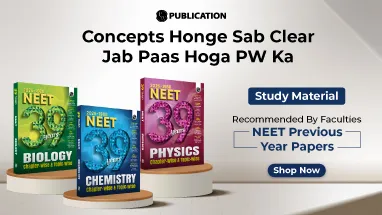
| Previous Year Papers | NEET 36 Years Physics | - | - Chapter-wise & topic-wise solved previous years' questions - Covers 100% of NEET & AIPMT questions from the past 36 years - Solutions verified against NTA Answer Keys |
| NEET 36 Years Chemistry | - | - Chapter-wise & topic-wise solved previous years' questions - Covers 100% of NEET & AIPMT questions from the past 36 years - Solutions verified against NTA Answer Keys | |
| NEET 36 Years Biology | - | - Chapter-wise & topic-wise solved previous years' questions - Covers 100% of NEET & AIPMT questions from the past 36 years - Solutions verified against NTA Answer Keys | |
| NEET 36 years Physics+Chemistry+Biology | - | - Chapter-wise & topic-wise solved previous years' questions - Covers 100% of NEET & AIPMT questions from the past 36 years - Solutions verified against NTA Answer Keys | |