







Difference Between Radicle and Plumule
Plumule functions as the embryonic shoot, giving rise to the stem, the radicle operates as the embryonic root. Check this article to know more about the difference between Radicle and Plumule.
 Jasdeep Bhatia16 Mar, 2024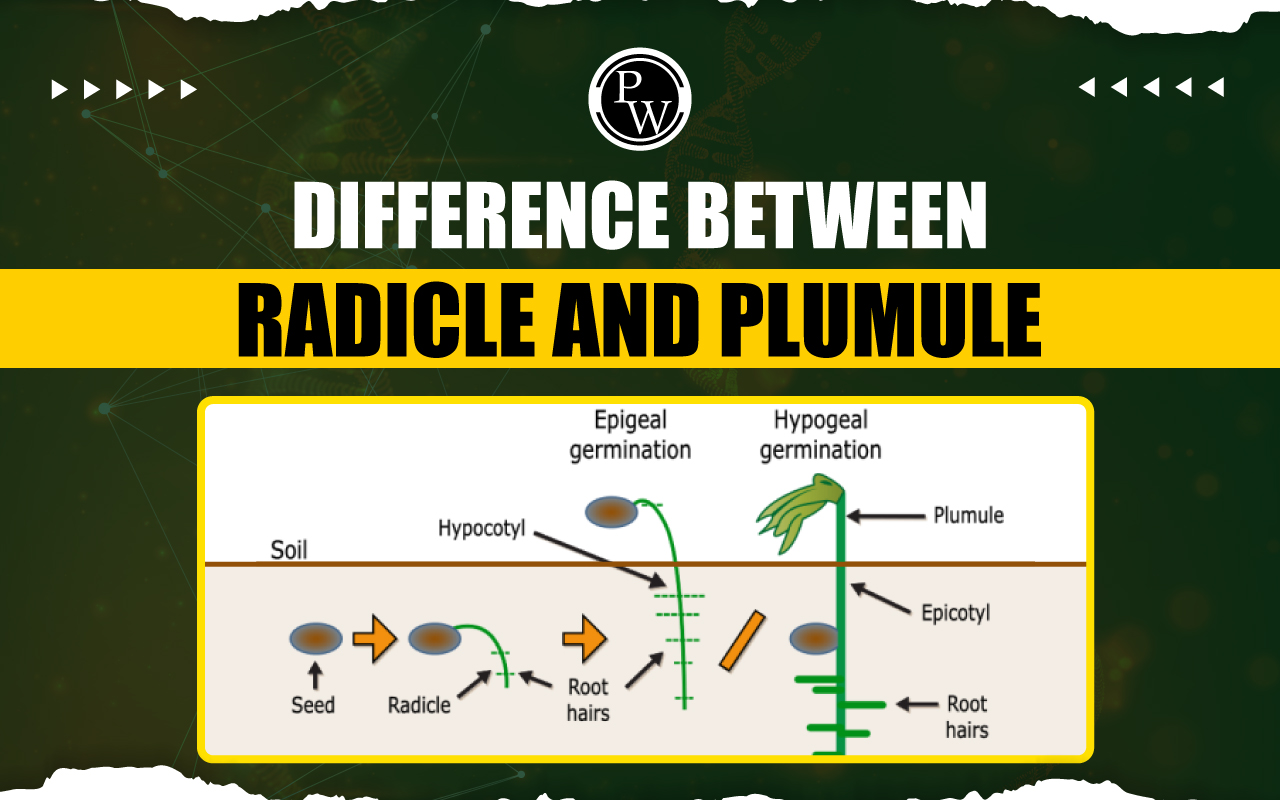
Difference Between Radicle and Plumule : A new plant or seedling arises from seed by the germination process. The seeds absorb moisture and begin to produce roots and shoots with the help of necessary nutrients stored in the endosperm and cotyledons.
The radicle is the first part to germinate, giving rise to the plant's root system. The plumule is formed after the radicle, giving rise to the shoot system.Radical
The embryonic axis of the seed develops when the seed germinates and gives rise to two important structures namely hypocotyl and epicotyl. The hypocotyl portion of the embryonal axis between the cotyledons gives rise to the plant's roots. It does not bear any vegetative or reproductive parts like leaves, buds, flowers, tendrils, spines etc. The roots typically consist of the following segments- zone of maturation, zone of elongation, and zone of cell division followed by the root cap. Radical is usually brown since it remains buried in the soil. It cannot perform photosynthesis due to a lack of chlorophyll pigment and exposure to sunlight. The roots anchor the plant in the substratum and absorb water and nutrients. Tap roots and fibrous roots are plants' main types of root systems.Related Links -
Plumule
The hypocotyl and epicotyl emerge from the germinating seed. The epicotyl is the portion of the embryonal axis between the cotyledons of the seed that gives rise to the shoot system of the plant. The shoot system is the green and leafy portion of the plant above the soil. The plumule supports all the aerial parts of the plant like flowers, leaves, branches and buds. It takes up water and nutrients with the help of roots and delivers them to the various parts via the vascular system (consisting of the xylem and phloem tissues). The nodes and internodes on the central axis help elongate the stem. The flowers are the main reproductive organ of the plant. The plumule has actively dividing cells that help form the plant's different aerial parts.Related Links -
Difference Between Radicle and Plumule
| Point of Difference | Radicle | Plumule |
| Definition | The embryonic part of the seed that forms the plant's root system is known as Radicle. | The embryonic part of the seed that forms the shoot system of the plant is known as Plumule. |
| Direction of growth | The radicle grows inside the soil. | The plumule grows outside of the soil, in the air. |
| Phototropism | It is negatively phototropic, i.e. grows away from sunlight. | It is positively phototropic, i.e. grows towards sunlight. |
| Geotropism | It is positively geotropic, i.e. develops along the force of gravity. | It is negatively geotropic, i.e. develops against the force of gravity. |
| Hydrotropism | It is positively hydrotropic, i.e. grows towards the presence of moisture. | It is negatively hydrotropic, i.e. grows away from the presence of moisture. |
| Development | It is the first part to be formed from the seed. | It develops after the radicle is produced. |
| Colour | White | Less whitish as compared to the radicle. |
| Components | It forms the root system which bears long, slender roots with root hairs and root caps at the tips. | It forms the shoot system which bears leaves, buds, flowers, fruits, nodes and internodes. |
| Function | The main function of the radicle is to absorb water and nutrients from the soil while also anchoring and fixing the plant body in the substratum. | The primary function of the plumule is to develop and bear the vegetative and reproductive parts of the plant like leaves and flowers. Leaves are responsible for photosynthesis whereas flowers help reproduce the plant. |
Difference Between Radicle and Plumule <span style=
What is a seed?
A seed is formed from the fertilisation of ovules by pollen grains. It is the dormant embryonic stage in the life cycle of a plant that develops when adequate nutrients, sunlight and water are available. The development process of a seedling from seed is known as germination.
What is the meaning of a radicle in a plant?
The radical is the embryonic part of the seed that is responsible for the formation of the root system of the plant. It is the first part to germinate from the seed.
What is the meaning of a plumule in a plant?
The plumule develops after the radical is produced. The plumule is the embryonic part of the seed that will form the shoot system.
What is the function of a radicle in a plant?
The roots that develop from the radicle help absorb water and nutrients besides fixing the plant in the soil.
What is the function of a plumule in a plant?
The plumule is responsible for the formation of shoots which harbour all the vegetative and reproductive parts of the plants. The leaves help in the manufacture of food by photosynthesis whereas the flowers carry out reproduction by pollination and fertilisation of gametes.

🔥 Trending Blogs


Talk to a counsellorHave doubts? Our support team will be happy to assist you!


Check out these Related Articles








Join 15 Million students on the app today!
 Live & recorded classes available at easeDashboard for progress trackingMillions of practice questions at your fingertips


Free Learning Resources
PW Books
Notes (Class 10-12)
PW Study Materials
Notes (Class 6-9)
Ncert Solutions
Govt Exams
Our Other Websites
Class 6th to 12th Online Courses
Govt Job Exams Courses
UPSC Coaching
Defence Exam Coaching
Gate Exam Coaching
Other Exams
Know about Physics Wallah
Physics Wallah is an Indian edtech platform that provides accessible & comprehensive learning experiences to students from Class 6th to postgraduate level. We also provide extensive NCERT solutions, sample paper, NEET, JEE Mains, BITSAT previous year papers & more such resources to students. Physics Wallah also caters to over 3.5 million registered students and over 78 lakh+ Youtube subscribers with 4.8 rating on its app.
We Stand Out because
We provide students with intensive courses with India’s qualified & experienced faculties & mentors. PW strives to make the learning experience comprehensive and accessible for students of all sections of society. We believe in empowering every single student who couldn't dream of a good career in engineering and medical field earlier.
Our Key Focus Areas
Physics Wallah's main focus is to make the learning experience as economical as possible for all students. With our affordable courses like Lakshya, Udaan and Arjuna and many others, we have been able to provide a platform for lakhs of aspirants. From providing Chemistry, Maths, Physics formula to giving e-books of eminent authors like RD Sharma, RS Aggarwal and Lakhmir Singh, PW focuses on every single student's need for preparation.
What Makes Us Different
Physics Wallah strives to develop a comprehensive pedagogical structure for students, where they get a state-of-the-art learning experience with study material and resources. Apart from catering students preparing for JEE Mains and NEET, PW also provides study material for each state board like Uttar Pradesh, Bihar, and others
Copyright © 2026 Physicswallah Limited All rights reserved.